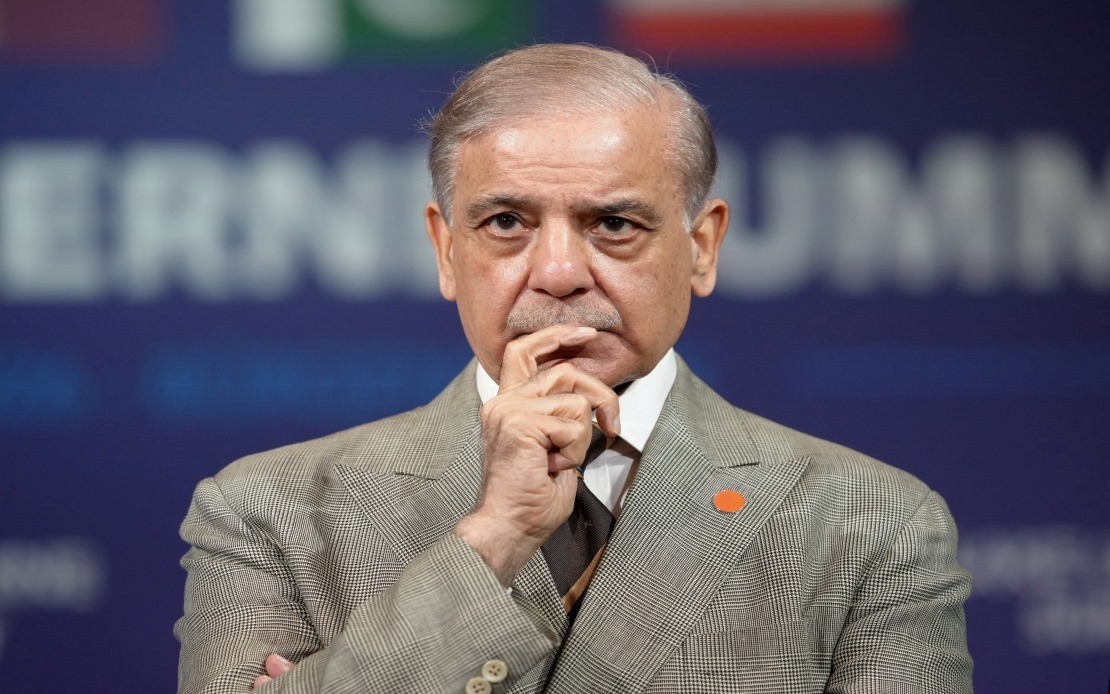
Pakistan and Türkiye have pledged to strengthen their economic relationship following high-level talks in Istanbul, where Prime Minister Shehbaz Sharif met with President Recep Tayyip Erdogan on Saturday. The discussions represent a strategic effort to deepen ties between the two Islamic nations at a moment when both face economic pressures and are seeking to diversify their international partnerships beyond traditional Western alignments.
The bilateral engagement moved beyond diplomatic formalities when Shehbaz addressed a dedicated Pakistan-Türkiye business conference attended by leading Turkish corporations. This gathering signalled the desire to translate political goodwill into tangible commercial opportunities, bringing together government officials and the private sector to identify concrete investment avenues. The timing reflects both nations' recognition that sustained economic growth requires sustained business-to-business engagement rather than government declarations alone.
Central to the emerging partnership is an ambitious target of $5 billion in annual bilateral trade. Currently falling far short of this figure, reaching this threshold would require substantial expansion of commercial flows and represent a tripling or more of existing volumes. Achieving this goal will demand removing trade barriers, facilitating easier cross-border transactions, and identifying complementary sectors where each nation possesses comparative advantages that the other requires.
Energy cooperation emerged as a priority area. Both Pakistan and Türkiye face significant energy challenges—Pakistan struggles with chronic electricity shortages that constrain industrial development, while Türkiye, positioned as a critical energy hub between Europe and Asia, has expertise in energy infrastructure and transit. Collaboration could involve Turkish investment in Pakistan's energy sector, technology transfer, or joint ventures in power generation and distribution modernisation.
Digital infrastructure represents an innovative dimension of the partnership. Shehbaz outlined his government's vision for establishing a Pakistan-Türkiye digital corridor designed to strengthen regional digital connectivity and facilitate secure cross-border data flows. This initiative addresses a growing necessity for South Asian and Middle Eastern economies to build indigenous digital infrastructure independent of Western control, enhancing cybersecurity and enabling data sovereignty. Such a corridor could position both nations as digital hubs for their respective regions and attract technology-sector investment.
Transportation and logistics featured prominently in discussions. Türkiye's geographic position and advanced port facilities at Istanbul make it a natural partner for Pakistan seeking to reduce reliance on Indian transit routes and develop alternative trade corridors to Central Asia and Europe. Pakistani goods exported through Turkish ports could reach European and African markets more efficiently, while Turkish products gain deeper market access across South Asia through Pakistani networks.
Critical minerals cooperation reflects strategic thinking about resource security. Pakistan possesses significant mineral deposits, while Türkiye has advanced processing and manufacturing capabilities. Joint development of mining operations, mineral processing facilities, or downstream manufacturing could create value chains benefiting both economies and reducing dependence on Chinese mineral processing dominance in South Asia.
Deputy Prime Minister and Foreign Minister Ishaq Dar led parallel discussions involving multiple Pakistani cabinet ministers overseeing maritime affairs, power generation, petroleum, privatisation, information technology, and telecommunications. This comprehensive ministerial involvement underscores the government's seriousness about identifying investment opportunities across diverse sectors. Such breadth suggests Pakistan is seeking not isolated deals but a systematic economic restructuring incorporating Turkish participation.
Turkish conglomerates participating in discussions—including the Koc Holding group, home appliance manufacturer Arcelik, gas distributor Aygaz, and export firm Demir Export—represent substantial capital and technological capability. Their presence indicates Ankara's willingness to encourage major private-sector players to explore Pakistani opportunities, lending credibility to the partnership beyond political rhetoric. These companies bring manufacturing expertise, consumer market experience, and financial resources that could address critical gaps in Pakistan's industrial base.
For regional observers, particularly in Southeast Asia and South Asia, this partnership reflects broader geopolitical repositioning. Pakistan and Türkiye are both hedging their international strategies, building partnerships within the Muslim world while managing relationships with Western powers. Deepening economic ties create mutual dependencies that strengthen political relationships and provide alternatives when relations with other partners become strained.
The emphasis on manufacturing, mining, and industrial investment suggests both nations recognise that sustainable prosperity requires moving beyond service-based economies toward value-added production. This orientation positions them as competitors and collaborators in global supply chains, potentially attracting multinational investors seeking to diversify production away from China.
While the $5 billion target appears ambitious given current trade volumes, the breadth of sectors addressed and the calibre of corporate participants involved suggest serious intent. Implementation will require follow-up mechanisms, reducing bureaucratic obstacles, and demonstrating early successes that encourage further private-sector engagement. The partnership's success will depend less on government announcements than on whether tangible projects materialise and generate returns for participating businesses.

