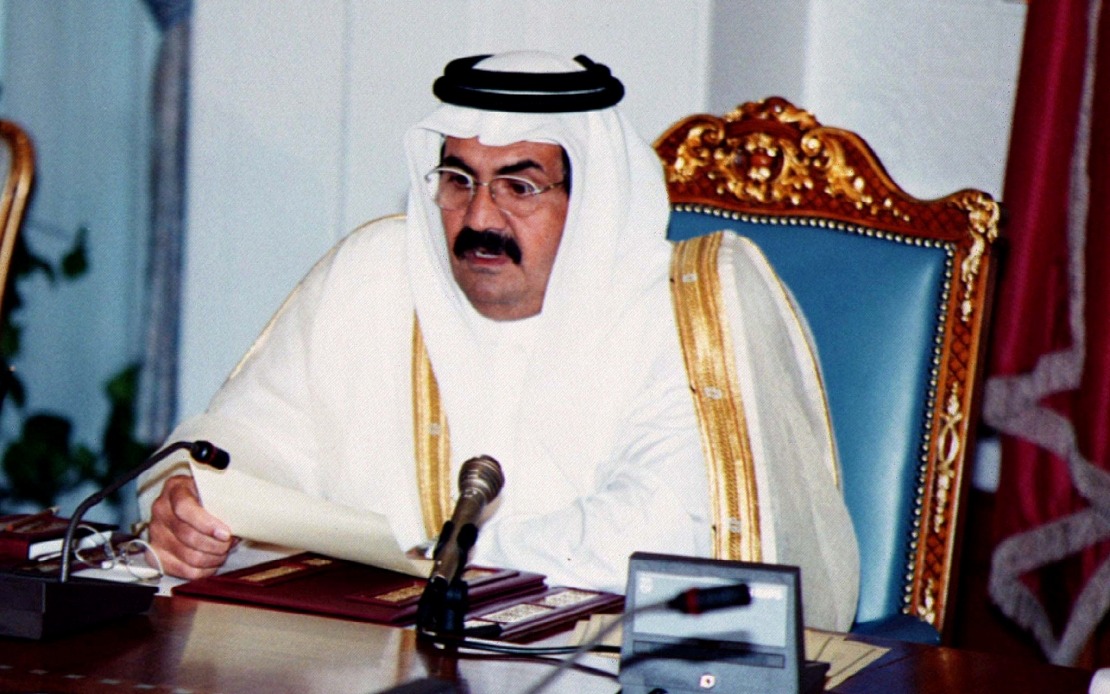
Pakistan's Prime Minister Shehbaz Sharif and Maldives President Mohamed Muizzu made separate visits to Qatar on Monday, arriving in Doha to express their sympathies with the ruling Al Thani family following the death of former Emir Sheikh Hamad Bin Khalifa Al Thani. The former leader, who steered Qatar through a transformative period as head of state for 18 years, passed away on Sunday at the age of 74, prompting an international wave of tributes and official mourning across the region.
Shehbaz Sharif's delegation to Qatar included prominent members of Pakistan's political establishment, underscoring the significance both nations attached to acknowledging the loss. His elder brother Nawaz Sharif, a three-time former prime minister whose political career has been marked by significant controversies and comebacks, accompanied him on the one-day official visit. The delegation further comprised Deputy Prime Minister and Foreign Minister Senator Ishaq Dar and Information Minister Attaullah Tarar, reflecting Pakistan's intent to demonstrate respect through high-level representation.
Sheikh Hamad's leadership tenure from 1995 to his voluntary abdication in 2013 represents one of the most consequential periods in Qatar's modern history. During his rule, the Gulf nation underwent dramatic transformation, evolving from a relatively modest regional player into a major global economic and political actor. His strategic vision, combined with vast hydrocarbon wealth, enabled Qatar to establish itself as a centre of diplomatic influence, cultural institutions, and international sporting events, most notably the hosting of the 2022 FIFA World Cup.
The death of the former emir has triggered formal mourning protocols across multiple countries in South Asia and the Middle East. Both Pakistan and India declared national days of mourning on Monday, a gesture that illustrates the widespread respect Sheikh Hamad commanded across diverse political systems and regional alignments. This demonstrates how figures who oversee periods of substantial national development can transcend conventional diplomatic boundaries and earn recognition beyond their immediate sphere of influence.
Maldivian President Mohamed Muizzu emphasised in his condolences that Sheikh Hamad's achievements would constitute an enduring legacy for future generations. The Maldivian leader highlighted not only the former emir's contributions to Qatar's domestic development but also his broader impact on the Arab world and the Islamic community at large. This framing reflects how regional leaders perceive Sheikh Hamad's influence extending beyond Qatar's borders, touching upon larger questions of Arab governance, Islamic identity, and Middle Eastern progress.
Bangladesh Prime Minister Tarique Rahman issued a formal statement recognising Sheikh Hamad's multifaceted contributions across several critical domains. His message to the incumbent Emir Sheikh Tamim Bin Hamad Al Thani specifically highlighted the former leader's work in advancing regional stability, fostering economic prosperity, strengthening educational institutions, and promoting international cooperation. These pillars represent the core areas through which authoritarian and monarchical leaders in the Gulf region typically measure their success and legacy.
Sheikh Hamad's abdication in 2013, a relatively rare occurrence among Gulf monarchs, was undertaken voluntarily and represented a deliberate succession plan to his son Sheikh Tamim. This orderly transition, orchestrated during his lifetime and without apparent coercion or institutional crisis, contrasts sharply with succession patterns in some neighbouring states and has been viewed favourably by observers of Gulf governance. The smooth handover established a precedent for managed political succession within the Qatari system.
For Malaysia and Southeast Asia, Sheikh Hamad's passing carries implications for regional engagement with the Gulf. Qatar has maintained strong diplomatic and economic relationships across ASEAN, and the current leadership transition moment provides an opportunity for Southeast Asian nations to recalibrate their engagement with Doha. The emphasis that leaders placed on Sheikh Hamad's commitment to international cooperation suggests that his successors will likely maintain Qatar's globalised approach to foreign policy and economic partnerships.
The international condolence messaging reveals how leaders frame the legacies of influential predecessors within their preferred narrative structures. Statements emphasising economic development, educational advancement, and peaceful cooperation suggest a consensus that these constitute the legitimate measures by which regional leaders should be evaluated. The absence of critical commentary in official responses indicates the diplomatic protocols governing state mourning and the strategic importance of maintaining positive relations with influential Gulf actors.
Qatar's relationship with Pakistan has grown substantially over recent decades, encompassing trade, investment, and shared strategic interests. Similarly, the Maldives, despite its geographic distance and different development profile, has cultivated closer ties with Gulf states. The high-level condolence visits therefore serve dual purposes: they pay genuine respect to a significant regional figure while simultaneously reinforcing bilateral relationships that both South Asian nations view as consequential for their respective national interests and regional standing.
The timing and composition of these official delegations reflect broader patterns in how South Asian and Southeast Asian nations conduct diplomacy with the Gulf region. By dispatching senior political figures and key cabinet ministers, Pakistan and Maldives signalled that Sheikh Hamad's death warranted serious diplomatic attention. This mirrors similar responses from other global capitals, suggesting that the former Qatari leader had achieved a status that transcended his formal removal from office a decade earlier.

