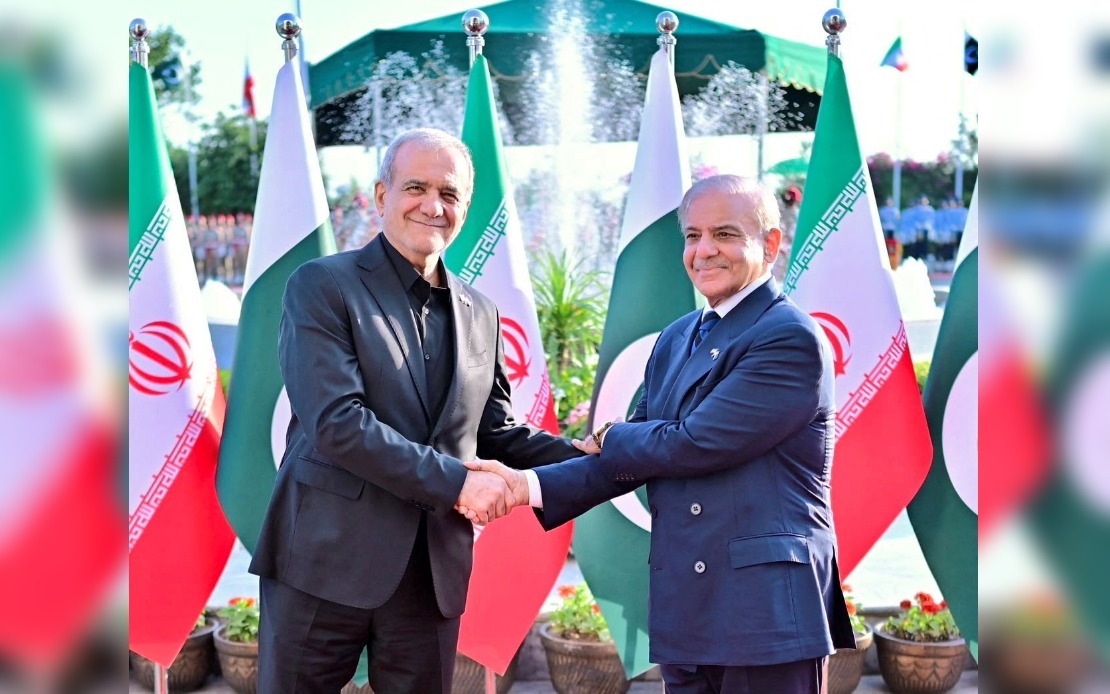
Pakistan and Iran have renewed efforts to resurrect the Islamabad-Tehran-Istanbul (ITI) freight corridor, a transcontinental rail connection that promises to reshape commercial patterns across South Asia, the Middle East and beyond. High-level discussions between Pakistan's Railway Minister Muhammad Hanif Abbasi and Iranian Interior Minister Eskandar Momeni in Islamabad this week have placed the infrastructure project firmly back on the bilateral agenda, signalling political commitment to overcome the operational obstacles that derailed the service in 2022.
The proposed restoration of the ITI corridor carries implications that extend well beyond bilateral trade between Islamabad and Tehran. Regional policymakers view the rail link as a potential catalyst for deeper economic integration, creating a direct pathway for goods to flow between Pakistan and Iran while simultaneously providing access to Turkish markets and, crucially, onwards to European and Russian trading partners. The corridor thus becomes a physical embodiment of the connectivity ambitions that dominate regional discourse, offering an alternative to existing overland routes that often face congestion, security concerns, or political complications.
The history of the ITI service reflects the challenges inherent in maintaining cross-border infrastructure in volatile geopolitical contexts. After remaining dormant for a decade, the freight service resumed operations in December 2021 amid optimism about regional stability and trade growth. However, that momentum proved short-lived. By 2022, the service ground to a halt again, victim to logistical bottlenecks, operational inefficiencies, and the broader security complexities that persist along Pakistan's southwestern frontier with Iran. Understanding these previous failures is essential context for evaluating whether current revival efforts possess the durability to succeed where recent attempts have failed.
Pakistan's commitment to the project manifests in concrete infrastructure investment. The country is now undertaking a substantial upgrade of its Main Line-3 (ML-3) railway corridor, which traverses Sindh and Balochistan provinces and represents the primary rail gateway connecting Pakistan to Iran. This modernisation effort is scheduled to commence within the current fiscal year, with completion targeted for December 2029. The timeline underscores that Pakistani authorities view the project not as a short-term initiative but as a foundational investment in long-term regional commerce.
Iran's parallel commitment similarly demonstrates bilateral seriousness. Iranian officials indicated that modernisation of the Zahedan-Mirjaveh railway line is expected to conclude within approximately one month, positioning Tehran to meet its infrastructural obligations. However, Iranian officials pointedly urged Pakistan to expedite completion of its own section—the standard-gauge rail corridor from Mirjaveh to Taftan in Balochistan—arguing that seamless cross-border operations depend upon synchronized infrastructure development on both sides of the frontier.
This interdependence creates both opportunity and vulnerability. For Malaysian readers and Southeast Asian observers, the ITI corridor represents an instructive case study in the complexities of regional connectivity. Like the aspirations embedded in Southeast Asian initiatives such as the ASEAN Connectivity Master Plan, the success of transcontinental rail projects hinges upon sustained political will across multiple governments, coordinated infrastructure investment, and resolution of operational challenges that often prove as significant as initial funding obstacles.
The economic logic underpinning the ITI revival is straightforward. Pakistan possesses geographic position as a potential hub linking South Asian production centres to Central Asian and European markets. Iran offers a direct gateway to Middle Eastern commerce. Turkey sits at the intersection of Asian and European trade flows. Connected by rail, these three countries could facilitate commerce that currently depends upon slower maritime routes, congested road networks, or indirect air transport. For Pakistani exporters, such a corridor would reduce transit times and costs significantly, potentially enhancing competitiveness for manufactured goods and agricultural products.
Yet the corridor's strategic significance transcends purely commercial calculations. The ITI route implicitly challenges existing paradigms of regional trade that have historically channeled Pakistani commerce through either southern maritime ports or northbound routes toward Central Asia. By directly connecting to Iran and Turkey, the corridor subtly repositions Pakistan within regional power dynamics, reducing reliance on any single transit partner while simultaneously increasing interdependence among the three nations. This geopolitical dimension explains why both Pakistani and Iranian officials have emphasised not merely bilateral cooperation but explicitly regional integration with Central Asia, Russia, and Europe.
The timeline for completion—with Pakistani work extending to 2029—suggests that actual freight movements may not resume for several years. During this interim period, the success of the ITI initiative will depend upon maintaining institutional momentum despite inevitable construction delays, budget fluctuations, and political transitions. The previous suspension in 2022 demonstrates that even resumed services can be terminated relatively quickly if operational or political conditions deteriorate.
For Pakistan specifically, the ITI corridor aligns with broader strategic interests in diversifying trade partnerships and reducing transportation costs. These factors become increasingly significant as the country navigates complex macroeconomic challenges and seeks to enhance export competitiveness. Iranian participation offers Tehran access to South Asian markets while improving its own connectivity toward Asian economies. Turkish involvement positions Ankara as a crucial bridge between Asian production and European consumption.
The restoration discussions also implicitly acknowledge changing geopolitical circumstances. Both Pakistan and Iran appear to view enhanced connectivity as mutually beneficial despite periodic tensions between the nations. This pragmatic orientation suggests that economic interdependence, even when imperfect, can transcend political disagreements when structured around mutual advantage. Whether this cooperative framework proves durable will depend heavily upon whether the infrastructure investments materialise on schedule and whether operational protocols can be established that address the security and logistical challenges that previously disrupted service.
As Pakistan and Iran move forward with revival efforts, Southeast Asian policymakers might observe how these nations navigate the substantial coordination challenges inherent in regional connectivity projects. The ITI corridor's ultimate success or failure will offer valuable lessons about the requisite institutional arrangements, security frameworks, and political commitments necessary to sustain transcontinental trade infrastructure in regions marked by persistent tensions and competing national interests.

