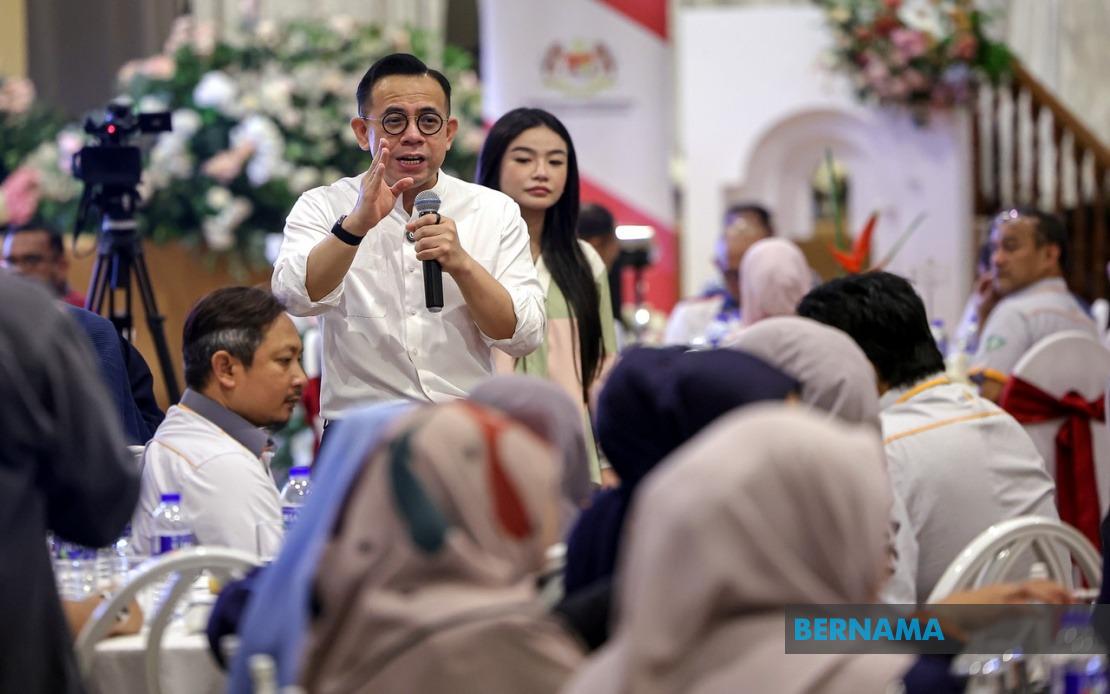
Pakatan Harapan's manifesto for the 16th Negeri Sembilan state election represents far more than campaign promises, according to Penang DAP chairman Steven Sim, who argues the coalition's proposals are anchored in the demonstrated competence of the state administration led by Menteri Besar Datuk Seri Aminuddin Harun. Speaking to reporters in Seremban on July 21, Sim emphasised that the credibility of PH's electoral offering stems directly from its established track record managing the state, distinguishing the coalition from rivals who might offer untested proposals to voters.
The 10 key commitments outlined in the manifesto represent enhancements and continuations of programmes and policies that have already shown measurable effectiveness in Negeri Sembilan. Rather than introducing entirely novel initiatives, Sim framed PH's approach as building strategically upon existing foundations that have proven their capacity to benefit residents. This strategy reflects a broader political calculation: in a competitive electoral environment, demonstrating competent execution of existing programmes may resonate more powerfully with voters than promising ambitious new ventures without implementation experience.
Sim's argument that "anyone can come up with a manifesto" underscores a fundamental challenge in Malaysian electoral politics, where voters must assess competing claims about future performance. The DAP leader pivoted this observation into a claim about PH's distinctive advantage, positioning the coalition as capable of translating political commitments into tangible outcomes. He stressed that the strength of PH's offer lies not merely in what the coalition promises but in its demonstrated ability to deliver benefits that residents can directly experience in their daily lives rather than perceive only through statistical improvements or political messaging.
This emphasis on palpable outcomes reflects broader voter expectations in Negeri Sembilan, a state where economic performance and quality of life improvements have increasingly become central to electoral calculations. Sim highlighted the government's commitment to sustaining the state's strong economic performance while ensuring that development benefits reach ordinary residents. For many voters in Negeri Sembilan, the question during this election cycle centers not on grand ideological visions but on whether the incumbent administration can continue delivering concrete improvements in employment, business opportunities, and public services.
Central to PH's manifesto is the establishment of the youth entrepreneurs fund, an initiative directly addressing economic mobility concerns among younger voters who face significant barriers entering the entrepreneurial space. This commitment falls under the purview of the Ministry of Entrepreneur Development and Cooperatives, positioning Sim's ministry as instrumental in executing PH's economic agenda should the coalition retain state government. The proposal reflects recognition that youth unemployment and limited entrepreneurial pathways remain pressing concerns across Malaysia, with Negeri Sembilan being no exception to these broader economic pressures affecting younger generations.
Sim confirmed that should PH retain control of the state government, his ministry would intensify collaboration with the Negeri Sembilan state government to support and empower entrepreneurs throughout the state. This intergovernmental coordination becomes particularly significant given Malaysia's federal structure, where successful economic development policies often require alignment between federal ministries and state administrations. The commitment to continued federal support signals that a PH victory in Negeri Sembilan would not be treated as an isolated state-level outcome but rather integrated into the coalition's broader national economic development strategy.
The political context surrounding this election reflects broader uncertainties within Malaysian governance. Negeri Sembilan has emerged as a competitive state where neither PH nor its opponents can take voter support for granted, making the substantiation of electoral pledges increasingly important to campaign strategy. By anchoring the manifesto in existing achievements rather than purely prospective proposals, PH seeks to address voter skepticism about political promises while building confidence in the coalition's capacity to govern effectively.
The Election Commission's announcement of July 28 for early voting and August 1 for polling day established a compressed campaign timeline, creating pressure on all contesting coalitions to persuade voters efficiently. Within this accelerated environment, arguments emphasizing proven track records potentially carry greater weight than detailed explanations of novel proposals, which require more extensive voter education and persuasion. PH's strategy of highlighting continuity and proven effectiveness rather than revolutionary change appears calculated for this particular electoral context.
Negeri Sembilan's economic profile distinguishes it from several other Malaysian states, with established manufacturing and services sectors providing a relatively diversified economic base. This foundation has allowed the state government to point to measurable achievements in economic indicators and employment creation, substantiating claims about effective stewardship. However, younger voters and those in sectors undergoing rapid transformation remain concerned about whether existing policies adequately address emerging economic challenges, particularly those related to technological disruption and wage stagnation.
The manifesto's commitment to youth entrepreneurship reflects understanding that Malaysia's younger demographic increasingly seeks pathways to wealth creation and business ownership rather than purely employment-based economic security. Access to startup capital and business development support remain significant barriers for youth entrepreneurs, particularly in smaller states like Negeri Sembilan where venture capital presence remains limited compared to metropolitan areas. By proposing a dedicated youth entrepreneurs fund, PH signals responsiveness to these concerns while positioning such support as sustainable federal policy rather than a temporary electoral gesture.
Sim's articulation of the manifesto also reveals internal PH messaging about the coalition's governance philosophy in an era of declining voter trust in political institutions. Rather than making expansive promises, the coalition appears to be emphasising responsible management of existing resources and programmes, reflecting lessons learned from previous electoral cycles when ambitious but insufficiently funded manifesto commitments generated disappointment. This shift toward what might be termed "modest aspiration" represents a significant evolution in how Malaysian political coalitions frame their electoral propositions to increasingly sophisticated electorates.
The broader implications of this election extend beyond Negeri Sembilan's boundaries, as the state's result will contribute to overall assessments of PH's governance legitimacy across Malaysia. States where PH demonstrates sustained electoral support based on implementation achievements strengthen the coalition's national political standing, while defeats would raise questions about whether the federal government's policies effectively translate into voter confidence at the subnational level. Consequently, Negeri Sembilan voters will ultimately determine not only their state government but also send signals about voter satisfaction with PH's broader national governance record.

