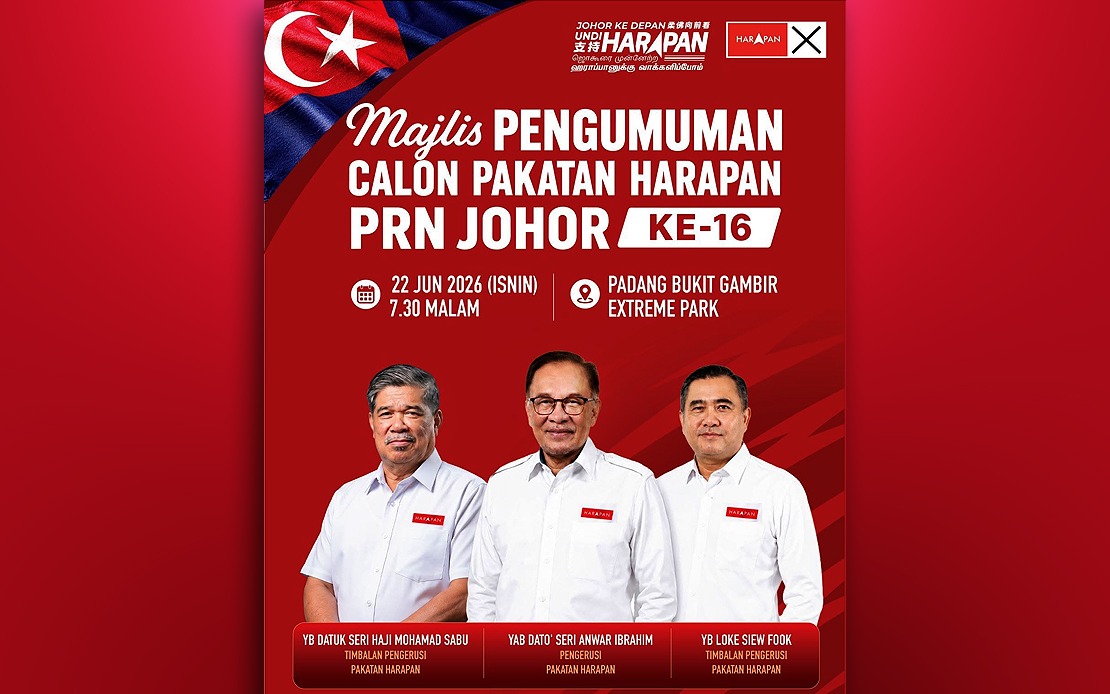
Pakatan Harapan's manifesto for the upcoming Johor state election will be presented to voters shortly after candidates are officially nominated this weekend, according to PKR vice president Datuk Seri Amirudin Shari. The coalition's senior figures gathered at a campaign event in Tangkak to announce their slate of candidates and outline preliminary campaign strategy, with Amirudin indicating that the full policy platform would follow in quick succession once the nomination process concludes.
The anticipated manifesto, carrying the tagline 'Johor Ke Depan', represents PH's blueprint for steering the state forward. Rather than presenting theoretical promises, party leaders have framed the document as a practical roadmap rooted in demonstrable achievements. The coalition intends to showcase governance successes achieved in Selangor, Penang, and Negeri Sembilan—three states where PH or its component parties currently hold or recently held administrative control—as evidence of capability to deliver similar results in Johor if voters grant them the mandate.
The timing of the manifesto release reflects strategic campaign planning. With the Election Commission setting June 27 as the nomination day, PH's decision to unveil its comprehensive policy platform within days of that deadline positions the manifesto as the centrepiece of the coalition's voter engagement strategy. This approach allows the party to build momentum heading into early voting on July 7 and the main polling day on July 11, ensuring maximum visibility and media coverage during the most critical phase of the election cycle.
For Malaysian voters in Johor, the manifesto carries particular significance given the state's pivotal role in national politics. Johor has traditionally been a powerhouse of electoral strength, and its outcomes can shift the balance of power in parliament. The PH coalition's emphasis on track record rather than aspirational promises suggests an attempt to counter scepticism about coalition stability and performance, especially relevant in a state where Barisan Nasional maintains historical dominance and voter loyalty.
Amirudin's remarks underscore confidence within the coalition regarding policy readiness. The manifesto team has been actively preparing the document, indicating internal coordination among PH's component parties—PKR, DAP, and Amanah—to present a unified vision. This preparation process itself signals that PH is approaching the election with institutional discipline, having given sufficient preparation time to develop a comprehensive platform rather than rushing announcements.
The presence of senior PH figures at the Padang Bukit Gambir event—including coalition chairman Datuk Seri Anwar Ibrahim, DAP secretary-general Anthony Loke, and Amanah president Datuk Seri Mohamad Sabu—underscored the coalition's commitment to the Johor contest. The gathering functioned not merely as a candidate announcement ceremony but as a show of unity among the three parties that comprise PH, a display that carries weight given the coalition's previous internal tensions and disputes.
The emphasis on Selangor, Penang, and Negeri Sembilan governance achievements is strategically calculated. Selangor, as Malaysia's wealthiest state, has been transformed under PH-aligned administrations into a centre of economic dynamism and public service modernisation. Penang has built a reputation for fiscal prudence and infrastructure development. Negeri Sembilan has pursued similar trajectories. By anchoring the Johor manifesto in these documented successes, PH attempts to convert abstract campaign promises into verifiable benchmarks that voters can evaluate.
For Southeast Asian observers watching Malaysian politics, the Johor election represents a test of electoral competition between long-entrenched incumbency and reform-oriented alternatives. The manifesto's focus on documented results rather than ideological rhetoric reflects broader shifts in voter expectations across the region, where demonstrated competence increasingly matters more than historical privilege or simple party loyalty.
The election schedule itself creates a compressed campaign environment. With nomination day on June 27, early voting on July 7, and general polling on July 11, candidates and parties have roughly two weeks to communicate their messages to voters. In this narrow window, the timing of manifesto release becomes crucial. By launching their comprehensive platform within days of nominations closing, PH ensures the document receives media attention and voter consideration during peak campaign intensity rather than fading into background noise.
The 'Johor Ke Depan' branding carries subtle messaging about forward momentum and progressive governance, positioning the coalition as agents of change and development rather than defenders of the status quo. This framing matters particularly in a state where incumbent administrations have long promoted stability as their primary virtue. PH's counter-narrative suggests that stability without renewal produces stagnation, and that dynamic progress requires different leadership.
As the campaign intensifies toward polling day, the Johor manifesto will serve as the central document against which voters measure the coalition's seriousness and the government's record becomes directly relevant to campaign discourse. The manifesto's success in influencing voter behaviour will depend not only on the quality of its policy proposals but on how effectively PH can communicate connections between accomplishments in other states and potential benefits for Johor residents specifically.

