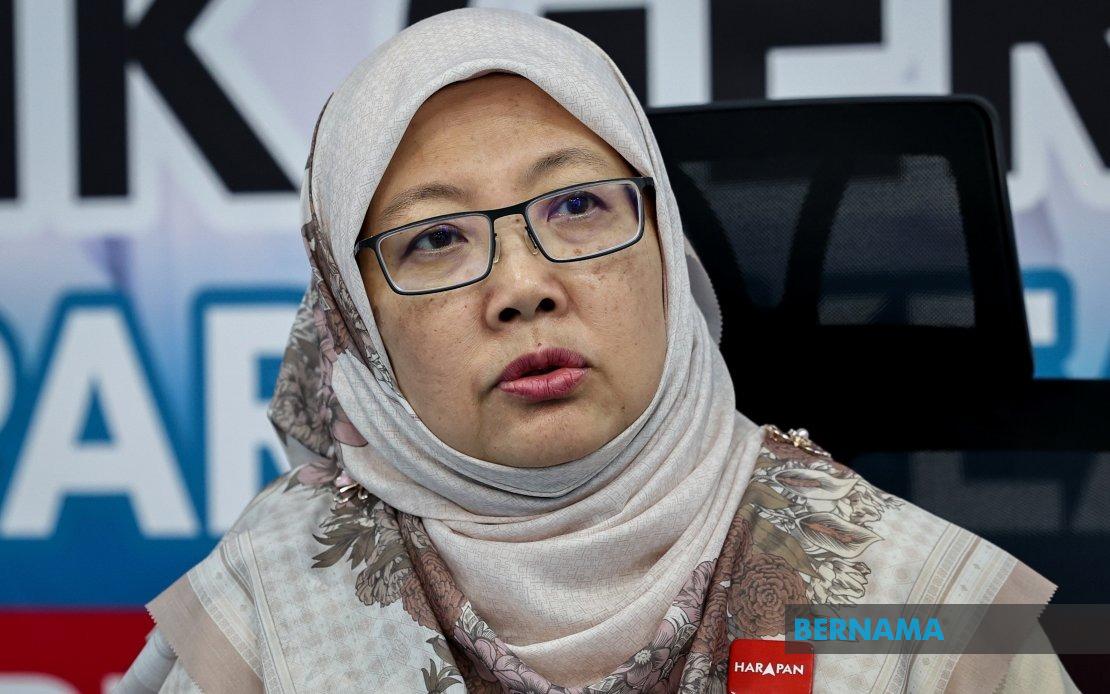
Pakatan Harapan will formally unveil its full complement of candidates for the Johor state election during a ceremony scheduled for this Monday, according to Johor PKR chairman Datuk Seri Dr Zaliha Mustafa. The announcement is expected to draw the coalition's senior leadership, with PH chairman Datuk Seri Anwar Ibrahim set to preside over proceedings as the party makes public the names of those it has selected to contest across the state.
The venue for this high-profile launch reflects strategic considerations around momentum building within the state. Dr Zaliha indicated that organisers are planning to hold the event in Johor's northern sector, with Bukit Gambir in Tangkak emerging as the likely location. This geographical choice is deliberate, aimed at capitalising on what coalition strategists perceive as growing grassroots enthusiasm in the northern zone following a series of campaign engagement programmes held throughout the region.
The northern focus builds on successful PH mobilisation efforts in recent weeks. The coalition has conducted multiple outreach initiatives across the northern corridor, including activities at Bukit Naning, which appear to have generated considerable positive feedback from local communities. By hosting the candidate announcement in this area, PH appears intent on sustaining this momentum and converting measured public support into solid electoral gains when voting takes place.
The candidate selection process itself has incorporated input from multiple organisational levels within the coalition. Dr Zaliha explained that PH has consulted branch-level party structures to identify individuals with genuine roots in their communities and demonstrated commitment to constituent service. This ground-up approach contrasts with purely top-down selection, suggesting an effort to field candidates with authentic local knowledge and established credibility rather than parachuting in outsiders unfamiliar with specific constituencies.
Diversity and representation have shaped the final slate. The coalition has deliberately constructed its candidate roster to encompass professionals, younger figures, and women across different ethnic communities. This multifaceted composition aims to present a balanced team capable of connecting with the broad cross-section of Johor's electorate and demonstrating that PH encompasses varied skill sets and perspectives rather than representing narrow interest groups.
Beyond demographic balance, candidates have been assessed on their capacity to contribute to PH's overarching electoral objectives. Dr Zaliha stressed that selection criteria extended beyond individual suitability for specific seats to encompass alignment with the coalition's broader strategic vision for the state. This suggests that individual candidacies have been evaluated not solely on local appeal but also on compatibility with coalition-wide policy priorities and governance ambitions.
PH's contest strategy reflects elevated expectations for this election. The coalition is not merely seeking incremental gains over previous electoral contests; rather, it has set its sights on achieving outright control of the state government itself. This represents a significant escalation from aiming for modest seat increases, indicating that PH believes the political environment in Johor has shifted sufficiently to make a government-formation outcome plausible within this election cycle.
The coalition will field candidates across every available seat, maximising its competitive reach. The slate comprises 56 candidates distributed among three component parties based on negotiated allotments. PKR will contest 20 seats, drawing on its position as the largest party within the coalition and leveraging its established organisational presence across multiple constituencies. DAP will field 17 candidates, concentrated in urban areas where the party traditionally commands stronger support. Amanah completes the coalition with 19 candidates, allowing the Islamic-oriented party significant representation while maintaining proportional balance among the three largest PH components.
The electoral calendar has been established with precise timing that now shapes both campaign intensity and strategic planning. Nominations are scheduled for June 27, providing candidates with a two-week window between formal announcement and filing nomination papers. Early voting operations will proceed on July 7, followed by the main polling day on July 11. This compressed timeline concentrates campaigning activity and means that campaign effectiveness during these intervening weeks will prove critical in determining outcomes.
For Malaysian voters broadly, this Johor election carries significance beyond state-level implications. As Malaysia's southernmost state and a major economic contributor, Johor's political complexion influences broader national calculations and power balances. A PH government in Johor would substantially reshape Malaysia's political geography, as the state has long been governed by established conservative parties. Success here would demonstrate that PH has successfully rebuilt credibility with voters after internal divisions and governance challenges that have damaged the coalition's standing over recent years.
The announcement timing also occurs within a wider context of electoral consolidation across Malaysian states. Multiple state elections have unfolded or are forthcoming, with results accumulating to inform broader patterns about voter sentiment and political trends. Johor's position as economically significant and politically contested makes this election a bellwether for national political health and potential future configurations of power that might emerge from the combination of multiple state-level outcomes.
Internal coalition dynamics will also merit close observation as the campaign unfolds. The agreed distribution of seats among PKR, DAP, and Amanah suggests negotiation has occurred without apparent major friction, yet campaign intensity could test these arranged proportions if certain constituencies become unexpectedly competitive or if internal party factions harbour differing priorities. How effectively these three distinct parties campaign in harness will influence whether their combined appeal exceeds the combined opposition strength.