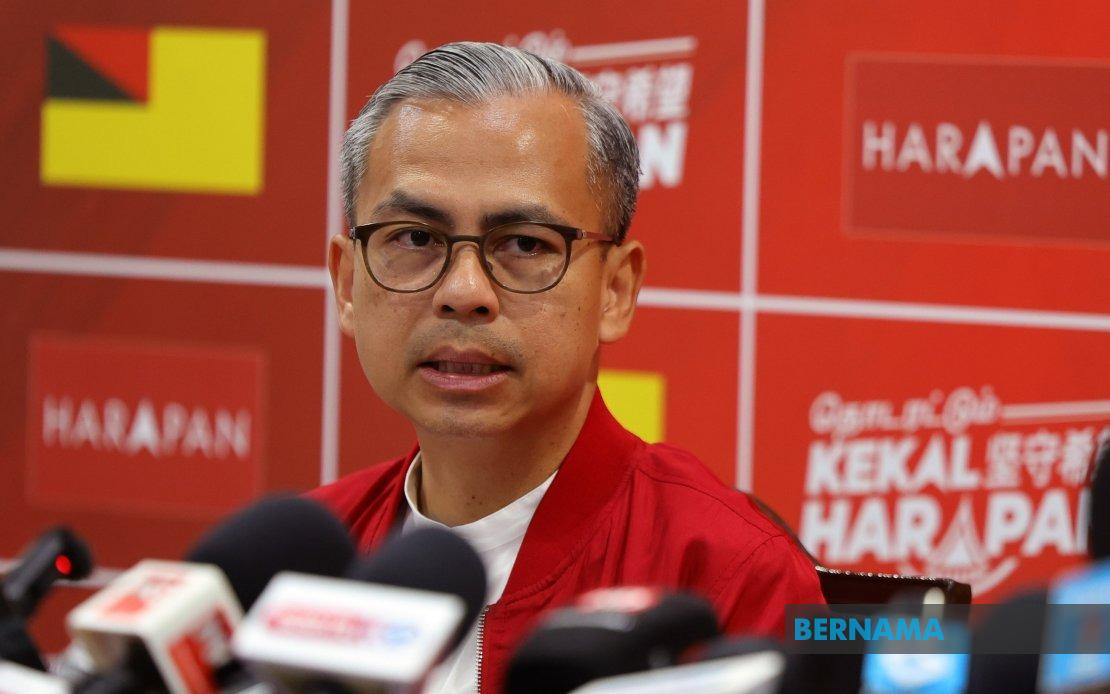
The question of who legitimately speaks for Malaysia's Malay-Muslim community has become a flashpoint in contemporary electoral politics, with Pakatan Harapan mounting a robust defence against suggestions that representation of this demographic is concentrated in a single political bloc. During a press conference in Seremban on July 23, senior coalition figures pushed back against what they characterize as a divisive and inaccurate narrative, one that they argue fundamentally misrepresents both the composition of their own alliance and the reality of Malaysia's plural society.
Communications Minister Datuk Seri Fahmi Fadzil, who holds multiple senior roles within the coalition, articulated a pointed challenge to the exclusivity argument by raising the personal stakes of the debate. He questioned the logical foundation of claims that only one political group can authentically represent Malay-Muslims, citing his own identity and that of Khalid Abdul Samad, the Amanah communications director who stood alongside him. The rhetorical force of these questions—"Am I not a Malay-Muslim?"—underscores a fundamental contention: that PH encompasses substantial Malay-Muslim leadership and membership, making claims of monopolistic representation factually dubious.
Beyond individual identity, Fahmi framed the debate within a broader philosophical contest about how Malaysia should organize its political life. He characterized what he called "exclusive politics" as fundamentally at odds with the nation's established character as a multicultural, plural democracy. This positioning transforms the disagreement from a simple factual dispute about representation into a deeper question about the legitimacy of political approaches that organize constituencies primarily along ethnic or religious lines. In this framing, PH stands for a model of politics that transcends identity categories, while opponents implicitly embrace a more particularistic approach.
The timing of these remarks during the Negeri Sembilan state election campaign gives the statement immediate electoral relevance. The state has become a battleground for testing different political narratives about governance and community representation. Fahmi acknowledged that PH takes seriously the charge that Malay-Muslims might be marginalized within its administration, indicating that such allegations carry electoral weight and require sustained counter-messaging. The coalition committed to intensified voter engagement specifically aimed at demonstrating that Malay-Muslim interests receive serious attention and resources under PH governance.
To substantiate these claims, the coalition pointed to concrete administrative achievements in Negeri Sembilan. Under Menteri Besar Datuk Seri Aminuddin Harun, the state has expanded mosque infrastructure and significantly increased zakat collections, which have risen by approximately two-and-a-half times compared with the previous administration. These figures serve as empirical evidence in PH's counter-narrative—that their governance model delivers material benefits to the Malay-Muslim community rather than neglecting it. Such metrics matter in Malaysian politics because they translate abstract claims about representation into visible outcomes that voters can assess directly.
The coalition's broader political philosophy, as articulated by Fahmi, emphasizes unity constructed around shared values and the common good rather than ethnically or religiously exclusive appeals. This represents a deliberate strategic choice that distinguishes PH's messaging from competitors who may mobilize voters through more identity-focused narratives. The vision presented—where Malays unite as Malays, Chinese as Chinese, Indians as Indians, but all stand together in pursuit of shared objectives—attempts to reconcile community identity with overarching national solidarity, an inherently delicate balance in Malaysian politics.
The presence at the press conference of Cha Kee Chin, the Negeri Sembilan DAP secretary, reinforces the coalition's multicommunal composition and adds non-Malay, non-Muslim representation to the discussion. This deliberate staging emphasizes that PH's challenge to exclusivist political messaging comes from within a genuinely diverse alliance, not from outside perspectives presumed to lack standing in conversations about Malay-Muslim representation. The physical presence of coalition partners from different communities underscores the operational reality of plural politics within PH's ranks.
For Malaysian observers, this exchange reflects ongoing tensions about how best to balance community-specific interests with national unity in a society where ethnicity and religion remain politically salient categories. The debate assumes particular importance because Malay-Muslims constitute the demographic majority in Malaysia, making competition for their political allegiance a central feature of electoral contests. Different political actors offer conflicting frameworks for understanding what serves Malay-Muslim interests: exclusive representation through a single bloc versus distributed representation across multiple coalitions.
The electoral calendar provides immediate consequences for these competing narratives. The Negeri Sembilan state election, with early voting scheduled for July 28 and polling day on August 1, will offer preliminary evidence about voter receptiveness to each coalition's framing. State-level results carry significance beyond Negeri Sembilan itself, serving as barometers for broader national political sentiment and the resonance of different campaign messages in communities across Malaysia. The performance in this state contest may influence how both PH and opposition parties calibrate their appeals regarding representation and community governance in subsequent elections.
Pah's position ultimately rests on an argument about the relationship between political organization and social reality in Malaysia. The coalition contends that Malaysian society's actual diversity demands political structures and rhetoric that acknowledge and accommodate this plurality rather than seeking to reduce political competition to a contest between mutually exclusive communal representatives. Whether voters in Negeri Sembilan and beyond find this vision persuasive remains an open question, but the intensity with which PH articulates this alternative framework suggests the coalition recognizes the stakes involved in how political representation of Malaysia's communities is understood and contested.

