Pakatan Harapan has indicated willingness to explore political cooperation with rival parties, though only under conditions that serve both national stability and public interest, according to senior coalition figures. The statement comes amid persistent speculation about potential realignments ahead of major electoral contests, including general elections and state polls, and reflects the pragmatic calculations shaping Malaysian politics as coalitions reassess their competitive positioning.
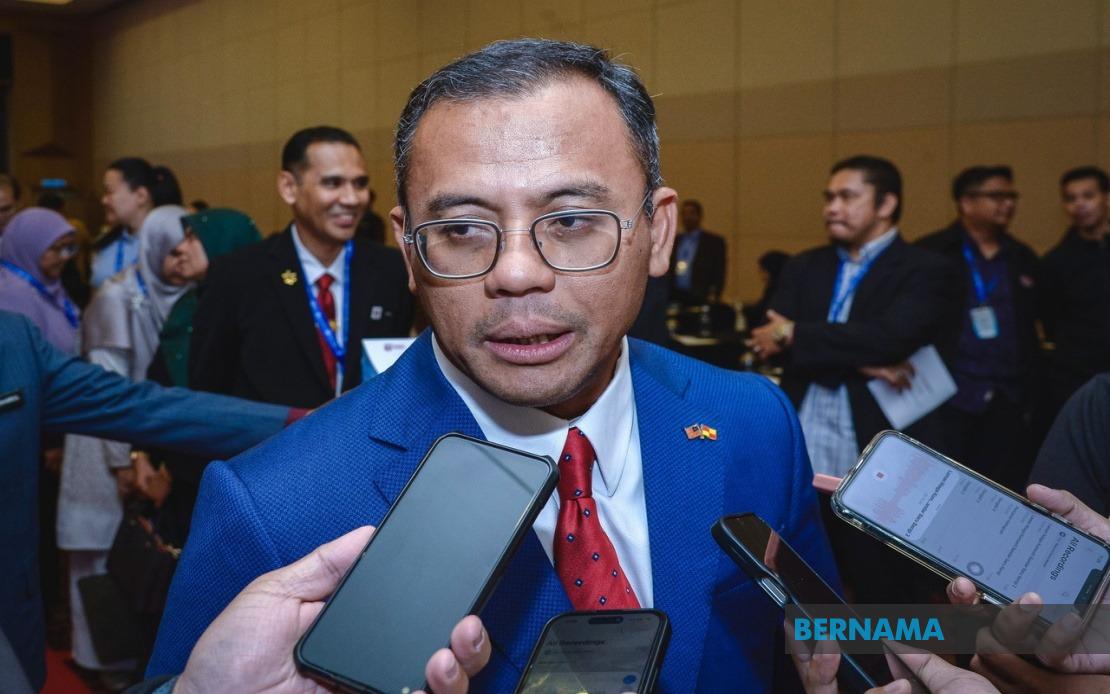
Datak Seri Amirudin Shari, a member of PH's Presidential Council and Selangor Menteri Besar, articulated the coalition's flexibility during remarks at the Ecology International Conference II in Bangi. As PKR's vice-president, Amirudin carries significant weight within the broader PH structure, making his comments a barometer of leadership thinking on coalition strategy. He stressed that PH remains receptive to engagement not merely with Perikatan Nasional and its components like Bersatu, but with any political force prepared to anchor cooperation in these twin principles.
The framing of conditions around cooperation reveals important nuance in how PH approaches political negotiation. Rather than ruling out talks categorically or embracing indiscriminate alliance-building, the coalition has positioned itself as willing to engage where shared commitment to stability and public welfare exists. This stance acknowledges the fractured state of Malaysian politics, where no single coalition commands overwhelming national dominance and electoral outcomes remain unpredictable. For Malaysian voters and regional observers, the signal suggests PH is calculating scenarios where cross-coalition cooperation might become tactically preferable to confrontation.
Amirudin moved to quash recent media reports suggesting Selangor PH had already moved toward some understanding with Bersatu, particularly at the state level. He characterised such speculation as reflecting broader national political realignments rather than concrete agreements at the Selangor state branch. This denial is significant because Selangor, Malaysia's most economically dynamic state and a PH stronghold since 2018, carries disproportionate weight in national political calculations. Any shift in Selangor's coalition dynamics would ripple through federal politics, making clarity about the state's alignments crucial for political observers.
The possibility of PH-Bersatu cooperation at the state level warrants examination in context of upcoming electoral calendars. The Melaka state election and the general election both approach, creating windows where coalition positioning becomes consequential. Speculation about cooperation between PH and Bersatu reflects both parties' recognition that Malaysia's polarised two-coalition structure—historically pitting PH and allies against Barisan Nasional and PN—may be yielding to more fluid, pragmatic arrangements. Neither coalition commands sufficient strength to govern without accommodation, a reality that pushes leaders toward exploring options previously considered unthinkable.
Amirudin's insistence that decisions on cooperation must be elevated to PH's central leadership underscores organisational hierarchy within the coalition and the dangers of unilateral action by state-level leaders. This disciplined approach reflects lessons from previous coalition fractures where state leaders' autonomous decisions destabilised higher-level arrangements. By routing potential agreements through the centre, PH seeks to ensure consistency across all state and federal levels and to prevent opportunistic local actors from undermining coalition cohesion. For Malaysian democracy, such internal checks matter because they theoretically constrain individual politicians' capacity to destabilise governing arrangements purely for personal advantage.
The underlying political mathematics favouring greater flexibility in coalition formation stems from Malaysia's electoral geography and demographic patterns. No single coalition enjoys the natural advantage once held by Barisan Nasional's decades-long dominance. Selangor, Kuala Lumpur, and Penang remain PH-inclined, while Johor and several east-coast states lean toward PN and Barisan. Kedah, Perlis, Terengganu, and other states remain competitive, with outcomes dependent on local dynamics, personality factors, and tactical positioning. This competitive landscape encourages coalitions to calculate state-by-state whether maintaining rigid national alliances or striking localised arrangements better serves electoral prospects.
The emphasis on timing and electoral cycles in Amirudin's remarks illuminates how strategic decisions about cooperation become bound to electoral calendars. Cooperation announced too early might alienate grassroots supporters or alienate allied parties; delayed too long, it misses windows for coordinated campaigning or resource pooling. This temporal dimension makes political cooperation less a matter of pure principle than of careful choreography. Malaysian voters, particularly those in marginal constituencies, face uncertainty about which coalitions will contest which seats, a dynamic that can depress voter turnout and reduce electoral clarity.
For Southeast Asian politics more broadly, Malaysia's coalition fluidity offers instructive lessons. The region's authoritarian and semi-authoritarian systems often exhibit rigid coalition structures, while Malaysia's democratic framework allows opposition coalitions and ruling parties to shift alignments. Yet this flexibility also creates unpredictability that can frustrate long-term policy continuity. Investors, civil society organisations, and neighbouring governments seeking stable partnerships with Malaysian administrations face questions about whether arrangements will survive electoral cycles or coalition recalculations. PH's openness to cooperation, while pragmatically sound, therefore carries costs in terms of institutional predictability.
Moving forward, the actual test of PH's stated principles lies in whether cooperation discussions occur and what conditions shape them. Should talks materialise with Bersatu or other parties, observers will scrutinise whether the coalition genuinely applies its stability and public welfare criteria or whether these serve as post-hoc justifications for partisan calculations. The credibility of PH's framework depends on demonstrable consistency between stated principles and actual behaviour across different states and electoral contexts. For Malaysian voters contemplating the 2024-2026 electoral cycle, understanding whether their chosen representatives maintain coalition commitments or pursue short-term tactical advantages becomes central to informed electoral choices.

