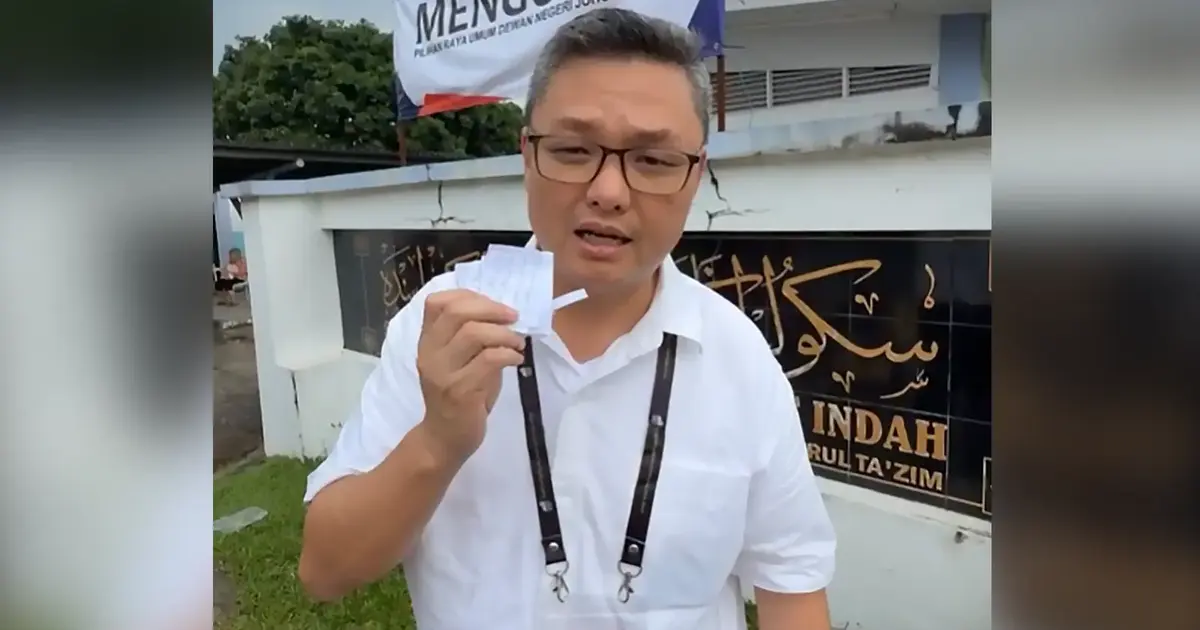
A prominent Pakatan Harapan representative has formally escalated concerns to Malaysia's election authorities, alleging that a Barisan Nasional counting agent engaged in the unauthorised documentation of voter choices during ballot tallying operations. The complaint filed by Tee Boon Tsong underscores persistent tensions between opposition and government-aligned parties over procedural integrity in the Malaysian electoral system, particularly regarding the conduct of officials tasked with monitoring vote counts.
The allegation centres on handwritten notes that Tee Boon Tsong claims were compiled to record individual ballot selections as votes were being processed. Such practices, if substantiated, would constitute a significant breach of election management protocols and raise fundamental questions about voter confidentiality and the sanctity of Malaysia's democratic processes. The documentation of how specific voters cast their ballots would be inconsistent with established electoral safeguards designed to protect voter privacy and prevent intimidation or coercion.
Tee Boon Tsong has specifically requested that the Election Commission (EC) confiscate the handwritten notes as a critical component of its investigation into the alleged misconduct. This demand reflects growing frustration among opposition elements regarding the need for tangible evidence to support complaints, and represents an attempt to secure documentation that could corroborate claims of procedural violations during the counting phase. The preservation and examination of such materials would be essential to determining whether systematic irregularities occurred.
The timing and nature of this complaint reflect broader concerns about election administration that have periodically surfaced in Malaysian politics. While Malaysia has maintained relatively stable electoral processes compared to some regional counterparts, periodic allegations of impropriety have prompted calls for enhanced transparency mechanisms and stricter enforcement of conduct standards among election officials and party representatives granted access to polling and counting operations.
Counting agents representing political parties play a legitimate role in Malaysian elections, serving as observers to ensure procedures are followed correctly and results are accurately tabulated. However, their authority is circumscribed by strict regulations governing their conduct during sensitive phases of the electoral process. The alleged recording of individual ballot choices substantially exceeds any legitimate observational function and would constitute an apparent violation of these boundaries.
The Election Commission's response to this complaint will carry significance beyond the immediate incident, potentially influencing how the body addresses similar allegations in future electoral cycles. The agency must balance the need to investigate all credible reports of misconduct with procedural fairness and the establishment of clear standards for what constitutes actionable violations. Malaysian electoral authorities have historically sought to maintain impartiality while responding to accountability demands from all political quarters.
For Malaysian voters and observers tracking election integrity issues, this incident highlights the importance of procedural vigilance at the counting stage. While ballot casting itself is subject to privacy protections, the subsequent counting process requires equally rigorous safeguards to prevent the recording or documentation of voting patterns that could be used for purposes beyond legitimate electoral verification. The vulnerability exposed by this allegation—if confirmed—would affect public confidence in the neutrality of the entire tallying mechanism.
The broader context of Malaysian electoral administration includes competing pressures between Pakatan Harapan and Barisan Nasional, particularly following recent electoral outcomes that have shifted the political landscape. Both coalitions maintain representations throughout the electoral process, and allegations from either side regarding the conduct of the other's representatives require careful, credible investigation to maintain the legitimacy of results and public trust in democratic institutions.
Tee Boon Tsong's emphasis on confiscating the alleged documentation reflects the practical reality that evidence preservation is often decisive in election-related disputes. Without access to the handwritten notes, investigators would struggle to verify claims, and the complainant's credibility would depend largely on witness testimony. The physical evidence would provide objective material against which procedural allegations could be evaluated.
Regional observers of Malaysian politics will be monitoring how the Election Commission handles this matter, as it provides insight into the body's commitment to investigating allegations against parties across the political spectrum with equal rigour. Southeast Asian democracies increasingly face scrutiny regarding electoral administration, and Malaysia's responses to transparency and integrity concerns contribute to the region's overall democratic health.
The incident also underscores the ongoing tension between party representation in electoral processes and the maintenance of institutional independence. While allowing parties to station observers provides valuable checks on potential irregularities, these arrangements create opportunities for procedural violations if not carefully managed through training, monitoring, and enforcement mechanisms that deter misconduct.
Moving forward, the Election Commission's investigation will need to establish whether the alleged note-taking represents an isolated incident or reflects a broader pattern of conduct that requires policy intervention. The complainant's specific allegations and supporting evidence will be weighed against any response or clarification from the Barisan Nasional representative in question. The agency's findings and any subsequent actions will set precedent for addressing similar allegations and reinforcing standards of conduct expected from all parties involved in electoral operations.

