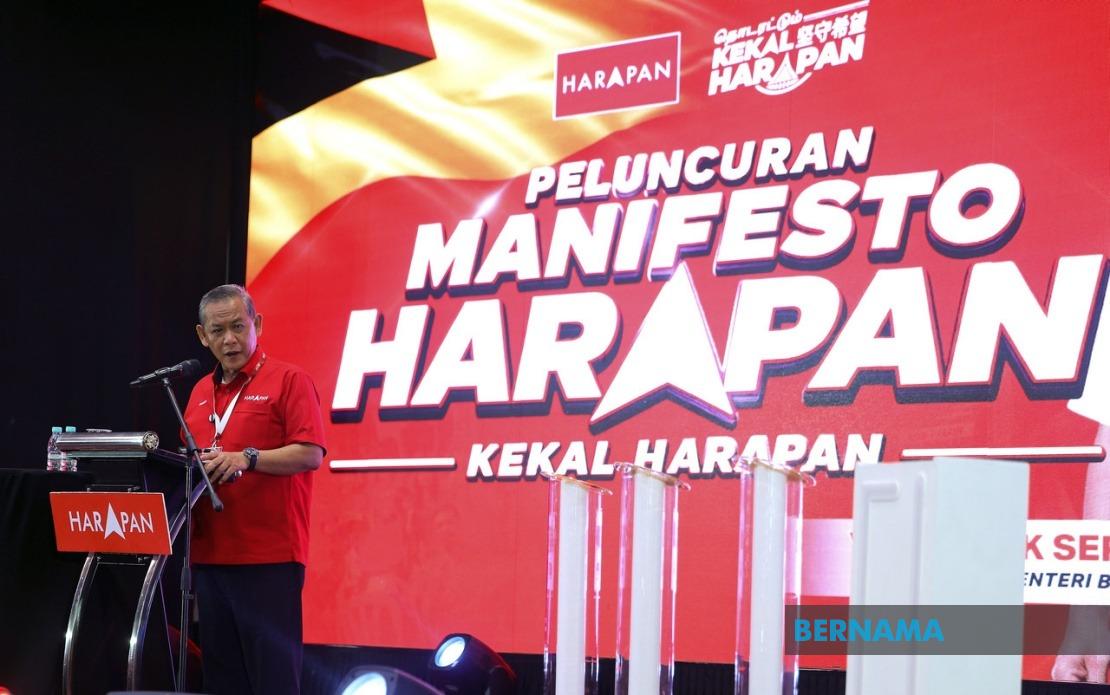
Pakatan Harapan has rolled out its election platform for the 16th Negeri Sembilan state election, unveiling a manifesto centred on economic opportunity and social welfare in the central Malaysian state. Introduced in Seremban by Negeri Sembilan PH chairman and Menteri Besar Datuk Seri Aminuddin Harun, the manifesto is framed around the theme 'Negeri Sembilan Kekal Harapan', asserting the coalition's commitment to keeping the state within PH's political orbit. The 10-point roadmap reflects the governing coalition's strategic priorities as it faces the ballot, seeking to consolidate support across urban and rural constituencies while addressing long-standing voter concerns about employment, housing affordability and public services.
The manifesto's emphasis on creating 30,000 high-income employment opportunities signals PH's recognition that Negeri Sembilan's workforce requires quality job growth beyond low-wage sectors. This pledge aims to position the state as an attractive destination for skilled workers and knowledge-based industries, particularly in manufacturing, technology and services that command competitive salaries. By targeting high-income positions rather than simply increasing total employment figures, PH appears intent on raising living standards and reducing the wage gap that has characterised many Malaysian states. For residents facing underemployment or wage stagnation, this commitment directly addresses concerns about economic advancement and family financial security.
The housing dimension of PH's platform, encompassing 20,000 affordable units alongside efforts to resolve accumulated land disputes, tackles two persistent grievances in Negeri Sembilan. First-time homebuyers, young families and lower-income households struggle across the state with property costs that consume disproportionate portions of household income. By committing to both new housing construction and land issue resolution, PH signals willingness to navigate the complex bureaucratic and legal obstacles that have left many residents without secure tenure or accessible property options. This addresses not merely a housing shortage but the deeper frustration many Negeri Sembilan residents harbour over government responsiveness to fundamental needs.
Education and healthcare improvements form the welfare backbone of PH's pitch, reflecting universal priorities that transcend class and community divisions. The manifesto's promise of quality education for all implicitly critiques current provision standards, suggesting rural-urban disparities in schooling resources and outcomes that voters perceive as inequitable. Healthcare commitments similarly acknowledge that many residents lack adequate access to quality medical services, particularly in more remote districts. These pledges resonate with middle-class families concerned about their children's educational trajectories and with working-class communities where health costs remain a significant financial burden.
The decision to highlight the People's Wellbeing Scheme (SSR) demonstrates PH's intent to expand social protection mechanisms, potentially broadening cash transfers, subsidies or assistance programmes that directly benefit vulnerable groups. Strengthening this scheme rather than merely maintaining it suggests resource allocation increases or expanded eligibility criteria. For pensioners, persons with disabilities, and low-income families already enrolled or seeking entry, expansion of SSR represents tangible evidence of welfare-state strengthening beyond political rhetoric.
PH's agricultural modernisation and food security initiatives respond to Negeri Sembilan's dual character as both an urbanising state and a region with significant rural communities and agricultural heritage. Updating farming practices while ensuring local food production resilience addresses both productivity concerns among farmers and broader national anxieties about supply-chain vulnerabilities and import dependence. The commitment to implementing the Federal Land Development Authority (Felda) Development Plan indicates coordination with federal mechanisms to enhance smallholder incomes and rural development outcomes.
Tourism and cultural heritage development form the fourth pillar of PH's economic diversification strategy. Negeri Sembilan possesses distinctive cultural assets, historical sites and natural attractions that remain underdeveloped compared to rival destinations. Targeted investment here could generate employment in hospitality, heritage conservation and cultural tourism while simultaneously strengthening community pride and social cohesion through recognition of local identity and traditions.
PH's emphasis on interfaith unity within its manifesto reflects the coalition's positioning as an inclusive political force committed to managing religious and ethnic diversity constructively. In a country where communal tensions occasionally flare, explicit manifesto space dedicated to promoting harmony signals seriousness about building consensus across communities and preventing divisive rhetoric from dominating campaign discourse.
The timing and presentation of this manifesto occurs within the broader context of Malaysian electoral politics, where state-level contests increasingly serve as barometers of federal coalition strength. Negeri Sembilan's election will test whether PH maintains voter confidence despite navigating complex federal governance challenges and managing coalition partnerships. Success here reinforces PH's narrative as a viable governing force; setbacks could embolden opposition claims that the coalition cannot sustainably manage power or deliver on commitments.
Yet manifesto pledges require scrutiny regarding feasibility and timeline. Creating 30,000 high-income jobs demands sustained investment in industrial estates, skills training and business incentives; delivering 20,000 affordable homes requires significant capital expenditure and land acquisition; expanding social welfare schemes necessitates revenue sources and administrative capacity. Negeri Sembilan residents will ultimately judge PH not by the ambition of these commitments but by implementation pace and tangible results over the next electoral cycle. The manifesto represents PH's opening argument to voters; the actual campaign period will reveal whether these promises resonate with core constituencies or whether opposition narratives about governance capacity and fiscal sustainability gain purchase among undecided electors.

