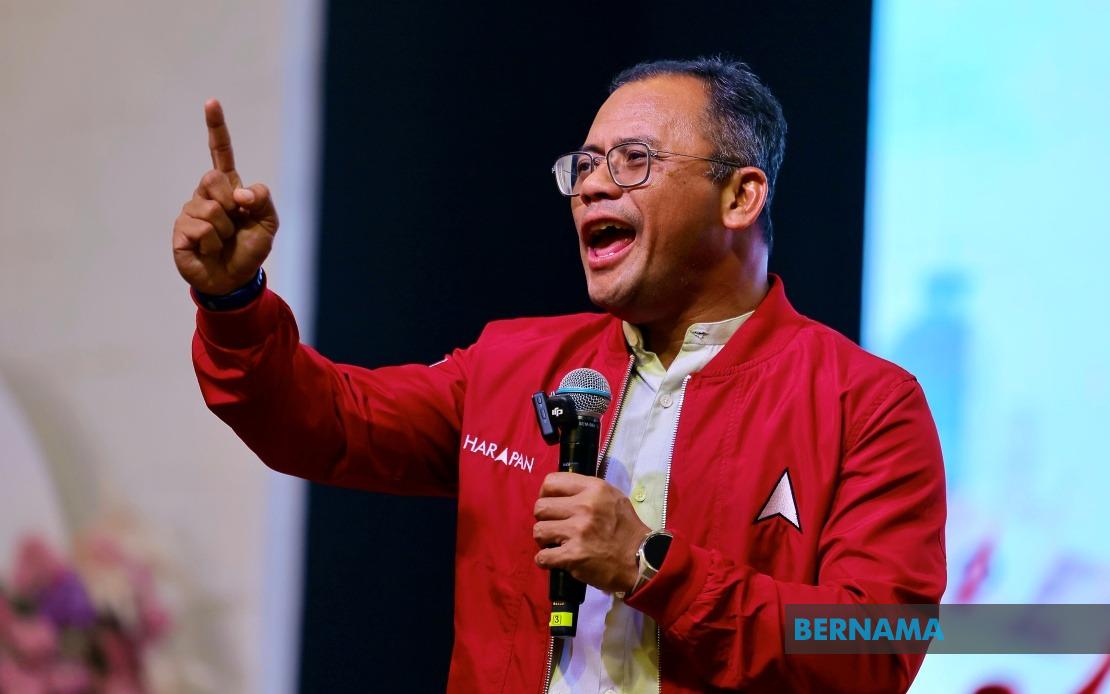
Pakatan Harapan formally introduced its election manifesto for the 16th Johor state election on July 3, framing the "Johor For All" platform as a comprehensive commitment to voters across the sultanate. The launch ceremony in Johor Bahru marked a significant moment in the coalition's campaign strategy, representing its attempt to consolidate messaging around inclusive governance and broad-based development that appeals beyond traditional party strongholds.
Datuk Seri Amirudin Shari, a senior figure in the PH Presidential Council and co-election director for PKR, spearheaded the manifesto presentation. His central role underscores the importance PH places on this state contest, particularly given that Johor remains a crucial battleground in Malaysian electoral politics. The state's 56 seats offer substantial representation in the larger political narrative, making the campaign machinery's coordination through figures like Amirudin essential to party unity and message consistency.
The coalition mobilised its three primary component parties for the occasion. Aminolhuda Hassan representing Johor PH's broader coordination, Teo Nie Ching bringing DAP's urban organising capacity, and Datuk Seri Dr Zaliha Mustafa emphasising PKR's institutional presence all gathered to signal unified intent. This multi-party representation demonstrates how PH operates as a coalition rather than a monolithic entity, with each component preserving some organisational autonomy while projecting collective purpose during major electoral moments.
The manifesto's name itself—"Johor For All"—carries deliberate positioning. Rather than emphasising partisan advantage or narrow community interests, the framing suggests inclusivity and universal benefit. This rhetorical approach reflects broader PH strategy in Johor, where demographic diversity, economic complexity, and historical political competition require appeals that transcend traditional ethnic or class divides. The phrase suggests the coalition aims to position itself as custodian of collective Johor interests rather than factional representation.
For Malaysian observers, Johor elections carry significance extending beyond state boundaries. The sultanate has historically served as either a proving ground for national political movements or a resilient alternative power base. PH's manifesto launch represents the coalition's attempt to reconfigure its narrative in a state where it faces entrenched competition, declining electoral fortunes in some areas, and the need to demonstrate concrete governance achievements that justify voter trust across diverse constituencies.
The participation of multiple party leaders also underscores internal coalition management. DAP's presence ensures the coalition includes representation of urban, primarily Chinese-majority concerns, while PKR's emphasis addresses Malay-Muslim constituencies and rural areas. This architectural balance within the campaign apparatus reflects the delicate coalition dynamics PH must maintain, particularly in Johor where electoral mathematics require cross-community support.
Manifesto launches in Malaysian electoral politics typically function as crystallisation moments—gathering commitments, campaign promises, and policy directions into documentary form. For PH in Johor, the document likely addresses perennial state concerns: economic diversification, infrastructure development, educational opportunities, and governance quality. The coalition's emphasis on "for all" suggests it may position itself as counterpoint to approaches seen as privileging particular groups or regions within Johor.
The timing and location of the launch—Johor Bahru, the state capital and economic hub—symbolically grounds the campaign in the heart of Johor's political and commercial reality. This location choice signals PH's intention to compete meaningfully in the state's urban centres, where DAP traditionally performs stronger and where economic anxieties among professional and middle-class voters create persuadable constituencies. The capital city represents Johor's aspirational face and forward-looking potential, aligning with typical manifesto messaging around progress and development.
For regional observers across Southeast Asia, Malaysian state elections like Johor's offer insights into coalition governance effectiveness, electoral competition dynamics, and the durability of multiethnic political arrangements. PH's manifesto unveiling demonstrates how parties attempt to maintain coalition coherence while mounting competitive campaigns, balancing ideological distinctiveness with unified messaging. The "Johor For All" platform represents a textbook example of broad-tent coalition positioning in a diverse democracy.
The manifesto's actual policy content would require deeper examination, but the launch event itself communicates important signals about PH's organisational readiness, leadership alignment, and strategic messaging. By gathering senior leaders from constituent parties and fielding candidates visibly, the coalition projects unity and preparation for electoral competition ahead. In Malaysian political context, such visible coordination matters significantly for voter perception of institutional strength and governance capacity.

