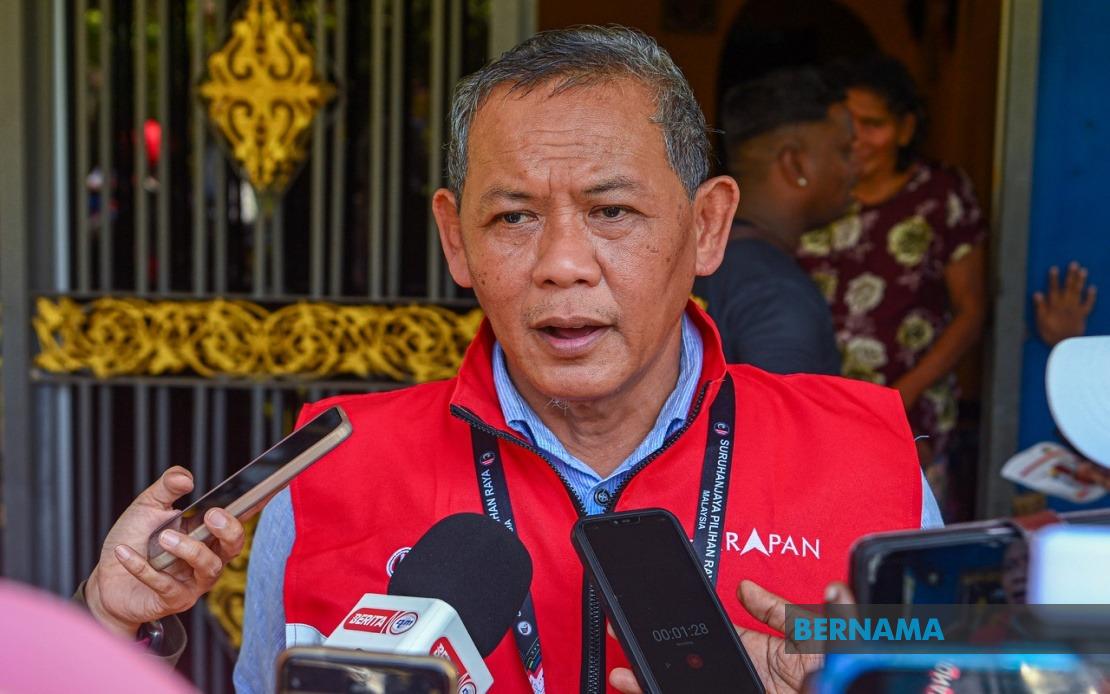
Pakatan Harapan has repositioned its electoral strategy for the upcoming Negeri Sembilan state election by widening the scope of its policy pledges to encompass middle-income households, moving beyond its traditional focus on lower-income groups. The coalition unveiled a manifesto themed 'Negeri Sembilan Kekal Harapan' containing 10 primary commitments aimed at addressing the economic concerns of a substantially broader cross-section of the state's population. State PH chairman Datuk Seri Aminuddin Harun explained that this recalibrated approach reflects the coalition's intention to ensure its welfare and development initiatives deliver meaningful improvements across different income segments rather than concentrating assistance solely on the most economically vulnerable citizens.
The decision to include M40 households—those earning between RM4,850 and RM10,970 monthly—signals a tactical shift in how the coalition frames its social contract with voters in Negeri Sembilan. Previously, Pakatan Harapan's initiatives concentrated primarily on the B40 category, encompassing families with household incomes below RM4,850. By explicitly extending educational access and welfare schemes to middle-income families, the coalition aims to address middle-class anxieties that have become increasingly significant in Malaysian electoral politics. This approach acknowledges that the traditional binary distinction between poor and non-poor has become inadequate for capturing the economic diversity within urban and semi-urban constituencies, particularly as cost-of-living pressures affect households across multiple income brackets.
Aminuddin, who simultaneously serves as Menteri Besar and Port Dickson Member of Parliament, articulated the coalition's confidence in its ability to translate electoral promises into concrete policy outcomes. He stressed that Pakatan Harapan distinguishes itself by treating manifestos as binding commitments rather than aspirational documents drafted solely to secure votes during campaign periods. This emphasis on delivery represents a deliberate contrast with rival political forces, positioning the coalition as results-oriented administrators rather than merely offering rhetorical appeals to voter sentiment.
The coalition's governance record since 2018 provides the empirical foundation for this claim. Aminuddin pointed to the state government's implementation of various welfare and developmental programmes as evidence of institutional competence and political will. He acknowledged, however, that converting pledges into functioning programmes presents substantially greater challenges than the act of making commitments themselves. The difficulty lies not merely in policy design but in navigating bureaucratic implementation, securing adequate budgetary allocation, and sustaining programmes across successive electoral cycles—tasks that require sustained political capital and administrative capacity.
The timing of this manifesto revision reflects broader Malaysian political dynamics. Regional elections increasingly pivot on economic grievances affecting middle-income voters, who constitute a growing electoral force in states like Negeri Sembilan. These households typically possess sufficient resources to escape extreme poverty but remain vulnerable to economic shocks, healthcare costs, and educational expenses. By directly addressing M40 concerns, Pakatan Harapan attempts to consolidate support among voters who might otherwise drift toward opposition promises or remain undecided.
Aminuddin faces a three-cornered contest in Linggi state seat against incumbent Datuk Mohd Faizal Ramli of Barisan Nasional and Zamri Md Said of Bersatu. This configuration reflects the fragmented opposition landscape in Malaysian state politics, where traditional two-party competition has given way to multi-polar contests. Aminuddin's personal campaign will serve as a microcosm for broader coalition messaging, with his victory or defeat potentially influencing overall state-level outcomes.
Beyond specific policy proposals, Aminuddin reiterated an appeal for conduct standards in electoral competition. He urged all political parties to maintain mature campaign standards and refrain from deploying divisive rhetoric capable of undermining communal harmony within Negeri Sembilan. This call reflects growing concern among political leaders regarding the potential for election campaigns to exacerbate social tensions, particularly in states with diverse demographic compositions. The appeal implicitly acknowledges that electoral victory achieved through polarisation carries significant costs for post-election governance and social cohesion.
The 16th Negeri Sembilan state election follows the dissolution of the State Legislative Assembly on June 5, with polling scheduled for August 1 and early voting on July 28. The compressed campaign timeline—roughly six weeks from dissolution to election day—means parties must communicate their policy positions efficiently to voters, relying on both traditional campaigning and digital communication channels. The brevity of the campaign period potentially advantages governing coalitions, which possess administrative machinery and incumbent advantages, over opposition forces that must rapidly mobilise organisational capacity.
For Malaysian voters and regional political observers, the Negeri Sembilan contest offers insights into how electoral coalitions calibrate policy messaging in an era of economic constraint and middle-class anxiety. Pakatan Harapan's explicit inclusion of M40 households suggests recognition that electoral sustainability requires addressing concerns across income spectrum, not merely mobilising traditional core constituencies. Whether this expanded manifesto resonates with voters will become apparent through August 1 polling results, with implications extending beyond Negeri Sembilan to inform political strategy in subsequent state and federal elections across the region.
The manifesto's emphasis on inclusive welfare provision also reflects evolving assumptions about the role of state governments in addressing economic inequality. Rather than accepting the notion that welfare assistance must necessarily concentrate resources on the most vulnerable, Pakatan Harapan's approach posits that broad-based initiatives reaching across income categories may prove more politically sustainable and socially effective. This philosophy, if validated through electoral success, could influence how other state governments structure their own welfare and development programmes.

