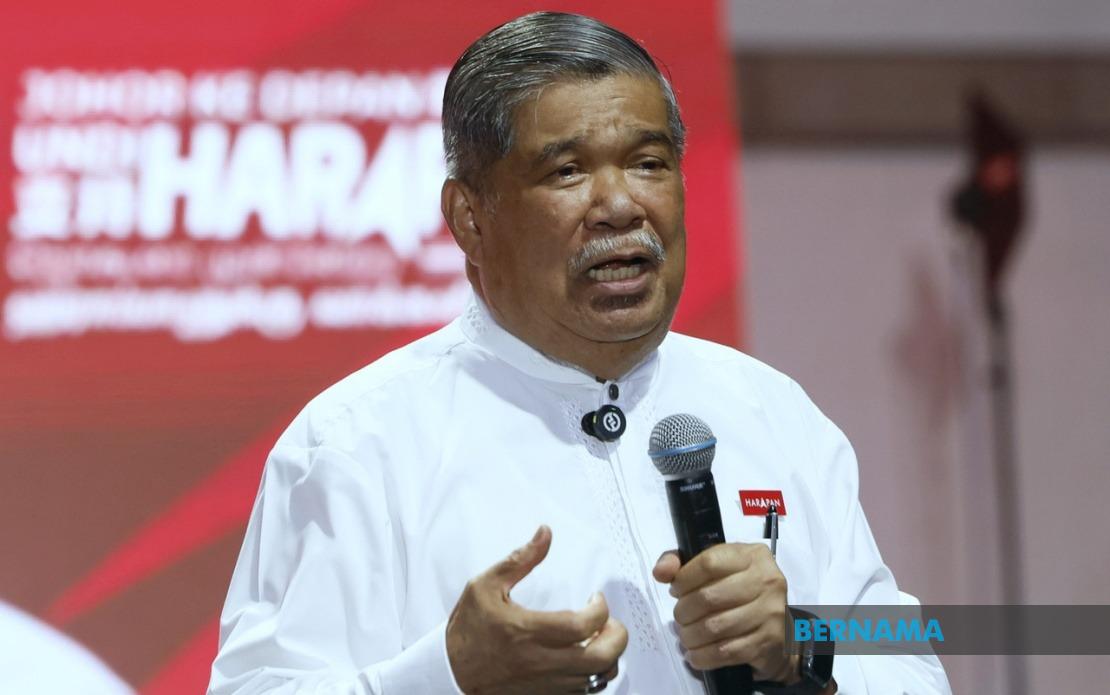
Pakatan Harapan's leadership has brushed aside attempts by PAS to influence voter behaviour in the upcoming Johor state election, with party officials expressing confidence that their campaign strategy and fundamental political message remain unshaken. The directive by PAS—Mohamad Sabu's former coalition partner—instructing party members to support Barisan Nasional candidates in constituencies where PAS is not fielding its own nominees has done little to rattle the opposition alliance ahead of the July 11 polls. Speaking at a PH ceramah in Permas Jaya, the Amanah president and current Minister of Agriculture and Food Security downplayed the significance of such tactical manoeuvres, emphasising that the coalition would proceed with its planned campaign activities without wavering.
Mohamad Sabu's remarks reflect a broader strategic confidence within the PH camp, which is now contesting all 56 Johor state seats directly against BN and PAS. The Amanah leader framed the coalition's resilience as stemming from its core identity as a multiracial and multi-religious political force. This positioning, he argued, distinguishes PH fundamentally from competitors who may rely on narrow appeals to specific ethnic or religious constituencies. By anchoring the party's narrative around inclusive cooperation and shared governance, PH is attempting to elevate the political conversation beyond the tactical vote-splitting manoeuvres that have characterised Malaysian electoral politics in recent years.
Central to PH's strategic messaging is the argument that voters should evaluate candidates on the basis of individual merit, demonstrated service records, and commitment to justice rather than responding to sectarian appeals. Mohamad Sabu explicitly urged Johor residents to resist what he characterised as attempts to mobilise them through racial or religious sentiment, presenting this as both a principled stance and a practical advantage. The emphasis on capability and track record is designed to appeal to a broad spectrum of voters, particularly urban and younger demographics who may prioritise pragmatic governance over identity-based politics. This framing also implicitly challenges the narrative that may underpin the PAS directive, suggesting that such moves are ultimately counterproductive in a state increasingly shaped by economic and quality-of-life concerns.
Another dimension of PH's campaign strategy involves leveraging the importance of administrative coordination between state and federal governments. Mohamad Sabu specifically highlighted how a PH-aligned Johor state administration would facilitate implementation of key development initiatives, ranging from public transport transformation to enhanced border facilities and investment attraction. For Malaysian readers and particularly for Johor residents, this argument carries weight given the state's pivotal economic role and its direct relationship with Singapore—factors that make policy continuity and inter-governmental alignment genuinely consequential. The coalition is positioning itself as the vehicle for seamless governance that can unlock Johor's potential without the friction that might arise from partisan divergence between state and federal authorities.
DAP strategic director Liew Chin Tong, who also serves as Deputy Finance Minister, introduced a critical analytical dimension to PH's assessment of the electoral contest. Rather than focusing primarily on combating rival parties' tactical moves, Liew drew attention to what he identified as the decisive variable: voter turnout, particularly among younger Johoreans. His analysis connected this observation to concrete recent history, pointing to the 2022 Johor state election as evidence of how low participation rates had materially benefited BN. The post-pandemic context is particularly relevant here; Liew noted that previous election cycles saw significant numbers of Johor voters based in Singapore unable to return home due to travel restrictions, a constraint that disproportionately affected opposition-leaning demographics. This interpretation suggests that PH's best path to victory lies not in outmaneuvring opponents through tactical repositioning but in mobilising its base and attracting persuadable voters through substantive policy proposals.
The policy agenda that Liew articulated reveals PH's attempt to address bread-and-butter concerns that resonate across economic classes and demographic groups. Employment quality and wage competitiveness emerged as a principal focus, with Liew pointedly noting the unfortunate reality that young professionals from Johor continue to seek opportunities across the border in Singapore. For a state that wishes to retain talent and build a knowledge economy, this brain drain represents both an economic loss and a governance failure. By prioritising high-quality job creation, PH is attempting to reframe the election around solutions to structural economic challenges rather than allowing the narrative to be dominated by identity politics or personality-based competition. The implicit suggestion is that effective state administration focused on genuine economic development offers more meaningful benefits than rival appeals based on patronage or communal sentiment.
Public infrastructure and environmental management featured prominently in Liew's enumeration of state-level priorities, reflecting both genuine public concerns and the demonstrable impact of state governance on daily life. Issues such as public transport, flood management, drainage and river maintenance, ageing population services, and childcare facilities are not merely policy talking points; they directly affect household budgets, time allocation, safety, and quality of life for ordinary Johor residents. By elevating these concerns, PH signals that its campaign is organised around service delivery rather than abstract constitutional disputes or sectarian grievances. Furthermore, such issues often transcend party lines; a resident struggling with inadequate public transport or insufficient flood defences cares primarily about results, not the partisan identity of the administration providing them.
The emphasis on the Johor-Singapore Special Economic Zone exemplifies how PH is attempting to weave together state-level priorities with federal-level economic initiatives. This project, which could generate substantial employment and investment in the state, depends precisely on the kind of inter-governmental coordination that Mohamad Sabu highlighted. For Malaysian and Southeast Asian observers, this represents an important demonstration of how domestic political competition intersects with regional economic integration. Johor's strategic position makes it a laboratory for cross-border development; successful coordination between PH federal authorities and a PH state government could accelerate initiatives that benefit not only Johor but also Malaysia's broader regional standing and competitiveness.
The divergence between PH's strategy and PAS's tactical directive illuminates a broader tension within Malaysian politics. While PAS has chosen to prioritise inter-coalition coordination with BN through vote consolidation, PH is attempting to build a narrative centred on multiracial cooperation and substantive governance. These represent fundamentally different bets about what voters prioritise and what induces electoral behaviour. PAS's move suggests a calculus that communal voting patterns remain powerful and that instructing supporters to back BN candidates in certain seats will produce measurable dividends. PH's counter-strategy assumes that an expanding cohort of voters—particularly younger, urban, and economically mobile Johoreans—are more responsive to promises of capable administration, economic opportunity, and inclusive governance than to sectarian instruction. The July 11 election will provide empirical evidence about which assumption better reflects voter preferences.
For Malaysian political observers and regional analysts, the Johor contest represents a significant test case in the evolution of post-2018 Malaysian politics. The collapse of the original Pakatan Harapan federal government and the subsequent reconfiguration of alliances created new uncertainties about which political models could sustain voter support. The 2022 Johor state election suggested that BN retained formidable structural advantages despite its federal discomfiture. However, the intervening years have seen shifts in economic conditions, generational composition of the electorate, and public expectations regarding governance standards. Mohamad Sabu and Liew Chin Tong's confidence that PH can succeed by emphasising multiracial cooperation, policy substance, and administrative alignment reflects a calculation that these factors now outweigh the advantages that accrued to BN in previous cycles. Whether this assessment proves correct will shape not only Johor's trajectory but also the broader direction of Malaysian politics as the nation approaches the next federal election cycle.

