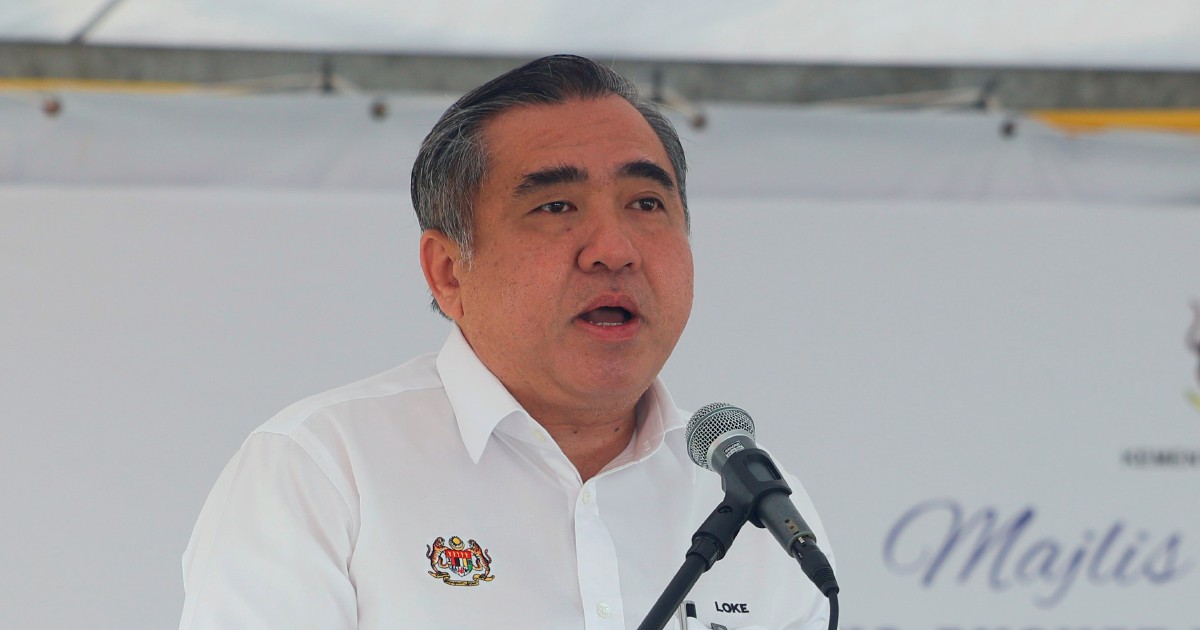
Pakatan Harapan has signalled its readiness to contest the forthcoming Negri Sembilan state election regardless of which political combinations its opponents may form, with party officials emphasizing that they have anticipated all conceivable scenarios involving Barisan Nasional and Perikatan Nasional. The coalition's apparent confidence reflects extensive preparation and strategic planning as the election calendar draws closer and political manoeuvring intensifies across the peninsular states.
The prospect of a formal or informal cooperation between the two major opposition blocs—Barisan Nasional, which governed Malaysia for decades before losing power in 2018, and Perikatan Nasional, which emerged as a significant political force following the Covid-19 pandemic—represents one of several tactical possibilities that Pakatan Harapan leadership has war-gamed. Such an alliance would consolidate centre-right and Islamist-leaning support bases, potentially challenging the ruling coalition's grip on the state government. Negri Sembilan, with its mixed-race and mixed-religious demographics spanning industrial zones, palm oil estates, and urban centres, has historically reflected broader national voting patterns, making it a bellwether state for Malaysian politics.
The confidence displayed by Pakatan Harapan's representatives stems partly from the coalition's track record in Negri Sembilan, where it has maintained legislative representation and electoral competitiveness. The state's political landscape has become increasingly fluid following the collapse of the Perikatan Nasional federal government in August 2021 and the subsequent formation of the current unity administration. Negri Sembilan has seen coalition governments and single-party administrations alternate, and local issues such as economic diversification, land settlement schemes, and infrastructure development feature prominently in voter calculations.
Political analysts suggest that any BN-PN partnership would require careful negotiation over seat allocation, nomination procedures, and campaign messaging. Both blocs have distinct constituencies: Barisan Nasional retains traditional support among rural and Malay-Muslim voters and among certain business-linked communities, while Perikatan Nasional has consolidated more recent support through social media-driven campaigns and youth mobilization. A combined ticket could theoretically consolidate these voting blocs, but risks emerged divisions if one partner felt undersupplied with winnable seats.
For Pakatan Harapan, which comprises the Democratic Action Party, the People's Justice Party, and the National Trust Party, maintaining unity while adapting to such scenarios depends on cohesive messaging and resource allocation. The coalition's strength lies partly in its appeals to urban voters, younger demographics, and communities prioritizing good governance narratives. Recent federal by-elections and state contests have shown that voter preferences remain volatile, with turnout levels and swing dynamics proving unpredictable as ordinary Malaysians weigh multiple factors including pocket-book issues, political stability, and leadership credibility.
The Negri Sembilan context carries particular weight because the state has witnessed internal shifts within both Barisan Nasional and Perikatan Nasional. Component parties within these coalitions have sometimes pursued divergent strategies, and personality-driven politics among state-level figures has occasionally transcended formal party alignments. Previous elections have demonstrated that local personalities, development promises, and community-specific grievances can override national political trends, suggesting that the ultimate outcome will depend on ground-level campaign execution rather than coalition algebra alone.
Regional observers note that preparations for Negri Sembilan elections occur against a backdrop of broader Malaysian political uncertainty. Successive changes in federal administrations, the integration of former Barisan Nasional defectors into various coalitions, and ongoing legal proceedings against senior political figures have created an environment where voter scepticism toward all political players runs deep. This scepticism could benefit insurgent campaigns or parties perceived as fresh alternatives, though no significant third force has yet crystallized at the state level.
Pakatan Harapan's stated preparedness also reflects awareness that opposition unity in Negri Sembilan would complicate its path to government. The coalition has invested considerable organizational energy in the state, building grassroots structures and cultivating candidate pipelines. Should BN and PN contest separately, Pakatan Harapan would face a three-way contest where vote-splitting could prove advantageous; conversely, a united opposition would concentrate anti-Pakatan Harapan sentiment and require the ruling coalition to achieve higher aggregate vote shares to secure legislative control.
The timing of statements regarding potential opposition cooperation reflects strategic calculation about momentum and public perception. By publicly asserting readiness for any scenario, Pakatan Harapan aims to project confidence and reassure supporters while simultaneously avoiding the appearance of nervousness about opposition unity. Such rhetorical positioning has become standard in Malaysian electoral contests, where parties routinely downplay threats while amplifying their own advantages.
Looking forward, the Negri Sembilan election will likely test whether Malaysian voters prioritize partisan loyalty, ideological alignment, local development priorities, or anti-incumbent sentiment. Both Pakatan Harapan and its potential opponents will refine strategies as the election date approaches and as campaign dynamics evolve. The party or coalition best able to frame the contest around salient voter concerns while maintaining internal discipline and avoiding public scandals will possess a decisive advantage. For observers tracking Malaysian political trajectories, Negri Sembilan's outcome could signal whether the current federal balance of power remains stable or faces fresh pressures.

