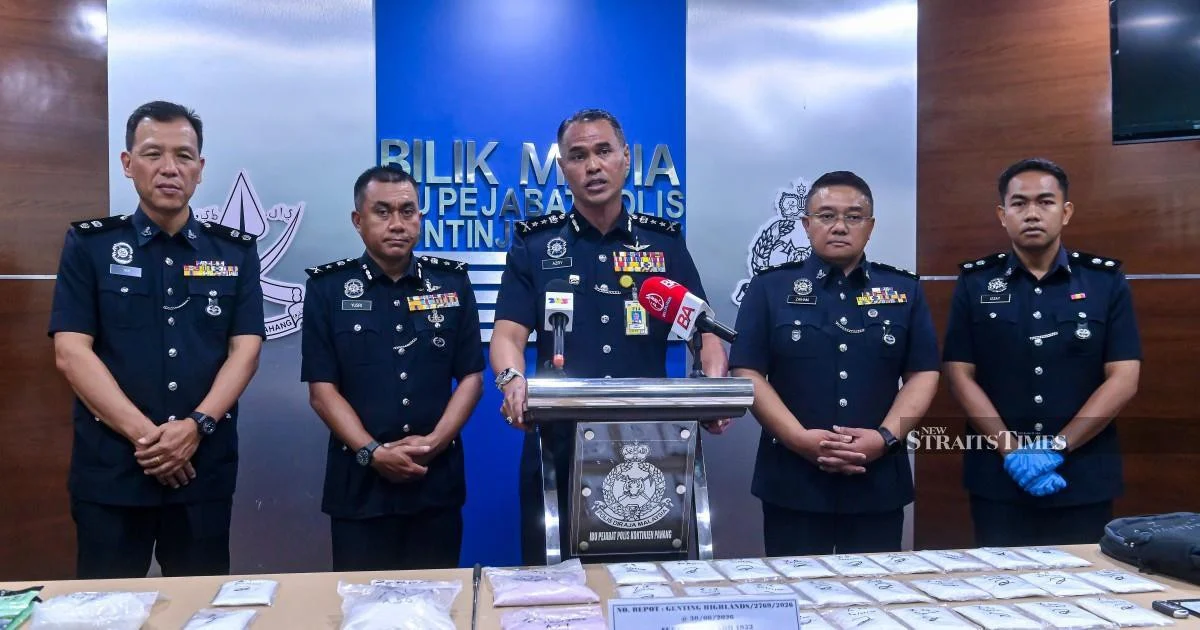
Authorities in Pahang have concluded a major three-day anti-narcotics operation that resulted in the apprehension of 333 individuals and the recovery of contraband, currency, and motor vehicles collectively worth more than RM500,000. Operation Hawk, as the initiative was designated, saturated all 11 districts within the state and was specifically designed to dismantle drug distribution networks operating from identified criminal hotspots.
The scale of enforcement activity in Pahang reflects the ongoing challenge posed by substance trafficking across Malaysia's east coast states. While Pahang has traditionally experienced lower headline crime rates compared to urban centres like Kuala Lumpur and Selangor, drug-related offences remain a persistent concern for law enforcement. The statewide scope of Operation Hawk indicates that authorities view the problem as sufficiently widespread to warrant co-ordinated action across administrative boundaries and population centres ranging from coastal towns to inland rural areas.
The recovery of over RM500,000 in seized assets encompasses multiple categories of contraband typical of drug enforcement operations in Malaysia. Narcotics themselves formed the primary seizure, though the inclusion of cash and vehicles suggests authorities targeted not merely end-level street dealers but also mid-tier distributors and money-laundering operations. Such seizures disrupt not only drug supply chains but also the financial infrastructure enabling traffickers to reinvest profits and expand operations.
The targeting of all 11 districts—from urban concentrations in Kuantan to smaller municipalities in peripheral areas—demonstrates a comprehensive approach rather than a focus narrowed to high-visibility crime zones. This inclusive enforcement strategy reflects intelligence suggesting that drug markets in Pahang have become geographically dispersed, with trafficking operations establishing themselves in smaller towns and rural localities where oversight may be lighter than in major cities.
From a regional perspective, Pahang's anti-drug operations carry significance beyond the state boundaries. The state's geographic position along major trafficking corridors linking Thailand and Singapore means that enforcement successes here can interrupt supply chains serving multiple Malaysian states. Additionally, Pahang's ports and overland borders facilitate both the importation of drugs from source countries and transshipment to other Malaysian jurisdictions, making operational effectiveness in Pahang consequential for the broader national drug control effort.
The arrest of 333 individuals over three days represents intensive field deployment by enforcement agencies. Sustaining such operational tempo requires mobilising substantial police resources, co-ordinating across district-level commands, and conducting surveillance and intelligence work preceding the operation itself. The concentration of enforcement activity into a defined timeframe also maximises the disruptive impact on trafficking networks, as criminals have limited opportunity to disperse or conceal operations before raids commence.
Malaysian drug enforcement agencies have increasingly adopted this model of time-concentrated, territory-wide operations as a tactic for overcoming the inherent advantages criminals possess in ongoing enforcement environments. By shifting from routine patrol-based interdiction to scheduled intensive operations, authorities can achieve surprise and overwhelm the responsive capacity of organised trafficking groups. However, such operations must be iteratively repeated to maintain pressure, as trafficking networks typically reconstitute after short-term disruptions.
The seizure of vehicles alongside drugs and cash reflects the sophisticated criminal infrastructure underlying drug distribution in Malaysia. Vehicles serve multiple functions within trafficking enterprises—transport of merchandise, escape from enforcement, and as collateral or assets for money laundering. Removing vehicles from circulation therefore strikes at operational capability beyond the immediate loss of individual vehicles themselves.
For communities in Pahang, Operation Hawk may provide temporary relief from visible drug-related disorder and trafficking activity, though sustainability depends on follow-up enforcement and demand-reduction initiatives. The concentration of enforcement resources into three days necessarily means reduced enforcement intensity on other days, potentially creating windows when trafficking resumes. Effective drug control therefore requires sustained baseline enforcement and intelligence operations complementing periodic intensive sweeps.
The monetary value attributed to seized assets—exceeding RM500,000—serves both an operational and communicative function. From an operational standpoint, drug asset seizures deprive criminal enterprises of capital, hampering expansion and reinvestment. From a communicative standpoint, publicising large seizure figures reinforces public messaging that enforcement agencies maintain capacity and commitment to counter trafficking, potentially deterring marginal participants and sustaining community confidence in law enforcement institutions.
Looking forward, Operation Hawk's success in generating arrests and seizures across all 11 districts will likely feature in assessments of police performance and anti-drug strategy effectiveness in Pahang. However, meaningful evaluation extends beyond arrest counts and asset values to encompass sustained reductions in drug availability, market prices, purity levels, and prevalence of addiction-related harms. These deeper impacts become apparent only through longitudinal monitoring rather than immediate post-operation assessment.

