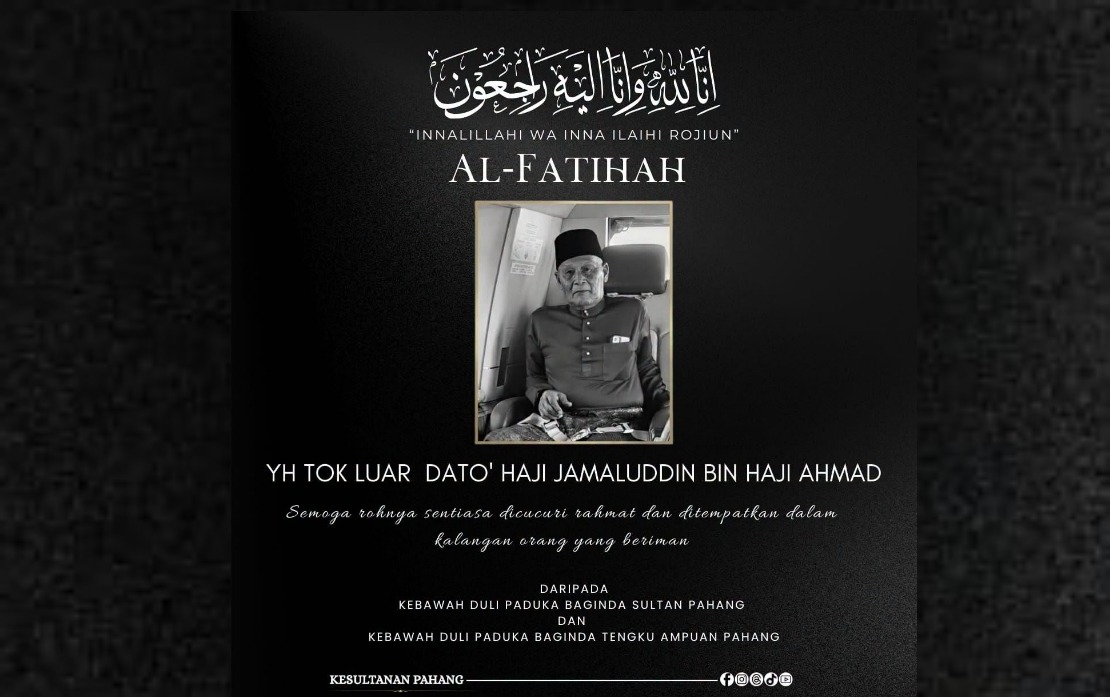
The Sultan of Pahang, Al-Sultan Abdullah Ri'ayatuddin Al-Mustafa Billah Shah, and Tengku Ampuan of Pahang Tunku Azizah Aminah Maimunah Iskandariah extended their condolences to the family of Tok Luar Datuk Jamaluddin Ahmad on June 28, following his death earlier that morning at Tengku Ampuan Afzan Hospital at 6.48 am. The royal family's message of sympathy was conveyed through a statement posted on the official Kesultanan Pahang Facebook page, reflecting the close bond between the deceased and the sultanate institution.
Datuk Jamaluddin was remembered by Pahang's royal household as a steadfast advocate and loyal companion to the Pahang Sultanate throughout his life. His unwavering dedication to supporting the institution earned him recognition and respect within palace circles. The passing of such a figure represents a significant loss not only to his immediate family but also to the broader network of individuals who have worked alongside the royal house in matters of state and ceremonial importance.
In their statement, the Sultan and Tengku Ampuan expressed their profound sadness at his demise and articulated their prayers for his spiritual well-being. The royal family invoked Islamic supplications on behalf of the deceased, requesting divine mercy upon his soul, forgiveness for any transgressions, acceptance of his righteous deeds, and his placement among the faithful and righteous servants in the hereafter. Such religious sentiments are customary in Malaysia's Islamic framework and reflect the spiritual dimensions of royal mourning traditions.
Beyond personal grief, the royal couple extended their sympathies to Jamaluddin's family members during this period of bereavement. They conveyed hopes that the bereaved household would be granted the emotional and spiritual fortitude necessary to navigate their loss with dignity and composure. In Islamic tradition, patience during times of grief is considered a virtue, and the royal family's invocation of strength for the family underscores this cultural value deeply rooted in Malaysian society.
The death of prominent individuals connected to state institutions often carries broader implications for administrative and ceremonial functions within the sultanate system. Figures like Tok Luar Datuk Jamaluddin, who maintain long-standing relationships with royal establishments, frequently serve as institutional anchors and custodians of traditions that link the contemporary monarchy to its historical roots. Their passing marks the end of an era of institutional memory and personal connection to the sultanate's administration.
Pahang's sultanate has historically maintained strong institutional traditions, with various officials and supporters playing crucial roles in ceremonial, advisory, and representative capacities. Individuals who earn the designation of "Tok Luar" typically occupy positions of significant cultural and administrative standing within the state hierarchy. Such recognition is rarely bestowed and reflects decades of service and demonstrated loyalty to the institution and the broader Pahang community.
The public acknowledgment of Jamaluddin's death through an official royal statement serves multiple purposes within Malaysia's constitutional monarchy framework. It affirms the continuing relevance of the sultanate institution in contemporary society while simultaneously honoring individuals who have dedicated themselves to its service. For residents of Pahang and observers of Malaysian royal affairs, such gestures reinforce the interconnected nature of state institutions and the prominent citizens who contribute to their functioning.
The timing of this tribute, released through modern social media platforms, reflects how contemporary Malaysian royal households balance traditional protocols with contemporary communication methods. The Kesultanan Pahang's Facebook presence represents an effort to maintain transparency and direct connection with the public, ensuring that significant institutional moments reach a broad audience beyond traditional court circles.
In the Malaysian context, where Islamic traditions and constitutional monarchy intersect, royal expressions of condolence carry particular weight and significance. They acknowledge not only the individual's contributions but also affirm the continuity of state institutions and their commitment to honoring those who serve them faithfully. The Sultan and Tengku Ampuan's message reinforces that service to the sultanate is recognized and remembered by the highest levels of state authority.
For the Pahang community and the broader Malaysian public, such occasions offer opportunities to reflect on institutional loyalty, service, and the networks of relationships that sustain governmental structures at state and federal levels. The passing of individuals like Tok Luar Datuk Jamaluddin Ahmad reminds citizens of the often-invisible contributions made by numerous individuals who work behind the scenes to maintain institutional continuity and stability across generations.

