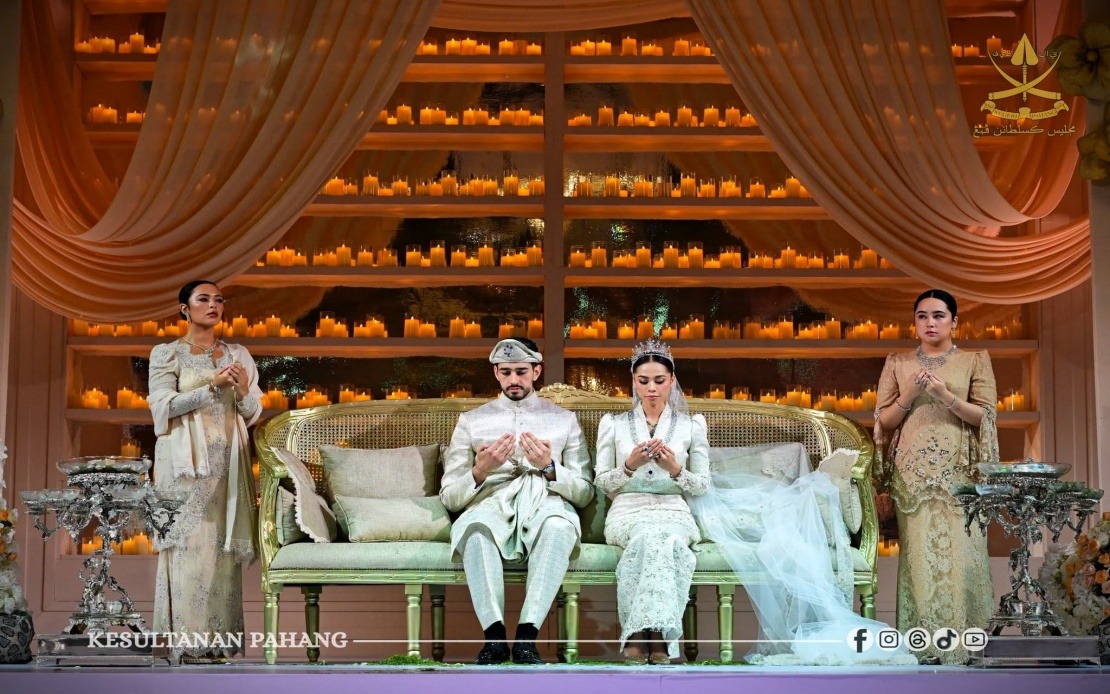
Pahang's reigning Sultan, Al-Sultan Abdullah Ri'ayatuddin Al-Mustafa Billah Shah, graced the wedding reception of his daughter Tengku Puteri Raja Tengku Puteri Ilyana Alia on August 9, celebrating her union with Christopher Lionel Froggatt at a Kuala Lumpur hotel. The event brought together members of the Pahang royal household and distinguished guests, underscoring the significance of the occasion within Malaysia's royal circles.
The Sultan arrived accompanied by Tengku Hassanal Ibrahim Alam Shah, the Regent of Pahang, alongside other members of the extended royal family. This ensemble of dignitaries reflected the importance placed by the ruling house on marking the newlyweds' celebration with full ceremonial dignity. The gathering also included high-ranking government officials and international representatives, signalling the cross-border connections of the royal union.
Pahang's Menteri Besar Datuk Seri Wan Rosdy Wan Ismail attended the reception in his official capacity, representing the state administration's participation in royal festivities. His presence alongside Shaikh Mohammed Hamad Tahnoon Al Nahyan, who represented the President of the United Arab Emirates, demonstrated the diplomatic dimensions of the event and Malaysia's strengthening ties with Gulf nations.
The reception featured a series of traditional Malay-Muslim ceremonies conducted with meticulous protocol. The newlyweds first took their position on the dais, where Tengku Puteri Seri Lela Wangsa Tengku Tan Sri Meriam Sultan Ahmad Shah performed the 'Istiadat Menyuap Nasi Semangat', a symbolic feeding ceremony that holds deep cultural significance in Malay royal weddings.
Following this opening ritual, the couple remained at the centre of the dais while the 'Istiadat Bersanding dan Merenjis' ceremony unfolded. This traditional sitting-in-state and water-sprinkling ritual was personally conducted by Sultan Al-Sultan Abdullah himself, signifying his blessing and formal recognition of the marriage. Family members subsequently participated in the water-sprinkling component, reinforcing the collective family endorsement of the union.
The Sultan further demonstrated his paternal blessing by performing the 'Istiadat Meletakkan Panca Bicara', a gesture that invokes a father's protective and benevolent wishes upon the newlyweds. This ceremonial act, deeply rooted in Pahang's royal customs, carries symbolic weight beyond mere formality—it represents the Sultan's formal commitment to the couple's wellbeing and prosperity.
The spiritual dimension of the celebration was honoured when Pahang Mufti Datuk Dr Asmadi Mohamed Naim recited prayers for the bride and groom. This invocation sought divine blessings for their marriage, reflecting the integration of Islamic spiritual practices within Malaysia's royal ceremonial framework. Such inclusion underscores how Malaysia's monarchy balances cultural tradition with religious observance in marking significant family milestones.
The wedding represents a notable moment in Pahang's contemporary royal history, bringing together the state's ruling establishment with international guests. The presence of UAE representation highlights Malaysia's diplomatic engagements in the Middle East and suggests possible family or business connections between the Pahang royal house and Gulf interests. Such international participation in royal ceremonies has become increasingly common among Malaysia's sultanates, reflecting the globalised nature of modern royal families.
The detailed observance of traditional ceremonies at the reception illustrates how Malaysia's royal institutions continue to preserve classical protocols and customs despite modernisation. The deliberate staging of each ritual, from the symbolic feeding to the blessing ceremonies, demonstrates the monarchy's commitment to cultural continuity and the education of younger generations in royal traditions. These practices, transmitted through lived ceremonial experience, serve to reinforce the legitimacy and cultural centrality of the institution.
For Malaysian and regional observers, the wedding serves as a reminder of the continuing relevance of constitutional monarchy in contemporary Southeast Asia. The respect shown by government officials, international dignitaries, and family members toward the Sultan and his household reflects the enduring cultural and political significance of Pahang's monarchy. As Malaysia navigates evolving political and social landscapes, the preservation of these royal ceremonies suggests a deliberate institutional strategy to maintain tradition whilst engaging with modern governance realities.

