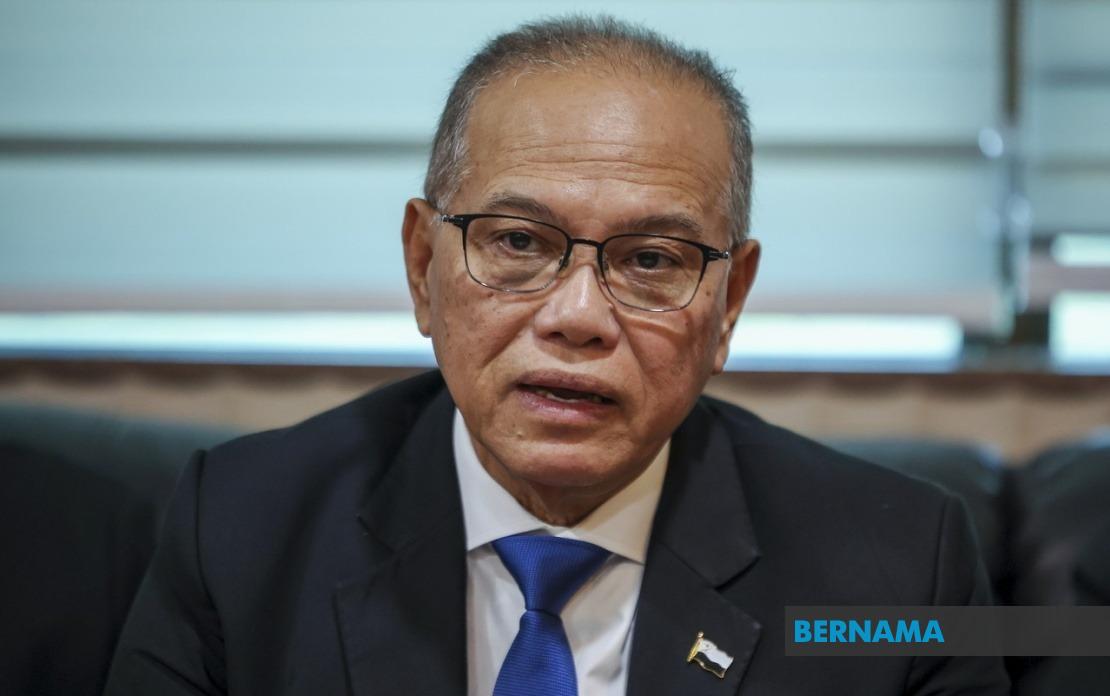
The Pahang state government has amassed RM921.72 million in revenue collection as of August 26, demonstrating solid fiscal progress midway through the financial year. According to Menteri Besar Datuk Seri Wan Rosdy Wan Ismail, this figure represents 72 percent of the state's RM1.279 billion revenue target for 2026, a performance benchmark that suggests the administration remains well-positioned to meet its full-year obligations. The Menteri Besar shared these details during the Pahang State Legislative Assembly sitting at Wisma Sri Pahang when responding to questions regarding the state government's economic trajectory and implementation of flagship development initiatives.
The revenue performance, according to Wan Rosdy, reflects a broader pattern of financial stability that has characterised Pahang's administrative approach this year. He framed the collection rate as evidence that state finances remain robust and properly aligned with budgetary expectations, a crucial metric for any regional government seeking to balance immediate public service delivery with longer-term development aspirations. For Malaysian states, maintaining consistent revenue collection during uncertain economic periods typically signals effective tax administration and steady business activity within the jurisdiction.
Pahang's economic fundamentals have shown encouraging signs beyond the revenue figures. The state's Gross Domestic Product expanded to RM71 billion in 2025, up from RM68.8 billion the previous year, demonstrating year-on-year growth that underpins the revenue collection achievements. This GDP trajectory matters significantly for the broader Southeast Asian regional economy, as Pahang's diversified economy—spanning manufacturing, agriculture, mineral extraction, and tourism—serves as a bellwether for broader Malaysian economic health. The Menteri Besar's emphasis on sustained GDP growth suggests that the state government views its financial position as fundamentally sound rather than merely meeting targets through administrative efficiency alone.
Investment inflows into Pahang have also exhibited strength according to the government's tracking. As of August 2026, committed investments reached RM11.47 billion, indicating that businesses and development projects maintain confidence in the state's economic prospects. Realised investments, representing capital that has already been deployed, totalled RM1.044 billion, a figure that converts private-sector confidence into tangible economic activity and employment generation. These investment metrics prove particularly relevant for Southeast Asian investors and Malaysian companies assessing regional expansion opportunities, as Pahang's investment attraction reflects broader competitiveness indicators.
The stable financial position has enabled the state government to substantially boost welfare and community development spending. Through the Makmur Pahang Initiative—the state's primary vehicle for direct citizen benefit programmes—the administration has allocated RM173.93 million across the 2024-2026 period. The progression of allocations reveals an increasing commitment to the initiative: RM38.8 million in 2024, RM50.54 million in 2025, and a significant jump to RM84.59 million in 2026. This ascending allocation pattern suggests that improving state finances are translating into enhanced social spending, a political and practical priority for state governments seeking to justify development policies to constituents.
The Makmur Pahang Initiative itself warrants closer examination, as such programmes have become standard practice across Malaysian states attempting to balance market-oriented development with social redistribution. These initiatives typically encompass direct cash transfers, targeted subsidy schemes, small-business support, and community infrastructure projects designed to ensure that growth benefits reach ordinary citizens rather than concentrating solely among corporate and elite beneficiaries. Wan Rosdy's commitment to increase allocations further through the upcoming state budget suggests that revenue growth is expected to continue, providing fiscal space for expanded welfare commitments.
From a governance perspective, the Menteri Besar's public disclosure of revenue targets and achievement rates reflects a transparency approach that contrasts with historical Malaysian state practice. Publishing that only 72 percent of the annual target has been achieved by late August—rather than claiming imminent target completion—demonstrates a willingness to acknowledge the timeline reality. This honesty potentially strengthens public confidence in government financial reporting, particularly important given historical controversies surrounding state-level fiscal management across Malaysia.
The economic and financial performance data carries implications for Malaysia's overall competitiveness within Southeast Asia. Pahang contributes meaningfully to Malaysia's national GDP and serves as a crucial FDI destination, particularly for manufacturing and resource-based sectors. The state's continued investment attraction and GDP growth suggest that Malaysia retains competitive advantages in attracting regional capital, a significant consideration as countries across ASEAN compete for development funding and industrial relocation from high-cost jurisdictions.
Looking forward, the Menteri Besar's indication that Makmur Pahang allocations will increase through next year's budget raises questions about Pahang's medium-term fiscal sustainability. While current collection rates and investment inflows appear healthy, sustained revenue growth depends on continued economic expansion and effective tax administration. Any significant downturn in investor confidence, commodity prices, or manufacturing activity could pressure future collections. The state government's willingness to expand welfare commitments based on optimistic revenue projections suggests confidence in sustained growth, but also introduces risk if economic conditions deteriorate.
The broader context of state-level fiscal autonomy within Malaysia's federal system also merits consideration. Pahang's revenue collection efforts occur within a framework where substantial funds flow from federal sources through revenue-sharing arrangements and grant allocations. The state's ability to increase Makmur Pahang spending reflects not only improved collections but also federal fiscal transfers. Understanding state finances therefore requires attention to both local revenue generation and federal-state financial relationships.
For investors and businesses operating within Pahang or considering expansion, the revenue and investment data suggest a state government confident enough in its financial position to commit resources to social programmes and development initiatives. This confidence typically translates into government stability, policy continuity, and willingness to invest in business-enabling infrastructure. The Menteri Besar's public emphasis on achieving financial targets and delivering citizen benefits reinforces the narrative of effective state management.

