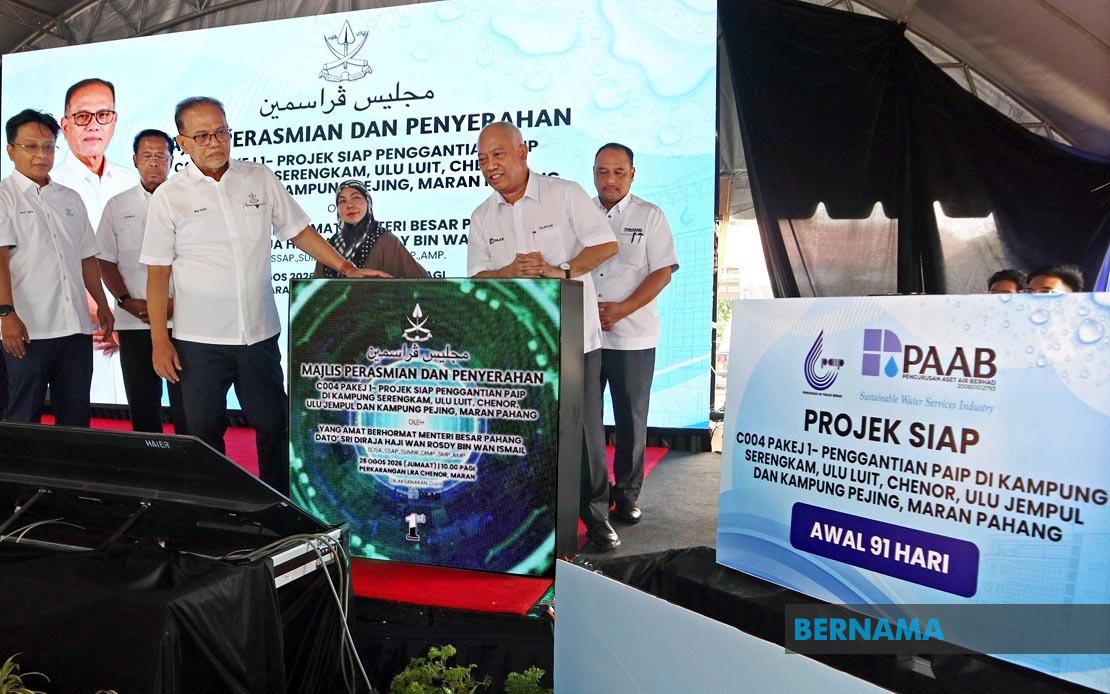
The Pahang state government has committed to devising a multifaceted approach to resolve the persistent shallowing of Sungai Pahang, particularly in vulnerable stretches such as Kampung Pesagi in Maran district. The initiative comes as local communities continue to grapple with the water level challenges that have hindered navigation, fishing operations, and agricultural activities dependent on the river's reliable flow. Menteri Besar Datuk Seri Wan Rosdy Wan Ismail outlined the state's determination to find sustainable remedies during a recent infrastructure ceremony, signalling that this environmental concern has risen to the highest levels of state administration.
The government's approach hinges on first obtaining a thorough technical assessment from relevant agencies before committing to any intervention measures. Wan Rosdy emphasised that decisions will be guided by detailed reports from district authorities, which will subsequently be presented to the state executive council for rigorous evaluation and refinement. This methodical process reflects an acknowledgement that river management requires careful analysis rather than ad-hoc solutions, particularly given the ecological and socioeconomic complexities involved. The comprehensive review is intended to distinguish between temporary relief measures and permanent structural changes that might stabilise water levels across affected zones.
The shallowing problem carries broader implications for the regional economy and community welfare. Residents relying on the river for livelihoods—from fishermen to transporters who historically used waterways—face mounting uncertainty. The state government's recognition that any intervention must rest on solid scientific and engineering foundations demonstrates maturity in regional governance, contrasting with purely political responses that might promise quick fixes without sustainability. By emphasising the need for short-term, medium-term, and long-term measures simultaneously, Pahang authorities suggest they understand this is neither a seasonal anomaly nor a problem amenable to single solutions.
Parallel to addressing the river challenge, the Pahang government continues advancing water and energy infrastructure projects that collectively shape the state's development trajectory. The Maran district has been a focal point for the pipe replacement programme designed to enhance water supply reliability, with four other districts already achieving resolution rates exceeding 90 per cent. The completion of the Chenor Water Treatment Plant's pipe replacement project underscores the government's multifaceted approach to water security, tackling both supply infrastructure and natural watercourse management simultaneously.
Larger energy infrastructure investments are also reshaping Pahang's capacity to attract business and support population growth. Tenaga Nasional Berhad's initiative to construct a 500kV Transmission Main Intake Substation in Kampung Awah represents a significant regional strategic initiative. With a projected investment of approximately RM350 million and completion targeted for 2030, this facility will form part of a connected network linking key East Coast locations. Such infrastructure typically generates cascading economic benefits, from construction employment to increased industrial capacity that makes regions more attractive for manufacturing and technology investment.
The strategic importance of the TNB project extends beyond Pahang's immediate borders. By strengthening the East Coast's energy transmission network, the state positions itself as a critical node in Malaysia's broader electrical distribution system. A more robust, resilient energy infrastructure reduces vulnerability to supply disruptions and creates conditions for power-intensive industries to establish operations with greater confidence. The interconnection of strategic locations across the region suggests coordinated planning among East Coast states, potentially fostering collaborative development initiatives that transcend individual state boundaries.
For Malaysian stakeholders and regional observers, Pahang's dual focus on environmental remediation and infrastructure modernisation illustrates the interconnectedness of development challenges. A shallow river handicaps local livelihoods while constraining regional logistics; simultaneously, energy infrastructure investments amplify a state's ability to capitalise on industrial opportunities. The state government appears cognisant that competitive positioning in Malaysia's economic landscape requires attention to multiple development fronts rather than isolated sectoral fixes. Job creation and improved living standards—goals repeatedly articulated by Wan Rosdy—emerge from such comprehensive approaches rather than from piecemeal interventions.
The transparency around seeking external expertise and engaging the state executive council also signals institutional confidence. Rather than defensive posturing about the river problem, state leaders have publicly acknowledged the issue and committed to evidence-based solutions. This openness may ease community anxieties while establishing a replicable template for other Malaysian states facing similar environmental challenges. The willingness to conduct thorough studies before implementation, though potentially frustrating for those seeking immediate relief, ultimately protects public resources and community interests by avoiding costly mistakes.
As the Pahang government pursues these interconnected initiatives, the state's trajectory will partly depend on execution discipline. Both the Sungai Pahang remediation programme and the energy infrastructure projects require sustained coordination across government agencies, technical expertise, and financial commitments spanning years. The appointment of capable teams and the maintenance of political backing through budgetary cycles will determine whether current commitments materialise into tangible improvements. For riverside communities and businesses dependent on Sungai Pahang, the coming months and years will test whether government words translate into engineering reality and restored livelihoods.

