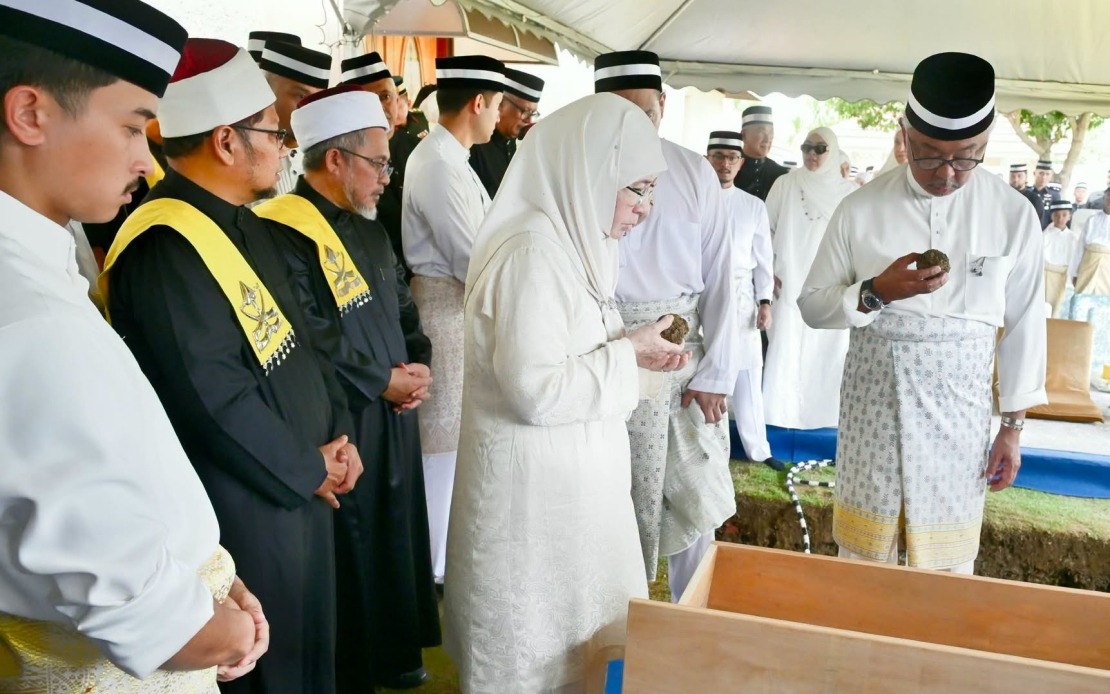
The Sultan of Pahang, Al-Sultan Abdullah Ri'ayatuddin Al-Mustafa Billah Shah, has declared a three-day mourning period across the Pahang royal household in the wake of his elder sister's death. Tengku Puteri Seri Kemala Tengku Datuk Seri Aishah, a prominent member of the state's royal family, passed away on Wednesday evening at a Kuala Lumpur medical facility, marking a significant loss for Malaysia's royal institution and the sultanate of Pahang specifically.
The official notification came through Maj Gen Datuk Mohamed Zahari Yahya, who serves as Comptroller of the Royal Household of the Sultan of Pahang. In his capacity, he outlined the formal observances that would characterise this period of remembrance, which commenced immediately and would extend through Saturday. The structured mourning protocol reflects longstanding protocols within Malaysia's royal institutions, where ceremonial observance serves both to honour the deceased and to demonstrate the gravity with which the loss is regarded by the state.
Members of the extended royal family face specific dress code requirements during the three-day period. All individuals within the household must wear white clothing as a symbol of mourning, whilst male members face additional sartorial obligations that underscore the formal nature of the observance. These requirements, though straightforward in their prescription, carry profound cultural and ceremonial significance within Pahang's royal tradition and broader Islamic mourning customs observed throughout Malaysia.
The death represents a particularly acute loss for the reigning Sultan and his consort, the Tengku Ampuan of Pahang Tunku Azizah Aminah Maimunah Iskandariah. The sibling relationship between the Sultan and the late Tengku Puteri would have encompassed decades of shared royal responsibility and family bonds, making this transition a deeply personal matter for the state's leading family. Royal siblings often serve important advisory and ceremonial roles within sultanate structures, and the loss of an elder sister carries both personal and institutional dimensions.
Following her death at 9.15 pm on Wednesday, Tengku Puteri Seri Kemala was accorded a final resting place befitting her station. She was interred at the Royal Mausoleum in Pekan, the historic capital of Pahang state, during proceedings that took place the same afternoon. This location holds profound significance as the burial ground for Pahang's most distinguished royal personages, and her interment there reflects her standing within the sultanate's hierarchy and history.
Beyond the immediate royal circle, the Comptroller's statement extended an invitation to the broader Pahang community to participate in spiritual observances honouring the deceased. Citizens of the state were encouraged to recite Al-Fatihah, the opening chapter of the Quran, and to offer prayers on behalf of Tengku Puteri's soul. This invocation reflects the Islamic tradition of collective remembrance and the belief that spiritual intercession from the living community can benefit the departed, a practice deeply embedded in Malaysian society regardless of formal royal connections.
The public prayer request carries particular weight given Pahang's identity as a sultanate with deep Islamic roots and governance structures explicitly grounded in Islamic principles. The Sultan, as the head of Islam in Pahang under Malaysia's constitutional arrangement, functions not merely as a secular authority but as a custodian of religious observance within his domain. His encouragement for the people to pray for Tengku Puteri's forgiveness and entry into paradise demonstrates how royal mourning practices intersect with broader religious and community responsibilities.
This mourning period, while observing formal three-day parameters, represents continuity with established protocols governing royal deaths across Malaysia's sultanates. Each state maintains its own traditional practices shaped by historical precedent and Islamic custom, yet common threads run through these observances. The requirement for specific dress, the designation of precise temporal boundaries, and the formal communications through designated officials all echo practices maintained across Peninsular Malaysia's nine states with reigning monarchs.
For Pahang particularly, the death of Tengku Puteri Seri Kemala marks a moment of transition within a family that has shaped the state's governance and identity. The three-day mourning period provides structured time for both the royal household and the broader Pahang community to process this loss and honour the deceased's place within the state's institutional memory. As the mourning period progresses through the weekend, it serves as a reminder of the interconnected bonds between Malaysia's royal institutions and the publics they serve.

