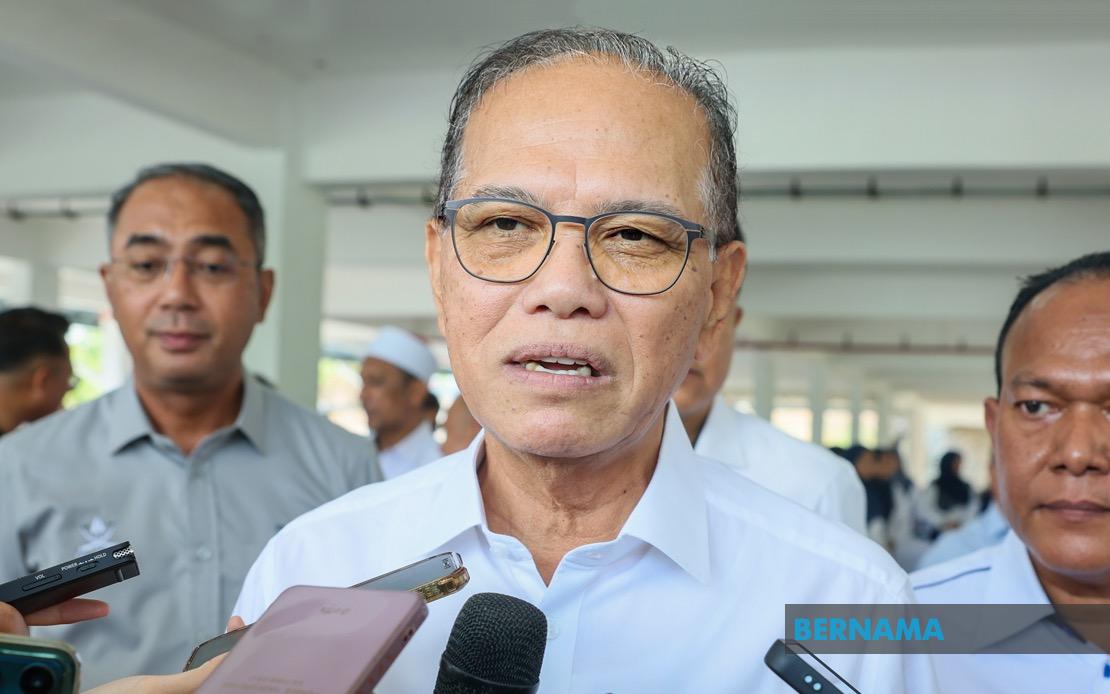
Datuk Seri Wan Rosdy Wan Ismail, Pahang's Menteri Besar, has made a direct appeal to young members of the Orang Asli community to embrace technical and vocational education as a gateway to improved employment outcomes and sustained engagement with the education system. Speaking at the YP Advanced Skills Malaysian Skills Certificate and Diploma Convocation Ceremony at the Sultan Haji Ahmad Shah Silver Jubilee Hall in Kuantan, Wan Rosdy highlighted the urgency of reversing patterns of educational disengagement that have long plagued indigenous communities across the state.
The remarks come against a backdrop of significant demographic responsibility. Pahang is home to approximately 90,000 Orang Asli, a population segment that has historically experienced lower completion rates in formal schooling. The Menteri Besar's public intervention signals growing recognition at the state level that conventional academic pathways alone may not serve all learners equally, and that alternative routes through skills training deserve active promotion and institutional support.
Wan Rosdy specifically celebrated the achievements of 388 graduates from YP Advanced Skills' various programmes, positioning the convocation as tangible evidence that vocational credentials can lead to meaningful employment or entrepreneurial opportunity. His remarks contained an implicit message: that technical qualifications represent legitimate, professionally valued alternatives rather than consolation options for those unable to pursue university degrees. This framing matters considerably in communities where traditional educational hierarchies have long privileged academic over practical training.
The Menteri Besar articulated an expectation that YP Advanced Skills graduates returning to their villages would serve as aspirational figures within their communities, demonstrating to younger peers that skill development offers concrete economic benefits. This peer-led motivation model reflects an understanding that abstract policy announcements rarely shift educational choices within tight-knit communities; instead, visible success by known individuals tends to carry greater persuasive weight. By explicitly hoping these graduates would become role models, Wan Rosdy attempted to mobilise social influence as an instrument of educational policy.
The appeal carries particular weight given ongoing national debates about Malaysia's educational outcomes and workforce readiness. The country has invested substantially in expanding TVET infrastructure and promoting a vocational pathway as part of its broader economic transformation strategy. However, uptake among indigenous populations has remained modest, reflecting complex barriers ranging from geographic isolation and limited local awareness to historical underrepresentation in skills training institutions. Pahang's initiative, therefore, sits within this wider context of attempting to broaden participation in technical education among underserved demographics.
Wan Rosdy's observation that skills training no longer represents a secondary educational choice reflects a recalibration of how vocational pathways are culturally positioned within Malaysia. Traditionally, TVET has battled perceptions of lower status compared to academic tracks, a prejudice that has constrained enrolment even when labour market demand for skilled technicians remained strong. His public reframing—treating skills qualifications as equally legitimate and economically valuable—aims to dismantle these ingrained hierarchies at the state level.
The flexibility inherent in vocational qualifications merits emphasis. Wan Rosdy noted that graduates can either establish their own enterprises or pursue employment, with both avenues offering viable economic futures. This dual pathway is particularly relevant for Orang Asli communities, where entrepreneurship and self-employment have historically provided alternatives to formal employment markets that may present discrimination or geographic constraints. Skills training that enables either direction thus addresses economic agency in ways conventional academic education sometimes does not.
YP Advanced Skills' track record in producing graduates with strong character and high employability, as the Menteri Besar acknowledged, suggests the institution has moved beyond purely technical instruction to embed broader workplace competencies—communication, team collaboration, problem-solving—that employers increasingly demand. This holistic approach helps graduates navigate not just immediate job placement but longer-term career progression, particularly valuable for first-generation skilled workers from communities with limited professional networks.
Wan Rosdy's exhortation that graduates pursue further education whenever possible indicates recognition that while TVET provides immediate employability, stacked credentials—combining vocational diplomas with subsequent degree-level study—can unlock even broader opportunities. This encouragement of lifelong learning pathways, rather than positioning a single vocational qualification as a terminal achievement, reflects more sophisticated workforce development thinking than earlier vocational education models sometimes embodied.
The Orang Asli community's persistent school dropout challenge extends beyond mere academic performance; it reflects structural inequities including inadequate infrastructure in rural settlements, cultural disconnection from mainstream schooling systems, and limited visibility of educational pathways translated into tangible livelihood improvements for community members. Addressing these requires not just policy pronouncements but sustained institutional commitment, improved access to quality TVET facilities in accessible locations, and ongoing community engagement to demonstrate genuine economic returns from credential attainment.
For Southeast Asia's broader development agenda, Pahang's initiative illustrates how regional governments are beginning to address skills development as central to inclusive growth, particularly among indigenous and marginalised populations. As Malaysia and its peers compete for position in the regional and global economy, mobilising all available talent—including from traditionally excluded communities—becomes both ethically imperative and economically strategic. The Orang Asli youth constitute valuable human potential; enabling their transition from education to economic participation through vocational pathways represents sound policy aligned with contemporary labour market realities.

