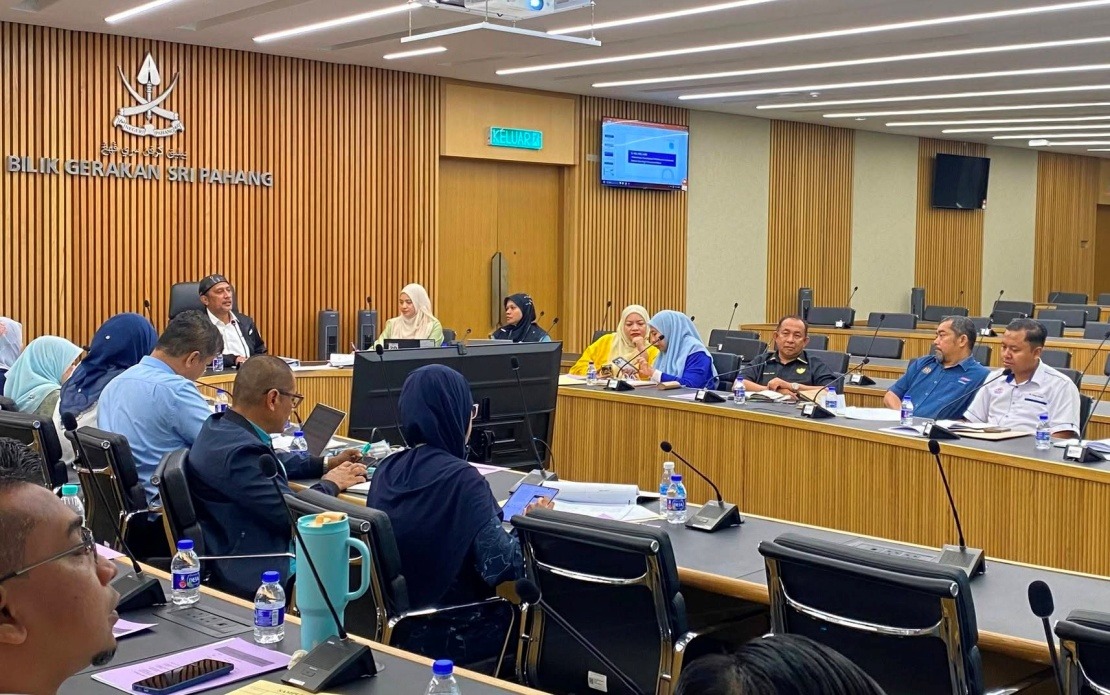
The Pahang state government has instructed the Department of Orang Asli Development (JAKOA), the Pahang Land and Mines Office (PTG), and relevant district land offices to undertake a comprehensive review of assistance mechanisms aimed at resolving a complex land dispute affecting the Orang Asli community in Kampung Sungai Cot, Maran. The directive comes as tensions have surfaced over overlapping land claims in the area, prompting state authorities to intervene with a structured approach to arbitrate competing interests.
Datak Seri Syed Ibrahim Syed Ahmad, who chairs Pahang's Islamic Religious Affairs, Rural Development and Orang Asli Affairs Committee, has pledged that the state government will handle the matter with careful deliberation, strict adherence to legal frameworks, and through inclusive dialogue designed to identify outcomes benefiting all stakeholders. His public statement represents an attempt to address concerns raised by advocacy groups and community representatives who have expressed alarm over the indigenous residents' predicament.
According to official records, the situation involves approximately 12 Orang Asli individuals who have submitted written claims to JAKOA substantiating their cultivation rights over the land. However, the same parcel was simultaneously granted approval to a commercial enterprise through a decision by the 32nd State Executive Council meeting held on November 4, 2015. This temporal overlap in approvals has created the fundamental legal and administrative complications now requiring resolution.
JAKOA has already engaged in preliminary discussions with Orang Asli representatives seeking to navigate between the competing claims. These consultations revealed that only six of the original claimants remain actively pursuing their assertions through official channels. During these initial meetings, the participating individuals asserted that the disputed territory constituted ancestral land belonging to their community. However, government authorities conducting verification have thus far been unable to substantiate these historical claims based on existing documentation and verified records currently maintained in official systems.
The apparent difficulty in validating ancestral land claims reflects broader challenges faced throughout Malaysia's indigenous affairs administration, where historical land use patterns and traditional territorial knowledge often exist outside formal government recording systems. This gap between oral tradition and documentary evidence creates recurring complications in land rights disputes affecting Orang Asli communities across the peninsula.
Beyond this specific case, Pahang hosts a substantial indigenous population distributed across 264 officially recognized Orang Asli villages sheltering more than 90,000 registered inhabitants. Of these communities, 30 villages have achieved formal gazettement status under Sections 6 and 7 of the Orang Asli Act 1954 and Section 62 of the National Land Code, thereby securing elevated legal recognition of their territorial claims. The state government has additionally approved outright land ownership transfer to Orang Asli communities in 16 villages operating under Section 76 of the National Land Code, demonstrating an administrative willingness to formalize indigenous land rights in selected circumstances.
Currently, 75 applications requesting formal land gazettement for Orang Asli communities remain under active processing within Pahang's bureaucratic pipeline. Of these pending applications, 31 have advanced to a stage where state executive council consideration is imminent, while 44 applications have encountered complications stemming from overlapping land claims and are undergoing dispute resolution procedures. An additional 143 applications are still at preliminary measurement and documentation phases conducted by JAKOA personnel.
This substantial backlog of gazettement applications suggests that Orang Asli land security remains an ongoing administrative priority throughout the state, even as individual disputes like that in Maran command immediate attention. The volume of pending cases indicates that clarifying indigenous land rights constitutes a persistent challenge requiring sustained institutional effort and resources.
The Kampung Sungai Cot situation exemplifies the structural difficulties encountered when corporate land development overlaps with indigenous territorial claims, a pattern observable throughout Southeast Asia as economic development pressures intersect with indigenous communities' historic land occupation. The Malaysian context specifically requires balancing commercial investment frameworks, established in the 2015 state executive council decision, against indigenous rights protections nominally guaranteed through the Orang Asli Act framework.
Syed Ibrahim's emphasis on proceeding "prudently" and through "consultative approaches" signals the state government's preference for negotiated settlements rather than adversarial litigation, potentially creating space for compromise solutions. However, the apparent inability thus far to verify ancestral claims through official documentation raises questions about what documentation standards will ultimately determine successful gazettement applications, and whether such standards adequately accommodate indigenous communities whose historical land use may not have generated formal written records.
For Malaysian policymakers and observers tracking indigenous affairs administration, the Pahang government's intervention demonstrates official recognition that unresolved land disputes threaten social stability and undermine development objectives. The multi-agency coordination being initiated suggests growing institutional acknowledgment that land security for Orang Asli communities requires sustained engagement across multiple government departments rather than compartmentalized administrative handling.
The resolution of this dispute will carry implications beyond Maran, potentially establishing procedural precedents for addressing subsequent overlapping claims throughout Pahang and possibly influencing how other states approach similar indigenous land disputes. The outcome may also shape perceptions within Orang Asli communities regarding government capacity and willingness to protect their territorial interests against competing commercial interests.

