The Pahang government has moved to defend its methodology for degazetting Permanent Forest Reserves, rejecting characterisations that the process lacks rigour or transparency. Menteri Besar Datuk Seri Wan Rosdy Wan Ismail clarified on August 30 that the state's approach to forest reserve removal operates within a carefully structured framework governed by strict administrative controls and clearly defined procedural requirements.
Wan Rosdy's comments directly addressed growing scrutiny over Pahang's decision to proceed with forest reserve degazettement without implementing public inquiries, a mechanism that environmental and governance advocates have increasingly cited as essential for democratic accountability. The Menteri Besar asserted that the decision reflects the state's constitutional authority over land and forest management, emphasising that this discretion falls squarely within Pahang's jurisdictional powers. He framed the matter as one of state governance prerogative rather than regulatory evasion.
Notably, Pahang ranks among a small cohort of states that have not adopted two key protective measures introduced by the National Forestry Act (Amendment) 2022. These safeguards require both a public inquiry process and the designation of replacement land before permanent forest reserves can be officially removed from protected status. The omission has drawn attention from environmental groups and observers concerned about land-use transparency in Malaysia's forestry sector, particularly given increasing pressure on remaining forest stocks across the peninsula.
The Menteri Besar further justified the approach by noting that Pahang does not stand alone in this decision. Several other Malaysian states have similarly opted not to implement these two protective mechanisms, suggesting that the practice reflects a broader trend among state administrations that prioritise expedited processing procedures. This collective approach may indicate either a consensus among state governments regarding the sufficiency of existing regulatory frameworks or alternatively, a preference for streamlined decision-making that bypasses additional procedural layers.
From a practical governance standpoint, degazettement procedures in Malaysia remain complex legal undertakings requiring alignment with multiple regulatory instruments and administrative protocols. Permanent Forest Reserves hold significant ecological and economic value, serving functions ranging from watershed protection to timber resource management and biodiversity conservation. Any removal requires careful consideration of long-term environmental and developmental implications, factors that remain central to ongoing debates about forest governance frameworks in Southeast Asia.
The broader context here involves Malaysia's commitment to maintaining forest cover amidst competing development pressures. International commitments and domestic conservation goals create tension with state-level land development initiatives, a dynamic that manifests clearly in degazettement disputes. Public inquiries, when implemented, provide forums for stakeholder input and documented rationales for reserve removal, establishing an evidentiary record that supports regulatory decisions and builds public confidence in governance processes.
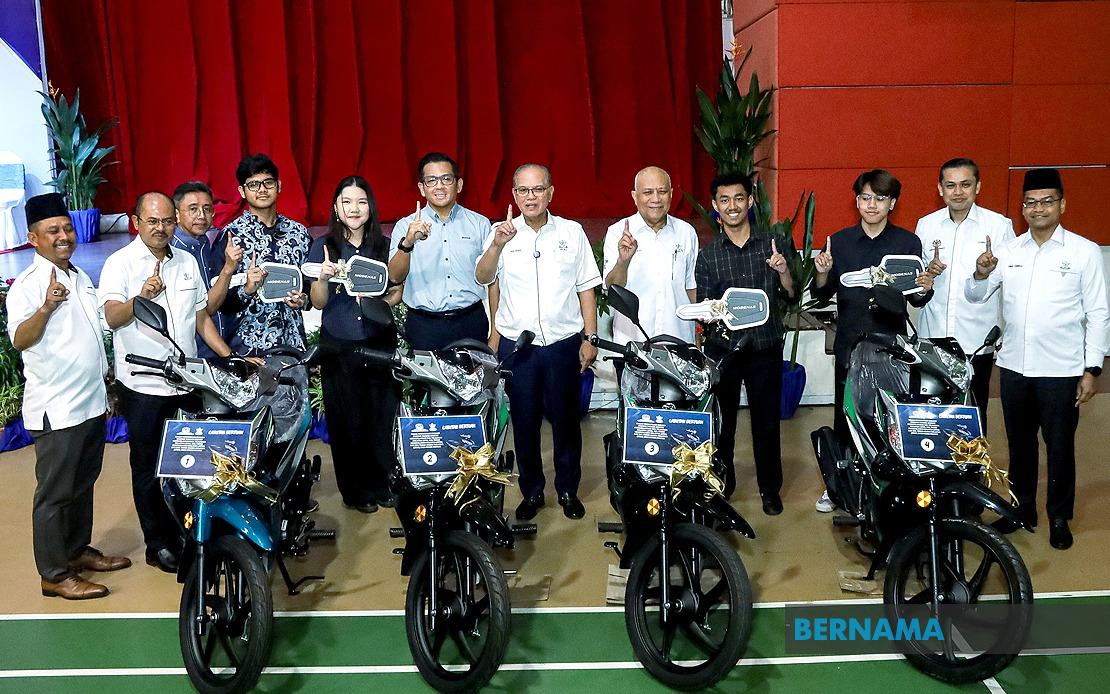
Shifting focus, Wan Rosdy announced a new youth-oriented financing initiative that will form part of Pahang's 2027 budgetary framework. The proposed interest-free motorcycle loan scheme targets students aged eighteen to twenty-one enrolled in public or private higher education institutions, framed as an incentive to support youth development through accessible transportation financing. This represents the state government's approach to youth economics, recognising that mobility and personal transport significantly impact educational participation and employment prospects among younger demographics.
The announcement occurred during a ceremony where over two thousand Pahang students celebrating outstanding examination results received state recognition and financial incentives. These high achievers encompassed SPM, STAM, and STPM candidates, reflecting the full spectrum of secondary and higher secondary qualifications across Malaysia's education system. The state allocated RM2.4 million toward these student incentive awards, demonstrating continued commitment to recognising academic excellence and encouraging continued educational pursuit among Pahang's youth population.
The motorcycle loan initiative carries particular significance for rural and semi-urban communities where personal vehicle ownership facilitates educational access and employment mobility. Higher education institutions in Malaysia, concentrated in urban centres and specific regional hubs, often require students to commute significant distances. For lower-income families, transportation costs represent a meaningful barrier to tertiary education participation, making subsidised financing mechanisms potentially transformative for educational access across socioeconomic strata.
The timing of this announcement during a youth recognition ceremony reinforces the linkage between educational achievement and economic support in state government messaging. Pahang's positioning of the loan initiative as an educational encouragement strategy reflects broader Malaysian policy discourse around human capital development and youth retention in an increasingly competitive regional economy. Interest-free terms represent a genuine subsidy, effectively reducing the cost of personal transportation for a targeted demographic.
Both policy initiatives—the forest reserve degazettement approach and youth financing scheme—reveal dimensions of how state governments balance competing priorities. Resource management decisions affecting public land intersect with economic development strategies benefiting specific populations. The forest reserve framework reflects administrative efficiency preferences, while youth programmes address demographic investment and social mobility concerns. These concurrent policy directions illustrate the multifaceted nature of contemporary Malaysian state governance, where environmental stewardship, fiscal planning, and human development priorities require constant calibration and negotiation.

