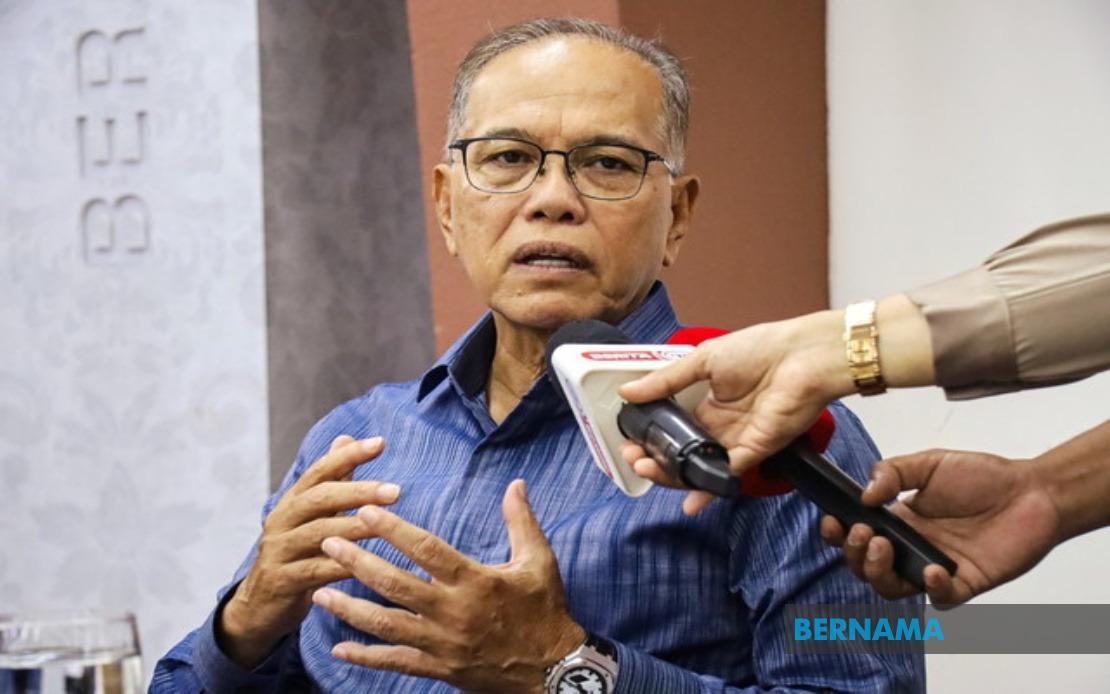
The Pahang chapter of Barisan Nasional has signalled its intent to preserve the existing power-sharing arrangement with Pakatan Harapan through the next general election, providing a measure of political certainty in a state that has seen considerable coalition shifts in recent years. Speaking in Kuantan on Wednesday, Menteri Besar Datuk Seri Wan Rosdy Wan Ismail underscored the party's commitment to maintaining the Unity Government partnership that has governed Pahang since late 2022, while acknowledging that the configuration remains subject to ongoing discussions among coalition members.
Wan Rosdy's statement carries weight in the context of Malaysia's fractious political landscape, where state-level coalitions have proven fragile and subject to sudden collapse or realignment. The Pahang BN leadership's public endorsement of continuity suggests confidence in the current arrangement and a desire to project stability to voters and investors alike. However, the careful phrasing—that discussions will determine the final outcome—leaves room for manoeuvre should circumstances change or pressures emerge within either party ahead of the general election.
The history of Pahang's recent political configuration underscores why such statements matter. Following the 15th general election in November 2022, the state assembly was divided between BN and Perikatan Nasional, each holding 17 seats out of the chamber's 42 total. The remaining eight seats went to Pakatan Harapan. This fragmented outcome reflected broader national trends and initially suggested uncertainty about governance. The subsequent formation of a unity government combining BN and PH created a commanding 25-seat majority, effectively sidelining Perikatan Nasional despite its equal initial standing.
Wan Rosdy's remarks also carry implications for Pahang's developmental agenda. As Menteri Besar, he has positioned the state government as focused on delivering tangible benefits to residents rather than engaging in political theatrics. His discussion of the Makmur Pahang Initiative—an overseas scholarship programme—exemplified this approach. The scheme has allocated RM118,000 to support 118 students from Pahang pursuing higher education in Egypt and New Zealand, while an additional USD1,000 per student has been channelled through Yayasan Pahang for those studying in Jordan and Morocco.
The scholarship programme reflects deliberate policy choices about educational partnerships and institutional development. By supporting students in these particular countries, Pahang's state government is cultivating relationships with educational institutions outside the traditional Anglo-American axis that has dominated Malaysian overseas study patterns. The inclusion of institutions with Islamic educational components suggests consideration of both academic excellence and cultural alignment, a calculus that appeals across Malaysia's political spectrum.
Wan Rosdy's openness to cooperation with other parties in preparing for the general election indicates flexibility beneath the surface commitment to PH. Such pragmatism is characteristic of Malaysian state-level politics, where coalitions often form around immediate electoral mathematics rather than ideological alignment. Pahang BN's willingness to explore multiple partnership options suggests the party recognises that circumstances may evolve and that maintaining options is prudent political strategy. This calculated ambiguity serves multiple audiences—reassuring current coalition partners while signalling to others that discussions remain possible.
The political arithmetic of Pahang provides context for understanding these statements. With Perikatan Nasional holding substantial representation despite being outside government, the coalition dynamics remain sensitive. Any significant shift in national politics or dramatic changes in party performance could alter state-level calculations. The BN-PH partnership essentially depends on both parties viewing continued cooperation as preferable to alternative arrangements, a condition that requires periodic reinforcement and demonstration of commitment.
The challenge facing Pahang's unity government is demonstrating that cooperation delivers tangible benefits that justify political compromise. The scholarship initiative illustrates one avenue—visible investments in youth development and human capital that transcend partisan boundaries. Such programmes help justify the coalition's existence to voters from both communities and provide grounds for claiming that stability in government translates to improved governance and service delivery.
Wan Rosdy's emphasis on students upholding Pahang's name and returning with excellent achievements reflects broader state-building ambitions. By investing in overseas education and encouraging young people to acquire skills and knowledge abroad before returning home, the state government positions itself as forward-looking and developmental. This narrative counters perceptions of Pahang as a state defined primarily by political intrigue rather than substantive governance.
Looking toward the general election timeline, Pahang's political trajectory will likely influence broader patterns across the peninsula. As one of Malaysia's larger states by land area and an economically significant region, Pahang's stability—or instability—reverberates through national politics. A successful continuation of BN-PH cooperation through the election would validate the unity government model that has become central to Malaysia's political architecture. Conversely, any breakdown of the partnership would raise uncomfortable questions about the sustainability of current national arrangements.
The remarks also signal that Pahang's political leadership intends to focus on developmental messaging rather than sectarian or confrontational politics as the election approaches. By highlighting investments in education, youth development, and human capital, Wan Rosdy positions the state government as competent and forward-focused rather than merely preoccupied with power preservation. This framing potentially insulates the governing coalition from accusations of merely serving elite interests or engaging in political manoeuvring.
For Southeast Asian observers and Malaysian analysts, Pahang's political choices carry significance beyond state borders. The state represents a test case for whether Malaysia's unity government model can survive beyond initial novelty and crisis-driven necessity to become an established form of governance. If the BN-PH partnership in Pahang endures through the general election and delivers credible developmental outcomes, it strengthens the model's credibility. If it fractures, questions about the model's viability will intensify at national level.

