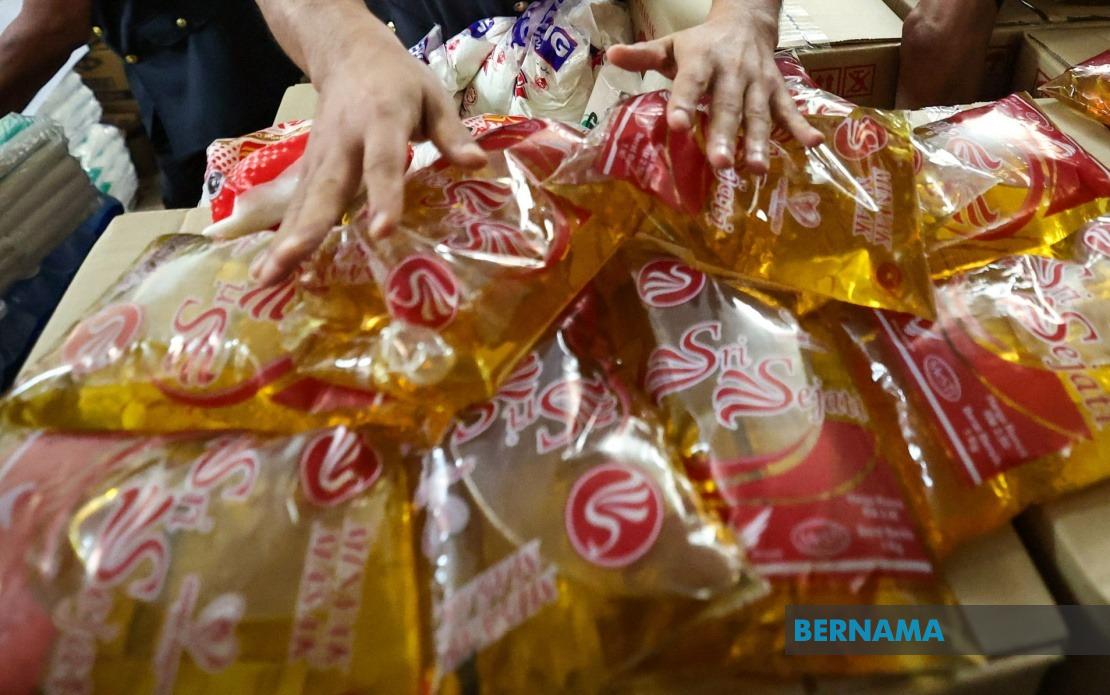
Malaysia's Public Accounts Committee has called for comprehensive restructuring of the cooking oil supply chain, proposing a dramatic 60,000 metric tonne monthly reduction in government quotas and tightened oversight mechanisms to recover RM10.879 billion in taxpayer funds squandered between 2019 and February 2025. The recommendations, presented by PAC deputy chairperson Teresa Kok, emerged from a year-long investigation into the Cooking Oil Price Stabilisation Scheme (COSS) that uncovered systematic inefficiencies, subsidy leakage to ineligible recipients, and pervasive market manipulation.
The investigation revealed a fundamental disconnect between allocated and actual consumption. The government had set the COSS quota at 60,000 metric tonnes monthly, yet domestic demand from legitimate Malaysian households ranges only between 19,000 and 30,000 metric tonnes per month. This grotesque oversupply—more than double what Malaysians genuinely need—has created opportunities for diversion to commercial operators, foreign nationals, and black market resellers who exploit the artificially controlled RM2.50 retail price. The absence of a properly targeted distribution framework means subsidised cooking oil packets intended for ordinary citizens have been systematically siphoned away from their intended beneficiaries, undermining the entire social assistance objective.
The Committee's investigation, which commenced in August last year and concluded in October, examined testimony from the Ministry of Domestic Trade and Cost of Living (KPDN), the Malaysian Islamic Development Department (JAKIM), and the Home Ministry. Evidence presented during ten separate proceedings exposed alarming governance gaps across the supply chain. Most troubling was the discovery that two of nine packaging companies repackaging subsidised cooking oil lack halal certification—a particularly glaring omission given JAKIM's recent improvements to the certification framework. This lapse raises questions about the rigour of vetting procedures and quality assurance mechanisms at KPDN.
The Committee identified dangerous mismanagement of spoiled cooking oil inventories as another critical vulnerability. Packaging companies currently operate without standardised procedures for identifying and isolating degraded stocks, yet the government continues subsidising these unusable quantities as if they will reach consumer tables. The absence of specific operating standards means taxpayers effectively fund cooking oil that never reaches anyone. This problem cascades down to retail points, where inadequate monitoring by authorities has enabled conditional sales tactics, hoarding behaviour, and widespread pricing above the supposedly fixed RM2.50 ceiling. The black-market practice of bundling subsidised cooking oil with other products at premium rates undermines the entire price control regime.
Particularly revealing is the skewed market concentration at the refining stage. Foreign companies control 67 per cent of the subsidised quota, whilst Malaysian government-linked companies including FGV and Sime Darby Guthrie account for merely 10.6 per cent, with remaining shares distributed among local private firms. This heavily foreign-dominated structure raises strategic questions about whether Malaysian resources should be underwriting the margin expansion of international conglomerates rather than strengthening domestic agricultural and processing capacity. The imbalance suggests opportunities for policy recalibration to channel subsidies toward competitive local operators.
Another area of wasteful expenditure identified by the PAC concerns the repackaging subsidy paid to companies. KPDN currently provides RM600 per metric tonne to packaging firms, a sum the Committee characterises as excessively generous relative to actual processing and packaging costs. This inflated rate comparison suggests the government negotiated poorly when establishing these subsidy levels, perhaps without thorough benchmarking against international operating costs or competitive bids. The PAC recommendation to recalibrate this rate toward genuine cost recovery rather than profit enhancement could yield substantial savings without disrupting the supply chain.
Foremost among the Committee's recommendations is acceleration of the digital transition from bulk subsidies to the nascent electronic Cooking Oil Price Stabilisation Scheme System (eCOSS). The current manual, quota-based approach lacks the verification mechanisms necessary to confirm recipient eligibility, track product flow, and prevent fraud at scale. A fully digitalised system with proper identity verification, consumption tracking, and real-time monitoring would enable authorities to restrict subsidised purchases to Malaysian citizens, families below defined income thresholds, and institutions like schools and hospitals, while automatically blocking commercial entities, foreign nationals, and serial bulk purchasers. Such digital infrastructure has proven effective in other subsidy programmes across Southeast Asia and represents the most promising avenue for eliminating the leakage that currently consumes more than one-third of total programme expenditure.
The Committee also proposes that KPDN redirect subsidy payments only for undamaged stocks, creating accountability throughout the supply chain. Companies would face financial consequences for allowing spoilage, creating incentives for proper storage, rotation, and quality assurance protocols. This mechanism-based approach harnesses market discipline rather than relying solely on inspection and enforcement. Additionally, the PAC recommends KPDN study options for reallocating refining quotas away from foreign-dominated players toward competitive domestic enterprises. Such redistribution would strengthen Malaysian agricultural value chains, increase domestic processing capacity, and ensure that subsidies primarily benefit local communities and producers rather than swelling the profits of international agribusiness conglomerates.
These findings illuminate a broader pattern of subsidy programme design weakness that extends beyond cooking oil. Malaysia's various price controls and assistance schemes frequently suffer from similar pathologies: excessive allocations untethered to demonstrated need, weak targeting mechanisms that favour ineligible recipients, inadequate monitoring at distribution points, and insufficient incentive structures discouraging waste and fraud. The cooking oil case, with its RM10.9 billion accumulated cost, provides a cautionary blueprint for how well-intentioned price stabilisation measures can devolve into unaccountable expenditure leakage. The PAC recommendations suggest a policy framework that combines tighter targeting through digitalisation, performance-based incentives for suppliers, market-oriented quota allocation, and continuous monitoring to replace the current trust-based model that has demonstrably failed.
Implementation of these recommendations will test KPDN's institutional capacity and political will. The recommendations do not require new legislation—only administrative action and priority resource allocation. However, they directly threaten the interests of foreign packaging companies receiving generous subsidies, wholesale operators benefiting from arbitrage opportunities, and retailers engaged in circumventing price controls. Some will resist through lobbying or legal challenge. The true measure of the government's commitment to rectifying this subsidy dysfunction will be observable within 12-18 months through quota reductions, eCOSS rollout, and a demonstrably lower government expenditure on cooking oil assistance. Malaysian consumers and taxpayers will judge whether the PAC's detailed forensic investigation catalyses genuine reform or becomes another shelved report gathering dust in bureaucratic filing cabinets.

