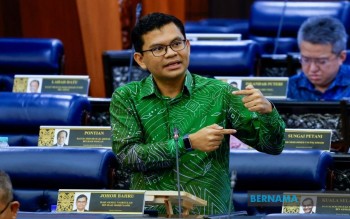
Small and medium enterprises across Malaysia have access to substantial untapped support as part of government efforts to strengthen business resilience amid economic headwinds. Economy Minister Akmal Nasrullah Mohd Nasir revealed that more than RM4 billion of Bank Negara Malaysia's RM5 billion Small and Medium Enterprise Stabilisation Relief Facility (SME SRF) remains available to help micro, small and medium enterprises navigate cash flow pressures and minimise operational disruptions. The disclosure came during parliamentary questioning on June 25, underscoring the government's commitment to ensuring financial access for struggling businesses.
As of mid-June 2026, the financing facility had processed approvals totalling over RM700 million for more than 1,000 SMEs, demonstrating growing uptake but also suggesting significant room for further applications. The continued availability of funding signals that many enterprises may still be unaware of the facility or have not yet submitted applications. For Malaysian business owners confronting supply chain difficulties and heightened global economic uncertainty, the programme represents a potential lifeline to stabilise operations without resorting to asset sales or severe workforce reductions.
The SME SRF forms part of a broader ecosystem of government support mechanisms designed to shield businesses from external shocks. Complementing the relief facility, the government has arranged an additional RM5 billion in financing guarantees through Syarikat Jaminan Pembiayaan Perniagaan Bhd, expanding the total safety net available to MSMEs across sectors. This dual-track approach—direct relief financing paired with guarantee schemes—reflects recognition that enterprises require flexibility in accessing capital during turbulent periods. The guarantee component particularly benefits firms that may struggle to meet conventional lending criteria but possess viable business models.
Access to these funds has been deliberately simplified to encourage uptake. Akmal emphasised that SMEs facing cash constraints should approach their respective financial institutions with their specific requirements, as lenders are equipped to tailor solutions matching individual business circumstances. Financial institutions have committed to processing applications within seven working days, a timeframe critical for businesses operating on tight margins where delayed capital deployment can prove catastrophic. This streamlined approach aims to reduce bureaucratic friction that typically deters smaller firms from pursuing formal financing.
Beyond direct financing, the government is implementing the Progressive Acceleration for Capability and Employability (PACE) Economic Resilience Package, valued at over RM710 million, to address employment and business continuity holistically. This comprehensive intervention targets four distinct pillars: social protection for affected workers, training and job placement initiatives, empowerment of gig economy participants, and strengthening young talent and SME capacity. The multi-pillar structure acknowledges that business survival depends not solely on capital availability but also on workforce stability and skill development.
Under PACE, more than RM580 million has been allocated to PERKESO to strengthen Malaysia's Employment Insurance System, providing a safety net for workers facing job displacement. This component proves particularly valuable in sectors experiencing significant restructuring, as it maintains household purchasing power and consumer demand that sustains broader economic activity. Simultaneously, HRD Corp has received RM100 million to coordinate training and job placement, leveraging the MYFutureJobs platform to match displaced workers with emerging opportunities in growth sectors.
Gig workers, increasingly important to Malaysia's economy but often lacking traditional employment protections, receive dedicated support through RM20 million allocated via the Skills Education Fund Corporation for specialised training programmes. The recognition of gig workers as a distinct group requiring targeted intervention reflects evolving labour market realities, where traditional employment relationships no longer capture the full spectrum of income-generating activities. TalentCorp's RM10 million contribution focuses on industrial training for SMEs and start-ups, building human capital depth that enhances long-term competitiveness and innovation capacity.
Supply chain stability remains a critical concern shaping government intervention strategy. Akmal indicated that authorities are actively monitoring the supply and pricing dynamics of essential goods and key raw materials critical to Malaysia's manufacturing, food, agriculture and services sectors. This vigilant oversight aims to identify bottlenecks before they cascade through supply networks, allowing preemptive action to prevent widespread disruptions. For Malaysian exporters and domestic-focused manufacturers, predictable access to affordable inputs determines operational viability and competitiveness in regional markets.
The global supply crisis that prompted these interventions extends beyond temporary logistical challenges, reflecting deeper structural vulnerabilities exposed by geopolitical tensions, pandemic aftereffects, and trade realignments. Malaysian businesses, deeply integrated into regional and global supply networks, face compounded pressures from both upstream input scarcity and downstream demand volatility. The government's multifaceted response—combining liquidity support, employment protection, skills development, and supply chain monitoring—attempts to stabilise the operating environment across multiple dimensions simultaneously.
Parliamentary oversight of these initiatives remains active, with Akmal committing to present a detailed ministerial statement addressing the global supply crisis in the Dewan Rakyat following formal parliamentary approval. This forthcoming statement is expected to provide more granular analysis of supply disruptions affecting specific sectors, timeline projections for normalisation, and any additional measures contemplated by the government. For business leaders, investors and policymakers tracking Malaysia's economic trajectory, the forthcoming statement should clarify government positioning on medium-term economic risks and the sustainability of current support programmes.
The availability of substantial undeployed funding under the SME SRF suggests that uptake remains below programme capacity, potentially indicating awareness gaps among eligible enterprises or hesitation regarding application procedures. Industry associations and financial institutions should consider targeted outreach to ensure that struggling MSMEs understand their eligibility and application pathways. For economies like Malaysia where SMEs constitute the employment backbone and economic dynamism foundation, maximising programme effectiveness proves essential to mitigating job losses and preserving productive capacity during global economic turbulence.

