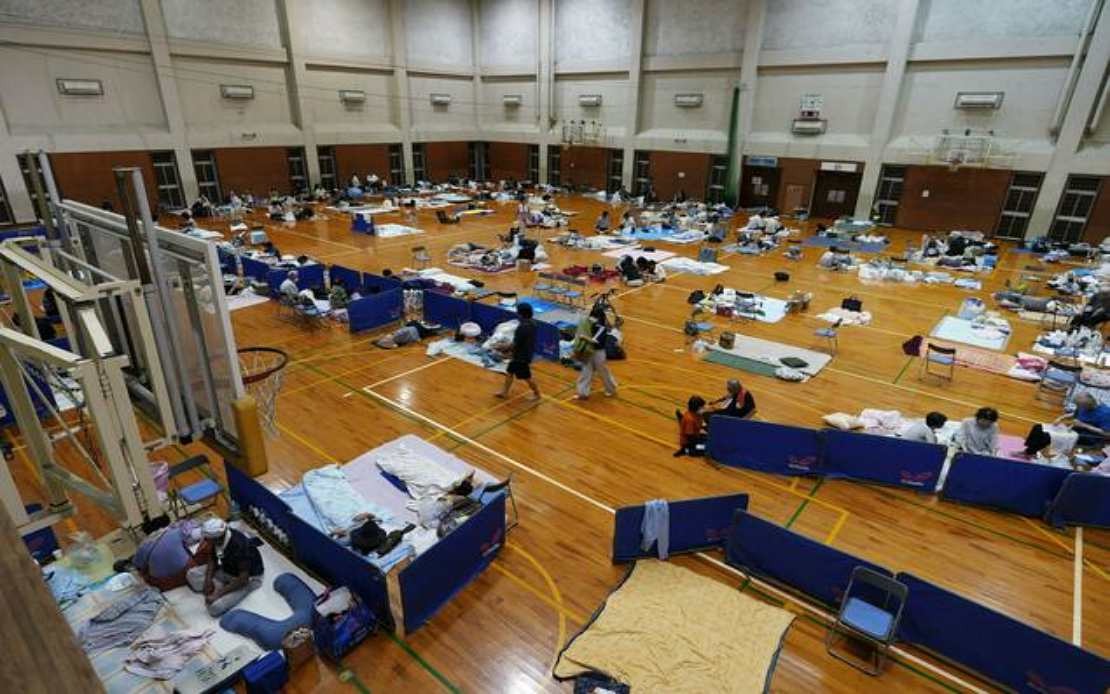
A week after a powerful 7.1 magnitude earthquake devastated Kumamoto Prefecture in southwestern Japan, the region confronts a mounting humanitarian crisis with more than 8,000 people still taking shelter in 150 emergency facilities. The situation has become increasingly dire as the affected areas endure a dual catastrophe: widespread infrastructure damage coupled with dangerously high temperatures that threaten the health and safety of displaced residents who have nowhere else to go.
The earthquake, which struck at approximately 4:27 p.m. on July 28, has claimed 38 lives and caused an estimated 12,000 buildings to suffer structural damage. However, the toll extends far beyond initial casualty figures. A death from suspected heatstroke among individuals sheltering in vehicles highlights how secondary disasters compound the impact of natural catastrophes, particularly when displaced populations lack access to adequate cooling and safe living conditions. This reality underscores a growing concern among disaster management professionals across Southeast Asia and beyond: post-earthquake challenges often prove as deadly as the initial tremor itself.
Prime Minister Sanae Takaichi visited one evacuation shelter on Monday and announced the government's decision to designate the earthquake as a "disaster of extreme severity." This administrative classification carries significant practical implications, unlocking enhanced reconstruction subsidies for local governments and enabling special assistance programmes for affected victims. Such designations reflect recognition that the scale of destruction and ongoing displacement demands exceptional governmental intervention beyond standard disaster protocols.
Temperatures across Kumamoto Prefecture have reached perilous levels, with Monday recording highs of 35°C or above in many localities, while certain areas experienced 40°C for the first time in recorded history. For individuals sleeping in evacuation shelters—many lacking proper ventilation or cooling systems—and those forced to remain in vehicles due to space constraints, such conditions present a genuine threat to life. The exact number of people sheltering in vehicles has not been fully determined, suggesting official figures may significantly underestimate the true scale of displacement and vulnerability.
Water infrastructure damage represents another critical challenge hampering the recovery effort. Approximately 45,000 households across five municipalities face continuing water outages, creating cascading health hazards. Without adequate water supply, maintaining basic hygiene becomes impossible, disease prevention becomes compromised, and vulnerable populations such as children, the elderly, and those with chronic illnesses face heightened risk. Water delivery trucks have been mobilised from across Japan to service affected areas, demonstrating the national mobilisation required to address such widespread infrastructure failure.
Government authorities are implementing multi-faceted strategies to mitigate the escalating health emergency. Officials are prioritising the distribution of drinking water supplies to evacuation centres, expanding portable sanitation facilities to maintain hygiene standards, and deploying portable cooling equipment to reduce heat exposure. These measures, while necessary, illustrate the immense logistical burden of managing a large-scale displacement in extreme weather conditions.
Beyond immediate relief efforts, longer-term housing solutions are gradually materialising. Applications for secondary evacuation to hotels have commenced, allowing some evacuees to access climate-controlled accommodation. Simultaneously, construction of temporary housing has begun in the hardest-hit municipalities of Uki and Hikawa, recognising that shelter centres cannot indefinitely house thousands of people. The transition to temporary housing will take weeks or months, leaving many facing an extended period of displacement.
The earthquake's destructive force was particularly severe at specific industrial and commercial sites. An explosion at an Aeon shopping mall in Kashima claimed seven lives, whilst a catastrophic chimney collapse at Nippon Paper Industries Co.'s plant in Yatsushiro killed nine workers. These incidents underscore how earthquakes don't discriminate, affecting both urban populations and industrial workers, with consequences rippling through the economy and labour market.
International solidarity has emerged as a notable bright spot in the crisis response. Kaohsiung, a major city in southern Taiwan, has provided essential care supplies to Miyabien, a nursing home in Yatsushiro, after local authorities identified critical needs. Midori Tagata, the facility's director, expressed profound gratitude for the donation, noting that widespread water shortages throughout Yatsushiro have severely compromised the ability to maintain adequate hygiene standards for elderly residents. This cross-border humanitarian gesture demonstrates how disaster responses increasingly involve regional cooperation, a pattern likely to expand as climate change intensifies extreme weather events across Asia.
Transportation infrastructure remains severely disrupted. The Kyushu Shinkansen Line bullet train service remains suspended between Kumamoto and Kagoshima-chuo stations, whilst the Kyushu Expressway has been closed to general traffic between the Matsubase and Ebino exits. Such closures hinder not only evacuation and relief efforts but also economic recovery, as businesses struggle to move goods and resume normal operations.
For Malaysian observers, the Kumamoto situation offers sobering lessons. As an archipelago prone to earthquakes, floods, and other natural disasters, Malaysia faces similar risks of large-scale displacement and post-disaster crises. The Japanese response—whilst significantly resourced—illustrates how even wealthy, technologically advanced nations struggle when managing tens of thousands of displaced people during extreme weather. Building resilient disaster response systems, ensuring adequate shelter capacity, and preparing for prolonged displacement represent ongoing challenges for disaster preparedness across Southeast Asia.

