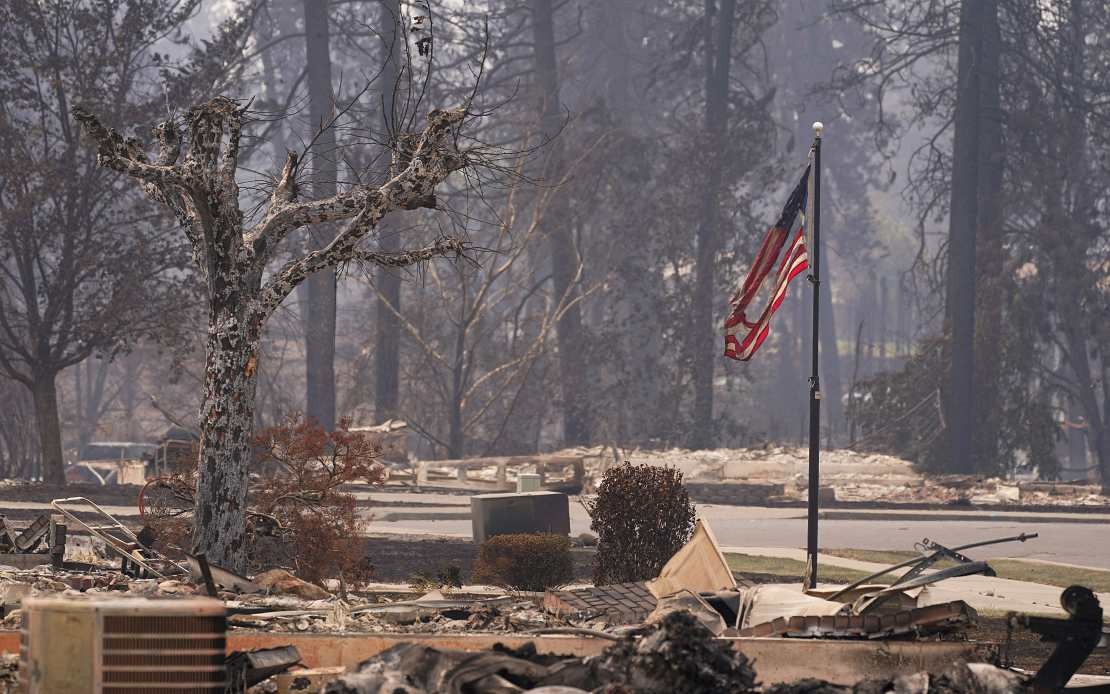
A humanitarian crisis is unfolding in the US state of Washington as multiple wildfires have forced the largest evacuation in recent memory, displacing more than 65,000 residents from their homes. The American Red Cross confirmed the staggering evacuation numbers on Monday, signalling the unprecedented scale of the disaster engulfing the region. The fires have already demolished over 700 residential structures, predominantly concentrated in Spokane County, where the flames have advanced with terrifying speed and intensity.
Law enforcement officials have made headway in identifying a suspected cause for at least one of the major blazes. Spokane County Sheriff John Nowels announced the arrest of Aaron F. Farinacci, a 37-year-old man charged with first-degree arson in connection with the Old Trails Fire. The suspect was apprehended Monday afternoon and is being held on a $1 million bond pending further legal proceedings. The connection between Farinacci and the rapidly spreading fire underscores how a single incident can trigger cascading disasters affecting tens of thousands of people across vast geographical areas.
The immediate danger zones reveal the scope of the catastrophe. Data from the interagency tracking system InciWeb indicates that fires ravaging the Spokane and Stevens counties region have charred approximately 8,026 acres—equivalent to 3,248 hectares—since Saturday. Critically, these fires remain at zero per cent containment, meaning firefighting crews have yet to establish any meaningful perimeter to halt their expansion. The lack of progress on fire lines reflects both the intensity of the blazes and the limited resources available to combat simultaneous emergencies across the state.
Weather conditions have begun providing some relief to exhausted firefighting teams. The Spokane Complex Fire Incident Management Team reported that increasingly favourable meteorological patterns are enabling crews to push back against the flames and construct defensive positions. This subtle shift represents the difference between losing ground and merely holding position, underscoring how dependent wildfire containment is on environmental variables beyond human control.
The scale of devastation extends far beyond the Spokane vicinity. The Sinlahekin fire has grown to a massive 85,000 acres—equivalent to 34,398 hectares—since ignition on July 26, triggered by lightning strikes. Over 820 personnel have been mobilised to combat this particular inferno, yet it too remains at zero per cent containment. Meanwhile, the Little Giant Fire burning northwest of Leavenworth within the Okanogan-Wenatchee National Forest has consumed 51,298 acres (20,759 hectares) and continues expanding. The cumulative acreage affected across all three major fires demonstrates the state's inability to concentrate resources effectively against multiple simultaneous threats.
Emergency management officials have focused significant effort on locating vulnerable populations. Washington Governor Bob Ferguson reported that authorities have successfully accounted for nearly everyone who submitted evacuation requests or called for assistance. However, officials remain intent on establishing contact with 14 individuals whose whereabouts have not been definitively confirmed. Ferguson emphasised that these 14 people should not be classified as missing, but rather as individuals with whom authorities wish to establish contact to verify their safety and wellbeing. This distinction carries important implications for search-and-rescue operations and resource allocation.
The human toll has so far been contained, though the psychological and economic costs accumulate daily. As of Monday, Governor Ferguson confirmed that no deaths had been confirmed in connection with the fires. This represents a fortunate outcome given the scale of the evacuation and property destruction, though the absence of fatalities should not obscure the immense suffering experienced by displaced residents facing the loss of homes, possessions, and livelihoods.
The Washington fires carry broader implications for understanding wildfire dynamics in the Pacific Northwest and beyond. The rapid expansion of multiple fires simultaneously suggests that underlying conditions—whether climatic, vegetative, or meteorological—have created exceptionally dangerous circumstances across the state. The arrest of a suspect on arson charges additionally highlights how intentional human action can catalyse natural disasters when environmental conditions are primed for rapid fire spread. This combination of factors presents a complex challenge for emergency management professionals and policymakers attempting to prevent future catastrophes.
For Malaysian and Southeast Asian observers, these events offer sobering reminders of the vulnerability of large population centres to environmental disasters. While Malaysian experiences with wildfires differ in character from the temperate forest conditions of Washington state, the fundamental lesson remains constant: rapid evacuation protocols, interagency coordination, and resource management become critical when disasters strike population-dense regions. The successful coordination of a 65,000-person evacuation, while challenging, demonstrates institutional capacity that many regions aspire to develop.

