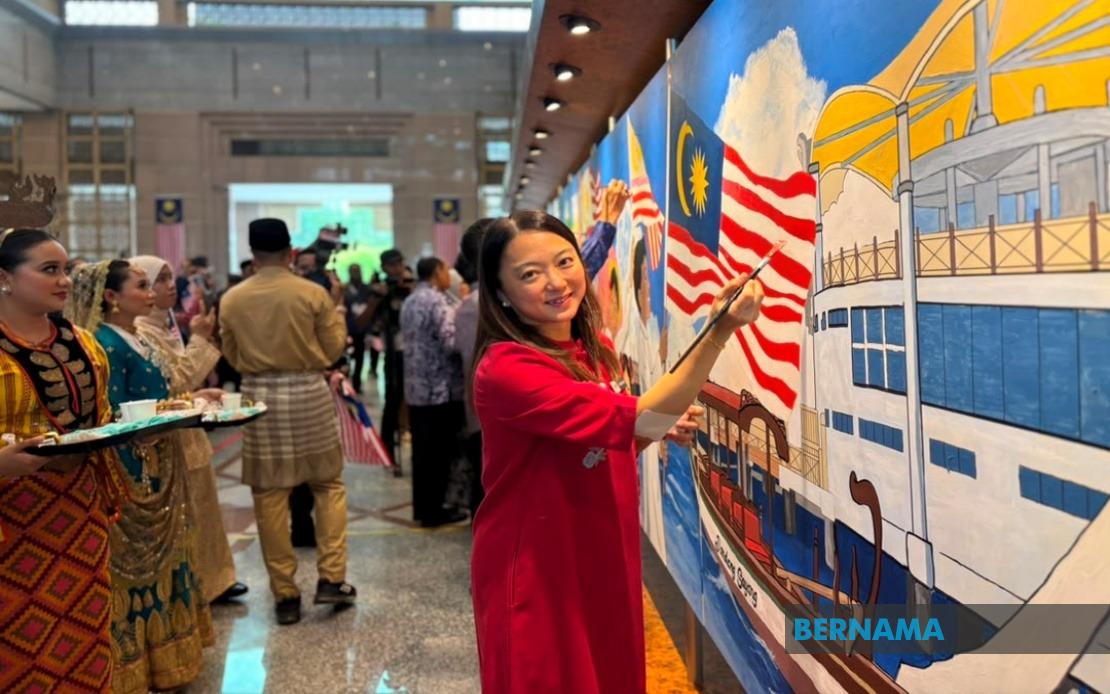
The Federal Territories have embarked on an extensive campaign to promote national pride ahead of the 2026 National Day and Malaysia Day festivities, distributing more than 62,000 Jalur Gemilang flags across Kuala Lumpur, Putrajaya and Labuan since the start of August. The widespread initiative reflects growing efforts by Malaysian authorities to foster patriotic sentiment among citizens and residents in the country's administrative heartland, where government institutions and federal infrastructure serve as primary symbols of national unity.
Minister in the Prime Minister's Department Hannah Yeoh oversaw the flag distribution programme, which has strategically placed the national emblem along key protocol routes, within public spaces, and throughout residential neighbourhoods across all three Federal Territories. The deliberate positioning of flags in high-visibility locations aims to create an environment where patriotism becomes visible and tangible for daily commuters and residents, transforming the urban landscape into an expression of collective national identity during the crucial lead-up to Malaysia's independence commemorations.
Yeoh articulated a broader vision for flag display that extends beyond the physical placement of cloth symbols. She encouraged Malaysians to demonstrate their attachment to the nation through diverse expressions of patriotism, including digital sharing on social media platforms where the flag can reach exponentially wider audiences. This multi-channel approach acknowledges how contemporary citizenship increasingly manifests itself through online spaces, where symbolic gestures circulate among extended networks and shape collective narratives about national belonging.
A critical component of the campaign addresses what officials perceive as widespread uncertainty regarding correct flag protocol. Rather than dismissing improper display as trivial, Yeoh and her team have invested resources in providing comprehensive guidance, recognising that confusion about proper etiquette can inadvertently deter citizens from participating in patriotic expression. The availability of detailed guidelines on official websites represents a practical intervention designed to remove barriers to flag flying, transforming what might otherwise feel like an exclusionary practice requiring specialised knowledge into an accessible civic activity.
The emphasis on correct flag handling carries particular importance for commercial and institutional settings where reputation risks accompany procedural errors. Yeoh specifically advised business owners and managers to ensure that employees understand proper display requirements and to implement oversight mechanisms that catch mistakes before the public observes them. This guidance reflects awareness that prominent misdisplays—whether inverted flags or improper mounting—can generate negative publicity and inadvertently communicate disrespect for national symbols, thereby undermining the patriotic objectives that flag campaigns intend to achieve.
The campaign gained symbolic momentum through the completion of a towering 25.40-metre Independence Mural at Menara Seri Wilayah, where Hannah Yeoh and staff from the Federal Territories Department participated in finalising the artwork. This monumental creation transcends simple decoration, functioning instead as a powerful visual statement that interweaves representations of each Federal Territory's defining landmarks with imagery of the Jalur Gemilang as the ultimate expression of national sovereignty. By featuring architectural and geographical markers specific to Kuala Lumpur, Putrajaya and Labuan, the mural acknowledges the distinct identities and contributions of each territory whilst simultaneously asserting their subordination to overarching national identity.
The mural initiative demonstrates how patriotic campaigns can operate through multiple registers simultaneously—the physical distribution of flags targeting individual households and businesses, the digital guidance enabling correct display, the social media encouragement multiplying reach, and finally the creation of iconic public artworks that establish permanent touchstones for national sentiment. This layered approach recognises that patriotism in contemporary Malaysia requires coordinated intervention across institutional, commercial, residential and digital domains rather than relying on spontaneous civic enthusiasm alone.
For Malaysian readers, the significance of this campaign extends beyond ceremonial flag-flying to reflect deeper questions about how national identity gets constructed and maintained in an increasingly complex, multicultural society. The 2026 commemorations occur within a political context where questions of national unity and social cohesion remain perpetually contested, making symbolic expressions of patriotism particularly consequential. When authorities invest substantially in flag distribution and mural creation, they signal that official Malaysia views the cultivation of patriotic sentiment as a legitimate and important state function rather than something that should emerge purely through organic civic participation.
The Federal Territories occupy special symbolic significance within Malaysia's governance structure, as they house the federal administration and administrative institutions that literally embody national government. Concentrating patriotic campaigns in these locations therefore carries particular resonance—transforming the spaces where government operates into visible declarations of national pride and establishing flags and murals as ambient features of the administrative environment. Residents and visitors navigating these territories encounter repeated reinforcement of national imagery, creating an atmospheric intensity of patriotic expression that extends beyond what occurs in other Malaysian states.
For the broader Southeast Asian context, Malaysia's investment in coordinated flag distribution and patriotic art reflects regional patterns whereby governments deploy nationalist symbolism to navigate domestic political tensions and regional positioning. As nations across Southeast Asia engage with questions of sovereignty, national identity and regional integration, the symbolic work performed by flags and public monuments carries strategic implications that ripple beyond ceremonial occasions. Malaysia's emphasis on proper flag protocol and widespread distribution thus participates in ongoing regional conversations about how nations project coherence and authority through visible symbols and institutional practice.

