The Ministry of Entrepreneur Development and Cooperatives (KUSKOP) has channelled nearly RM100 million in financing to more than 4,300 entrepreneurs operating in Melaka, marking significant progress in the state's efforts to nurture a thriving micro, small and medium enterprise (MSME) ecosystem. The approval, tallied as of May 31, demonstrates the ministry's strategic focus on providing capital access to business owners who drive local economic activity and job creation across the region.
This substantial investment reflects a deliberate policy shift towards democratising access to financing for entrepreneurs who might otherwise struggle to secure conventional bank loans. By funnelling resources directly to business owners in Melaka, the ministry addresses a persistent challenge in Southeast Asian economies: the capital gap that prevents promising ventures from scaling up. The availability of this funding acts as a critical enabler, allowing entrepreneurs to invest in equipment, inventory, premises improvements, and workforce expansion without exhausting personal savings or resorting to informal lending channels.
Minister Steven Sim articulated the government's broader vision during his recent three-day working visit to Melaka, which coincided with the Hebatkan Perniagaan Malaysia Carnival. He emphasised that financing mechanisms serve not merely the business owners themselves, but create ripple effects throughout communities. When entrepreneurs secure capital and their operations grow, they generate employment for workers, create demand for suppliers' goods and services, and inject spending power into neighbourhood businesses and services. This multiplier effect means that each ringgit disbursed functions as seed capital for broader economic circulation.
The nationwide scope of these initiatives reveals the government's commitment to MSME development across all states and regions. In the first five months of 2024 alone, KUSKOP approved RM5 billion in financing benefiting nearly 180,000 entrepreneurs nationwide. This substantial flow of capital underscores recognition that MSMEs form the backbone of Malaysia's economy, contributing significantly to employment, innovation, and regional development. The sheer scale of the programme—touching nearly two hundred thousand businesses in just five months—demonstrates an unprecedented mobilisation of government resources towards the entrepreneurial sector.
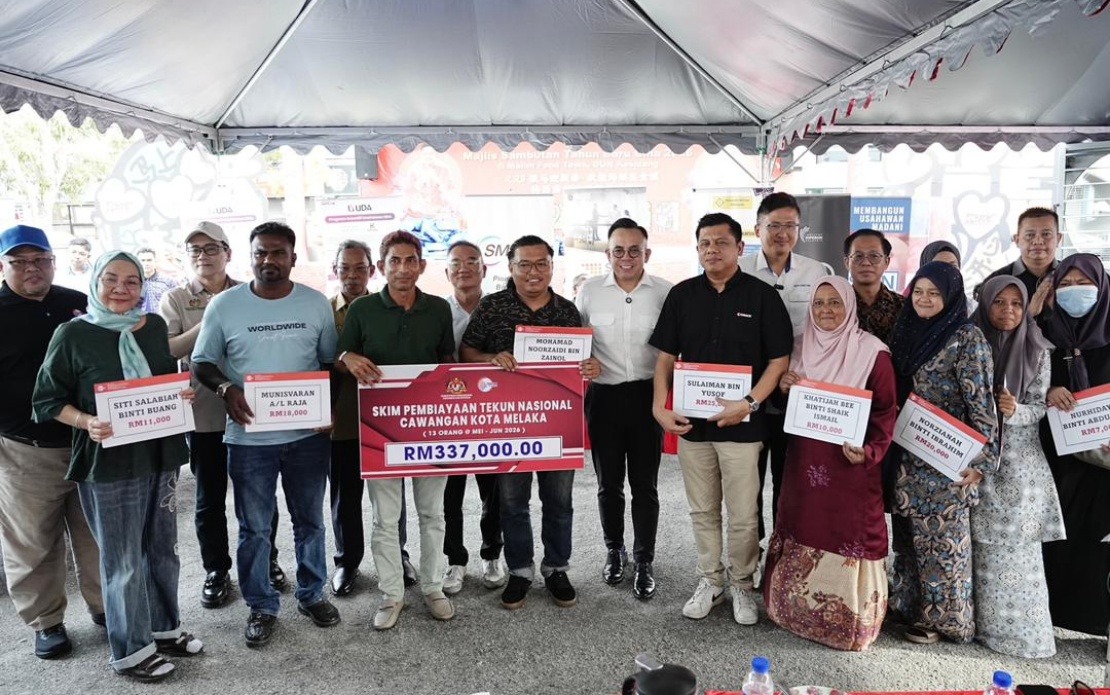
Among the concrete outcomes of this financing push was a mega meet-and-greet session at Malim Food Town, where Minister Sim personally engaged with approximately 50 local entrepreneurs. During this gathering, the ministry distributed nearly RM1 million in financing to 18 entrepreneurs through TEKUN Nasional and SME Corp Malaysia. The recipients spanned diverse sectors including food and beverages, wholesale operations, professional services, construction contracting, retail, e-commerce, automotive services, and various other businesses. This sectoral diversity highlights that the ministry's approach is not narrowly focused but tailored to support the full spectrum of entrepreneurial activity that characterises Melaka's economy.
The PowerUp10K initiative represents an ambitious scaling-up of these efforts. By channelling RM15 billion in financing to MSMEs nationwide during the current year, the programme aims to reach entrepreneurs who might otherwise lack pathways to growth capital. This target-driven approach provides a concrete benchmark against which progress can be measured, while signalling to the business community that government support for entrepreneurship is substantial, sustained, and backed by measurable commitments. For Malaysian entrepreneurs watching from other states, the Melaka success story serves as proof of concept that such programmes deliver real results.
Minister Sim also articulated a strategic perspective on Malaysia's competitive advantages in attracting investment and supporting business growth. He highlighted the country's multicultural and multilingual character as a distinctive economic asset. Malaysia's diversity in ethnicity, languages, and cultural traditions creates a rich talent pool that appeals to foreign investors seeking to establish regional headquarters or manufacturing bases. Simultaneously, this same diversity enables local businesses to understand and penetrate broader regional markets across Southeast Asia, where similar multicultural communities exist. This perspective reframes Malaysia's diversity not as a challenge to be managed but as an economic asset to be leveraged.
For entrepreneurs in Melaka specifically, the implications are substantial. The state has historically lagged behind more industrialised regions in per-capita business density, making targeted financing initiatives particularly impactful. By reducing the cost of capital and simplifying access pathways, KUSKOP enables Melaka entrepreneurs to compete more effectively with better-capitalised businesses in Selangor or Kuala Lumpur. A food entrepreneur in Malim, for instance, can now secure funds to upgrade kitchen facilities or expand distribution networks without years of saving or high-interest informal lending.
The timing of these initiatives also reflects responsiveness to post-pandemic economic conditions. Many MSMEs faced cashflow constraints during lockdowns and have only recently rebuilt reserves sufficient for reinvestment. Government financing fills the gap between recovery and growth, providing bridge capital that allows businesses to move from survival mode to expansion mode. This support proves particularly valuable in states like Melaka where tourism-dependent businesses (hotels, restaurants, retail) and manufacturing segments were disproportionately affected by pandemic disruptions.
Looking forward, the sustainability of these financing programmes depends partly on uptake rates and loan repayment discipline. Government financing is most effective when businesses utilise it productively and generate sufficient returns to repay. The ministry's emphasis on engaging directly with entrepreneurs—through carnival events and walkabouts—suggests an awareness that financing alone is insufficient; entrepreneurs also require mentorship, market intelligence, and networking opportunities. The walkabout at Malim Food Town, where Sim and local officials observed business operations firsthand, signals commitment to understanding ground-level challenges beyond spreadsheet metrics.
The broader policy environment matters too. While KUSKOP financing addresses capital availability, entrepreneurs also navigate regulatory environments, utility costs, labour regulations, and supply chain dynamics. Melaka's specific context—with strengths in food production, tourism, and light manufacturing—means that financing programmes should ideally complement sector-specific support in areas like export certification, digital transformation, and skills development. When bundled together, these interventions create an ecosystem conducive to sustainable entrepreneurial growth.
For regional observers in Singapore, Thailand, and Indonesia, Malaysia's KUSKOP programme offers insights into how governments can systematically support MSME development. The emphasis on reaching specific numbers of entrepreneurs through measurable financing targets, combined with direct ministerial engagement and nationwide coordination, represents a whole-of-government approach increasingly recognised as essential for inclusive economic growth. As Southeast Asian economies grapple with post-pandemic recovery and regional competition, the success or shortcomings of such programmes will influence how policymakers in neighbouring countries calibrate their own MSME support mechanisms.
%22%2F%3E%3C%2Fpattern%3E%3C%2Fdefs%3E%3Crect%20width%3D%22100%25%22%20height%3D%22100%25%22%20fill%3D%22url(%23ph4jkmhg)%22%2F%3E%3Crect%20width%3D%22100%25%22%20height%3D%22100%25%22%20fill%3D%22url(%23ph4jkmhp)%22%2F%3E%3Ctext%20x%3D%2250%25%22%20y%3D%2250%25%22%20text-anchor%3D%22middle%22%20dominant-baseline%3D%22central%22%20fill%3D%22rgba(255%2C255%2C255%2C0.95)%22%20font-family%3D%22Georgia%2C%20'Times%20New%20Roman'%2C%20serif%22%20font-weight%3D%22700%22%20font-size%3D%22272%22%20letter-spacing%3D%22-0.02em%22%3EAnwar%3C%2Ftext%3E%3C%2Fsvg%3E)