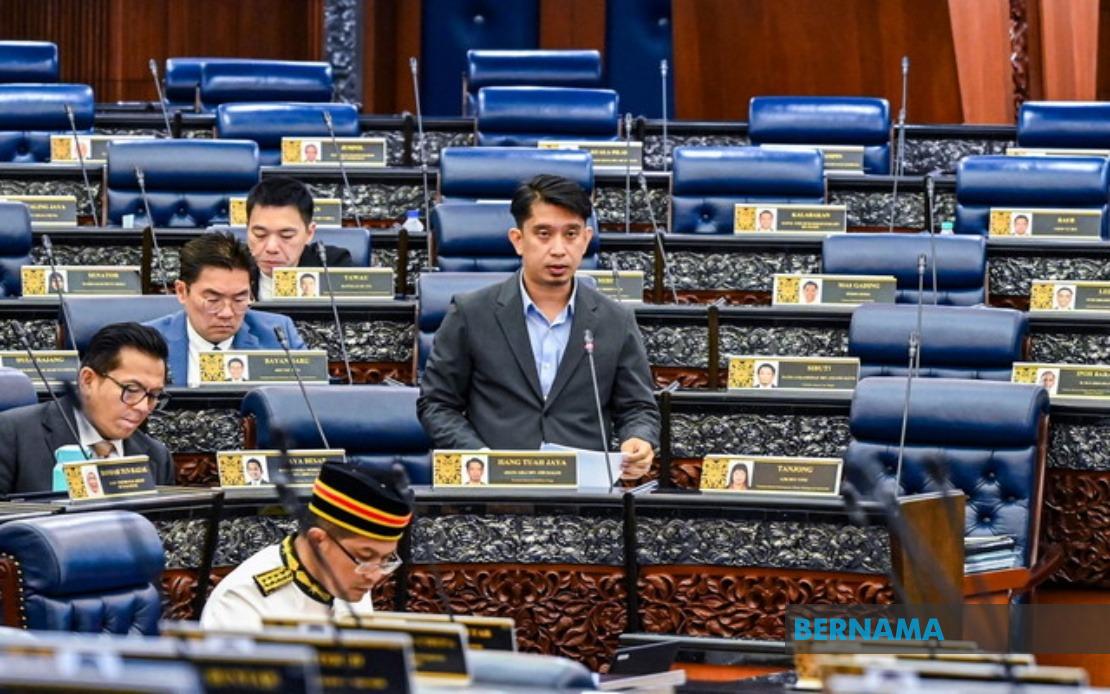
Parliament learned today that Malaysian public higher learning institutions have recruited over 326,000 students into science, technology, engineering and mathematics programmes during the past three years, underscoring the government's commitment to developing a technology-driven workforce. The Dewan Rakyat was informed that of 556,556 diploma and degree students who enrolled in public institutions of higher education (IPTA) between 2023 and March 2026, exactly 326,419 pursued STEM disciplines while the remaining 230,137 selected non-STEM fields, indicating a 59-41 split favouring technical qualifications.
Deputy Minister of Higher Education Adam Adli Abd Halim presented the enrolment figures in response to parliamentary questioning, drawing from the Ministry of Higher Education's comprehensive MyMOHES database. The data reveals that despite Malaysia's diverse economic needs spanning services, commerce and humanities, the public university system has deliberately skewed admissions toward science and technical fields. This strategic allocation reflects deliberate policy choices rather than student demand alone, signalling institutional priority-setting from the ministry level.
Adam Adli framed the STEM concentration within broader national objectives, explaining that public universities are calibrating their intake to address anticipated shortages in high-technology sectors. He specifically highlighted artificial intelligence, semiconductor manufacturing, automation systems, digital transformation and green energy technologies as priority areas where Malaysia faces competitive pressures and skill gaps. These sectors represent the economic frontier where Malaysia seeks to establish regional and global competitiveness, moving beyond traditional roles in commodity production and assembly.
The parliamentary exchange touched on deeper questions about human capital planning and economic strategy. Datuk Dr Ku Abd Rahman Ku Ismail, representing the opposition Perikatan Nasional coalition, pressed for details comparing enrolment patterns between public and private higher education institutions, seeking to understand whether private colleges were filling different educational niches or simply duplicating public sector offerings. The question reflects concern that Malaysia's private education sector, which operates substantial institutions, might not be sufficiently aligned with national development priorities.
More significantly, Dr Ku raised the issue of engineering projections under the National Science, Technology and Innovation Policy, known as DSTIN 2021-2030, which is administered by the separate Ministry of Science, Technology and Innovation rather than the Higher Education Ministry. This jurisdictional distinction matters substantially in Malaysian governance, as policy coherence across multiple ministries often proves challenging. The deputy minister clarified that DSTIN does not establish fixed numerical targets for engineers by specific discipline, a potentially important caveat that suggests flexibility rather than rigid planning.
Instead, the government has adopted a broader framework focused on developing the entire Researchers, Scientists, Engineers and Technologists ecosystem, abbreviated as RSET. This approach represents sophisticated human capital thinking, recognising that innovation systems depend on diverse roles beyond narrow engineering specialisation. The RSET framework encompasses research scientists, technologists, technicians and supporting professionals, creating an interdependent labour market rather than isolated skill silos.
Under this RSET framework, Malaysia has established a target of 200 such professionals per 10,000 workers by 2030. Given the projected national workforce of approximately 17.06 million people, Adam Adli calculated that Malaysia will require approximately 341,200 RSET professionals by the end of this decade. This figure provides strategic context for current enrolment levels; with over 326,000 STEM students enrolled since 2023 alone, Malaysia appears to be on trajectory to meet this aggregate target, though timing, field distribution and graduate employment require careful monitoring.
The implications for Malaysian higher education are substantial. The public university system has essentially committed itself to a STEM-heavy mission that will require corresponding investments in infrastructure, faculty expertise and laboratory facilities. Current enrolment suggests that within the next several years, Malaysian employers will face a significant influx of new STEM graduates, creating both opportunities and potential absorption challenges if job creation in relevant sectors lags behind qualification supply.
When Onn Abu Bakar, representing the government coalition's Pakatan Harapan component, asked about expanding expert lecturers, research laboratories and advanced facilities to support growing AI, semiconductor and digital engineering programmes, the deputy minister signalled that the government is concentrating institutional development efforts through the Malaysian Technical University Network, or MTUN. This network comprises four specialised universities that serve as focal points for technical education innovation and research capacity.
The MTUN approach represents a deliberate concentration strategy rather than attempting comprehensive upgrading across all public universities. This model acknowledges resource constraints while attempting to create islands of excellence that can drive sector-wide improvements through knowledge dissemination and benchmark-setting. However, it also raises questions about whether four institutions can adequately serve Malaysia's technical education needs across a country spanning three time zones and multiple regional clusters.
For Malaysian employers and industries, these enrolment figures signal an approaching era where technical talent should become more readily available, potentially moderating the acute skills shortages currently constraining sectors like information technology, electronics manufacturing and renewable energy. However, whether the qualifications being produced match actual industry requirements, and whether graduates possess the practical and soft skills employers demand, remain open questions. The raw numbers provide only part of the picture concerning workforce readiness.
Regionally, Malaysia's STEM concentration compares to similar policy pushes across Southeast Asia, where governments increasingly view technical education as essential to middle-income economic transition. Thailand, Vietnam and Indonesia have pursued comparable strategies, creating regional competition for technical talent and potential oversupply in certain disciplines. Malaysian graduates will increasingly compete in regional labour markets, particularly in Singapore and advanced manufacturing hubs, meaning quality and specialisation matter as much as quantity.
The government's emphasis on alignment with industry needs represents appropriate policy rhetoric, but actual implementation through continuous curriculum revision, employer engagement in teaching, and apprenticeship integration remains inadequately developed in Malaysia's higher education system compared to leading technical education nations. As the IPTA sector rapidly expands STEM capacity, bridging the gap between academic provision and practical industry application will determine whether this substantial investment in human capital translates into genuine competitive advantage.

