Singapore is experiencing a surge in grassroots activism, with more than 200 community projects applying for grants under a freshly launched S$50 million fund designed to support ground-up initiatives. The SG Partnerships Fund, announced by Prime Minister Lawrence Wong during his February 2026 Budget speech and operationalised in April 2026, represents a significant shift in how the city-state channels resources toward citizen-led social solutions. The response underscores strong demand among Singaporeans to translate ideas into tangible community programmes without bearing prohibitive costs themselves.
The fund operates through a tiered structure that accommodates initiatives at different stages of maturity and scale. The seed tier, offering grants up to S$5,000, targets individuals, grassroots organisations, and newly registered entities piloting fresh concepts within their communities. The sprout tier provides up to S$50,000 for established organisations aiming to create sector-wide change. The recently launched scale tier, unveiled in July 2026, awards grants reaching S$1 million for mature organisations with ambitions to transform entire sectors. According to Hasliza Ahmad, director of the Singapore Government Partnerships Office (SGPO), the seed tier has proven most popular among applicants—a finding that speaks to the appetite among ordinary citizens to initiate change rather than relying solely on established players.
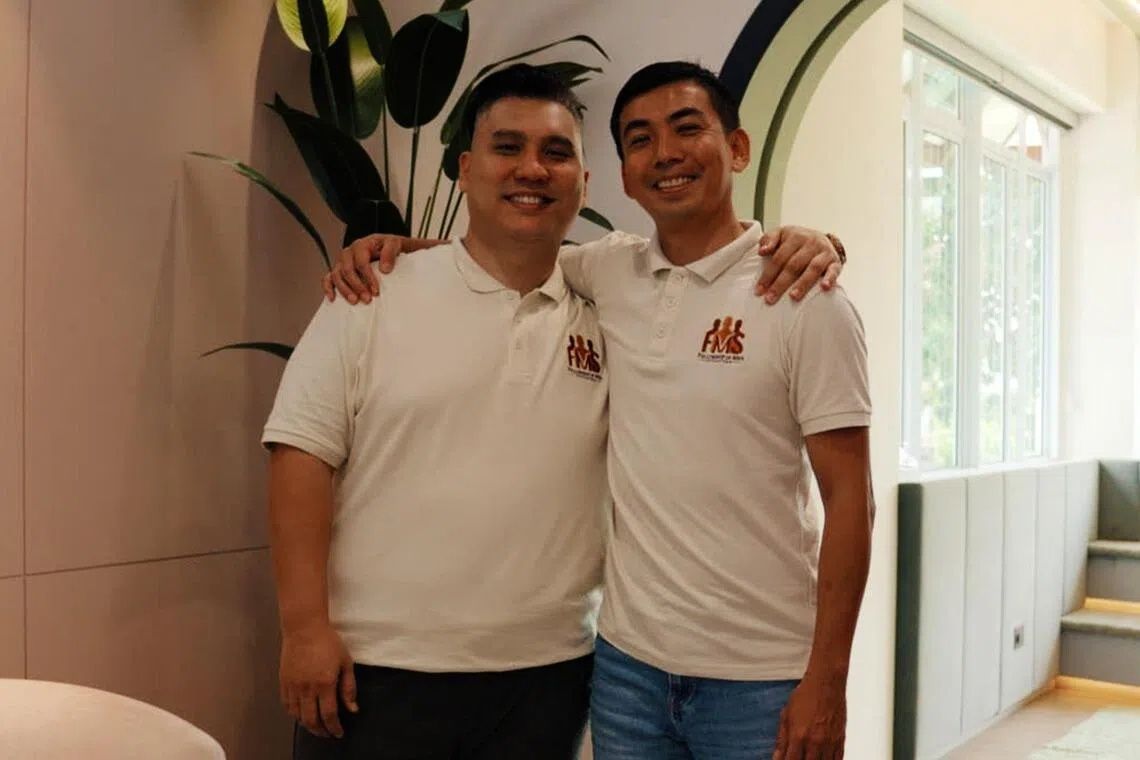
Fellowship for Movement Singapore exemplifies the kind of initiative the fund targets. Co-founders Ben Ang and Ismail Didih Ibrahim met five years prior at a family service centre, where both recognised a critical gap in how Singapore addresses male mental health and emotional resilience. Rather than focusing on crisis intervention after problems escalate, they pivoted toward prevention and early intervention. Ang, who served as the centre's director, and Didih, a volunteer who operated Japanese and nasi padang food stalls, eventually abandoned their full-time positions to launch their non-profit formally in January 2026. Their approach blends community engagement, peer mentoring, and facilitated group activities that provide men with accessible entry points to discuss masculinity, emotional wellbeing, relationships, and the importance of seeking professional help—all delivered in conversational, hands-on formats rather than clinical settings.
When awarded the seed-tier grant, Ang and Didih capitalised on the funds to conduct a three-hour workshop at a culinary school in Geylang. The session brought together 24 men alongside their wives and children, transforming cooking into a vehicle for discussing self-care, family dynamics, and help-seeking behaviour. Without the grant, this activity would have occurred in Ang's home kitchen and entirely out of pocket. The experience has galvanised their ambition to expand into a broader movement, with plans to apply for larger grants in future rounds. Ang's vision extends beyond conventional notions of masculinity as provider and protector, aiming instead to foster a culture where men feel empowered to acknowledge their humanity and emotional dimensions—a cultural reframing particularly relevant in Southeast Asian societies where traditional masculine norms often constrain emotional expression.
Another compelling example emerges from Loke Wai Yee, a 21-year-old LASALLE College of the Arts student. During the annual "angel tree" season—when disadvantaged children display Christmas wish lists on shopping mall trees—Loke observed significant geographic and economic barriers. The trees appeared only in certain parts of Singapore, and expensive gift items excluded younger and budget-conscious donors. This observation prompted her to partner with twelve peers to launch Little Wishes, an online platform democratising charitable giving. The seed grant allowed them to hire professional web developers rather than attempting the build themselves, resulting in a polished, user-friendly site launching in August 2026. Little Wishes enables donors to select gifts within their budget and receive matching data connecting their contributions to specific child beneficiaries, thereby widening access to charitable participation across Singapore's diverse socioeconomic landscape.
The SGPO's role extends significantly beyond mere fund distribution. The office actively functions as a connector and guide, linking grant recipients with social service agencies, introducing them to complementary funding streams, and providing ongoing mentorship. For Little Wishes, this ecosystem approach proved transformative—the team leveraged SGPO connections to identify relevant partners and information resources that enriched their project design and implementation pathway. This comprehensive support model recognises that financial resources alone insufficient; grassroots initiatives require access to networks, expertise, and organisational guidance to translate concepts into sustainable programmes. Such scaffolding is particularly valuable for young or first-time social entrepreneurs navigating regulatory, operational, and strategic complexities.
The tiered structure itself reflects nuanced understanding of initiative development. Seed-tier grants function as proof-of-concept investments, enabling individuals to test ideas with minimal financial risk and demonstrate viability. This democratisation particularly benefits younger citizens and those from less privileged backgrounds who might possess compelling ideas but lack capital to validate them. Sprout and scale tiers subsequently reward organisations demonstrating traction, allowing them to deepen and expand impact. Hasliza's observation that seed-tier applications dominate reflects this logic—citizens prioritise launching new concepts over scaling existing ones, suggesting healthy pipeline development for future community solutions.
For Malaysia and the broader Southeast Asian region, Singapore's SG Partnerships Fund model offers instructive lessons regarding citizen engagement and social innovation funding. Many Southeast Asian societies grapple with questions about how best to mobilise grassroots energy while ensuring effective resource deployment. Singapore's approach—combining tiered grants with active partnership support—suggests that accessibility and mentorship prove equally important as money itself. The fund's success in attracting over 200 applications indicates that suppressed demand exists among citizens to address community challenges through their own initiatives, provided structural and financial barriers diminish. Malaysian policymakers and social sector leaders might consider whether comparable mechanisms could unlock similar energy domestically.
The SG Partnerships Fund also highlights how shifting demographics and values shape social policy. Younger Singaporeans, exemplified by Loke and her cohort, demonstrate eagerness to tackle inequality and social fragmentation through digital platforms and inclusive design thinking. Simultaneously, issues around male mental health and help-seeking—traditionally taboo across many Asian societies—gain mainstream attention through initiatives like Fellowship for Movement Singapore. These trends suggest that Singapore's next generation of leaders will increasingly expect government to enable rather than solely provide social solutions, and to address issues previously confined to private or charitable spheres.
As applications continue processing, the fund's ultimate impact will depend on implementation quality and recipient organisations' capacity to deliver. However, the volume of applications and diversity of initiatives already signal that this funding mechanism has tapped into genuine community aspiration. Whether other Southeast Asian governments adopt comparable models could significantly shape how grassroots social innovation develops across the region. For Singapore specifically, the fund represents both validation of active citizenship and a calculated bet that distributed, community-led problem-solving can complement government-directed programmes in building more resilient, inclusive societies.

