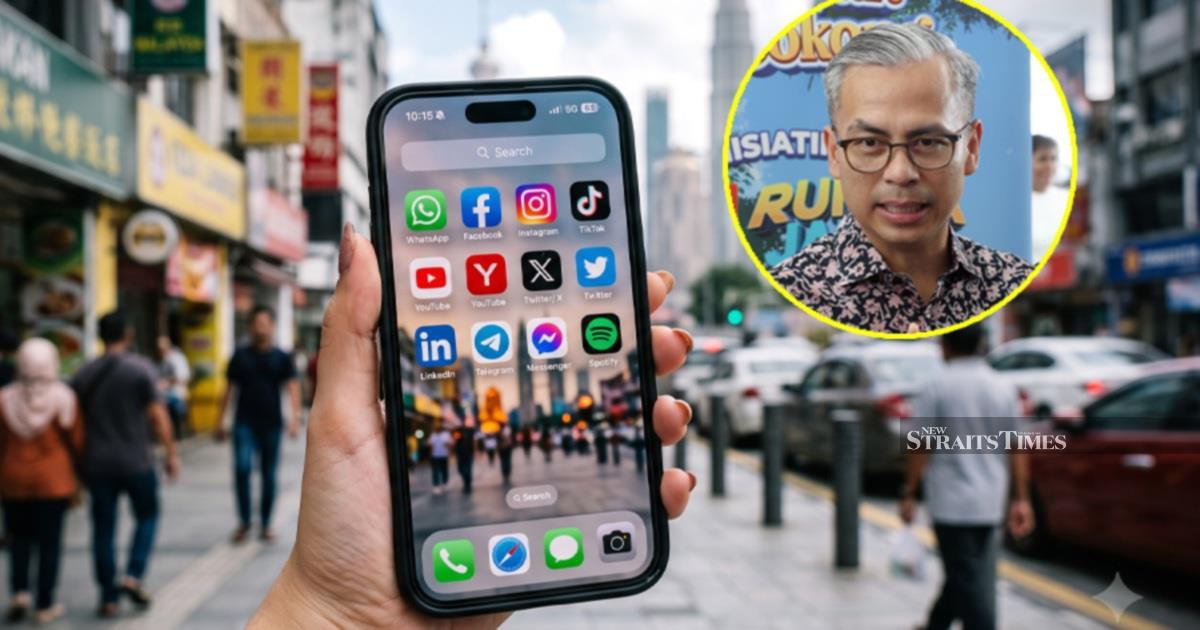
Malaysia's Communications Ministry has uncovered a significant disinformation operation involving more than 1,800 fake social media accounts, many strategically deployed to inflame sensitivities around race, religion, and royalty matters. Communications Minister Datuk Seri Fahmi Fadzil disclosed the findings, underscoring the growing sophistication and scale of coordinated inauthentic behaviour on digital platforms targeting the nation's delicate social fabric.
The discovery represents a substantial escalation in what authorities view as organised efforts to weaponise social media for divisive purposes. The sheer volume of detected accounts suggests resources, planning, and coordination beyond isolated bad actors. By concentrating on the so-called 3R issues—among Malaysia's most sensitive topics—the operators appear intent on maximising social polarisation and undermining national cohesion during a period when digital influence campaigns have become increasingly prevalent across Southeast Asia.
The 3R framework itself reflects Malaysia's constitutional and social reality. Article 153 of the Federal Constitution enshrines special rights and privileges for Malays and bumiputeras, while Islam holds constitutional status as the Federation's religion. The institution of the monarchy commands deep reverence in Malaysian culture and law. Content weaponising these pillars strikes at foundational aspects of the Malaysian compact, making their instrumentalisation through inauthentic networks particularly corrosive to public discourse.
Fahmi's announcement arrives amid a broader regional reckoning with information manipulation. Neighbouring countries have similarly grappled with coordinated inauthentic behaviour preceding elections and during periods of political turbulence. Thailand, Indonesia, and the Philippines have each documented state-sponsored and commercially-motivated fake account networks designed to shape narratives and amplify division. Malaysia's detection of such a substantial operation suggests either comparable sophistication in domestic or foreign operations, or heightened vigilance by authorities.
The mechanics of such campaigns typically involve networks of bot accounts, compromised or fabricated profiles, and coordinated engagement designed to game algorithmic visibility. By simultaneously posting and amplifying inflammatory 3R content, operators create the false impression of grassroots outrage, trick platform algorithms into wider distribution, and potentially trigger authentic users into engaging—thereby expanding reach organically. The strategy weaponises social media's own mechanics against authentic discourse.
Identifying and measuring such networks presents technical and definitional challenges. Platforms employ detection algorithms, but sophisticated operators continuously evolve tactics to evade identification. The figure of 1,800 accounts likely represents those detected with reasonable confidence, suggesting the actual network may be larger or that ongoing detection efforts continue. The disclosure itself serves a protective function, alerting the public and platforms to exercise heightened scrutiny of similar patterns.
The revelation carries implications for Malaysia's digital governance landscape. The government has previously enacted legislation addressing online content, including provisions addressing sedition and religious sensitivity. The Communications Ministry's role in coordinating detection and response raises questions about the relationship between such regulatory frameworks and enforcement, as well as public-private partnerships with platform operators who host the networks. Transparency regarding removal rates and platform cooperation will prove crucial to public confidence.
For Malaysian users and civil society, the findings underscore the importance of digital literacy and source verification. Fake account networks succeed partly through exploiting confirmation bias and emotional responses to sensitive topics. Users encountering inflammatory 3R content should scrutinise account authenticity, posting patterns, and whether claims contain verifiable evidence. Shares and retweets of unverified content inadvertently amplify disinformation.
The international dimension merits consideration. While authorities have not publicly attributed the operation to specific actors, such campaigns occasionally originate from state-sponsored operations, commercial manipulation firms, or organised domestic actors. The targeting of Malaysia's 3R sensitivities could reflect foreign actors seeking to destabilise, domestic political actors seeking electoral advantage, or commercial entities monetising engagement. Each scenario demands different investigative and preventive approaches.
Platform accountability represents another critical element. Facebook, Instagram, Twitter (now X), and TikTok have committed to transparency reports detailing inauthentic behaviour removal. The Malaysian operation's detection should prompt verification that these platforms rapidly remove identified networks and adjust systems to prevent recurrence. Users should report suspicious accounts to platform operators, contributing to crowdsourced detection.
Moving forward, the ministry's priorities should include sustained monitoring, public awareness campaigns distinguishing authentic from inauthentic engagement, and coordination with international partners investigating transnational disinformation operations. Strengthening digital literacy through education systems and community programmes offers longer-term resilience against such campaigns regardless of their source.
The discovery of 1,800 fake accounts underscores that information warfare has become a tangible dimension of Malaysian social life. Combating such operations requires technical sophistication, regulatory clarity, platform cooperation, and informed citizenry. Datuk Seri Fahmi's disclosure, while concerning, demonstrates that detection mechanisms exist—what remains is sustaining vigilance while protecting legitimate speech and discourse.

