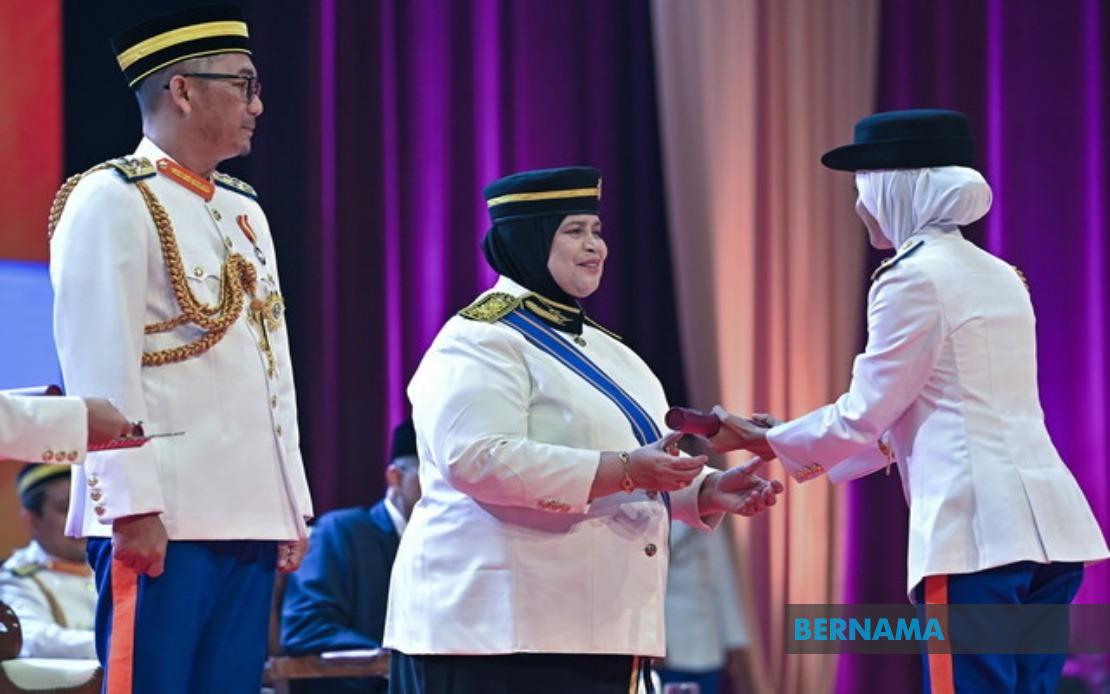
Approximately 1,107 cadets from the Civil Defence Student Corps (Kor SISPA) studying at 36 higher learning institutions across Malaysia will become the inaugural recipients of a newly approved allowance scheme, with disbursements commencing this month. The phased implementation represents a significant milestone in enhancing the financial welfare of student volunteers engaged in civil defence activities, reflecting government commitment to supporting youth participation in disaster management and public safety initiatives.
Deputy Minister of Rural and Regional Development Datuk Rubiah Wang announced the scheme during the 17th National Kor SISPA Commissioning Ceremony at Universiti Pendidikan Sultan Idris in Tanjong Malim, representing Deputy Prime Minister Datuk Seri Dr Ahmad Zahid Hamidi. She characterised the development as a watershed moment for the organisation, transitioning welfare improvements from abstract discussions into tangible policy implementation. The inaugural phase carries a financial commitment of approximately RM500,000, with subsequent phases planned to extend benefits to larger cohorts of student members.
The allowance structure employs a performance-based calculation methodology tied to duty hours worked by cadets. Students holding bachelor's degrees will receive RM9.80 per hour, while diploma holders qualify for RM8 per hour compensation. This differential reflects educational qualification levels whilst maintaining reasonable remuneration for both groups. The one-off nature of the allowance distinguishes it from ongoing salary arrangements, positioning it as recognition for specific service contributions rather than permanent employment compensation.
Rubiah, who additionally serves as Civil Defence honorary commissioner, emphasised that the initiative addresses a longstanding gap in supporting student volunteers whose contributions extend throughout the academic year. Civil Defence personnel involvement transcends traditional disaster response roles, encompassing university-based events, campus activities, and community engagement programmes. By introducing financial incentives, authorities aim to reinforce the value placed on such service and encourage sustained participation among the student demographic.
The government signalled its intention to identify additional fiscal mechanisms to progressively expand the allowance programme, potentially reaching broader segments of the Kor SISPA membership. This incremental approach reflects pragmatic budget management whilst demonstrating substantive commitment to welfare enhancement. Officials indicated that expansion timelines depend on fiscal availability and strategic prioritisation within the rural and regional development portfolio.
Since its establishment in 2010, Kor SISPA has cultivated a pipeline of trained civil defence volunteers through universities, polytechnics, and teacher education institutes nationwide. The organisation has graduated 11,802 trained personnel to date, representing a substantial cadre of youth engaged in public safety infrastructure. These individuals bring institutional knowledge, community connections, and motivation to civil defence operations, constituting an invaluable national asset in disaster preparedness and response capabilities.
The allowance scheme carries broader implications for Malaysian higher education and youth engagement policy. Financial recognition of extracurricular civil defence participation may influence student decisions regarding volunteer involvement, potentially strengthening recruitment and retention within the programme. For institutions, the policy signals government recognition of campus-based emergency preparedness initiatives, potentially encouraging universities to enhance their civil defence infrastructure and training provisions.
Regionally, Malaysia's development of formalized student civil defence corps with accompanying welfare provisions positions the nation as an institutional innovator in youth disaster management. Many Southeast Asian neighbours grapple with translating disaster risk reduction frameworks into effective student engagement mechanisms. The Malaysian model, combining structured training, institutional embedding, and financial recognition, offers a replicable template for neighbouring countries seeking to build youth participation in civil defence systems.
The commissioning ceremony structure itself reflects military-style institutional formality, reinforcing the professional character of student participation in civil defence. By holding national ceremonies at different campuses annually, the government maintains visibility of the programme whilst creating aspirational moments for student cadets. The scheduled next ceremony at Universiti Sultan Zainal Abidin (UniSZA) continues geographic rotation, symbolising equitable distribution of recognition across institutional networks.
For individual cadets, the allowance carries practical significance beyond its monetary value. Formal government remuneration acknowledges the legitimacy and importance of civil defence service, potentially affecting how students perceive their volunteer roles and their professional trajectories post-graduation. Some may leverage such experience toward careers in emergency management, public administration, or security sectors, multiplying societal returns on the investment.
The scheme's success will depend substantially on administrative implementation efficiency. Payment processing must function smoothly across dispersed institutions to maintain participant confidence. Transparent communication regarding eligibility criteria, calculation methodologies, and payment schedules will prove essential for programme credibility and sustained engagement.
Longer-term, this allowance initiative may catalyse broader reconceptualization of student volunteer compensation across Malaysian public service programmes. If successful, comparable schemes in other civil defence domains or humanitarian service areas could follow, reshaping how government values youth contributions to national resilience infrastructure.

