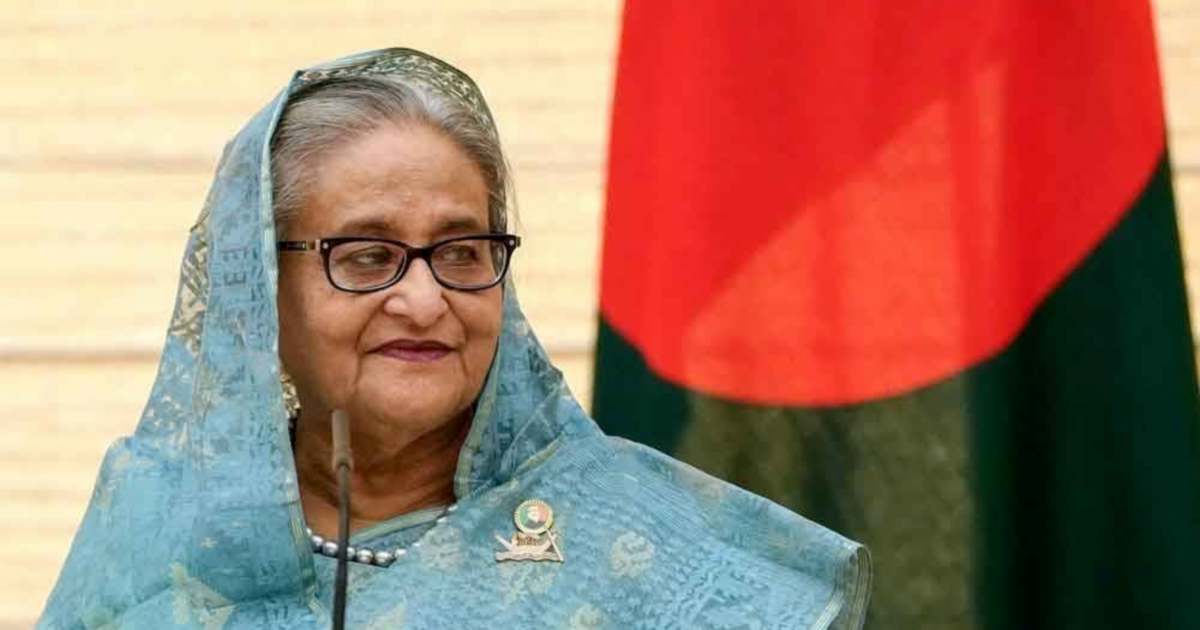
Sheikh Hasina, who fled Bangladesh following mass protests that toppled her government, has declared her intention to re-enter the country within twelve months despite a death sentence imposed while she remains outside national borders. The exiled former Prime Minister has categorically rejected the judicial ruling against her, framing it as fundamentally illegitimate and driven by political calculations rather than legal merit. Her assertion represents a high-stakes challenge to Bangladesh's interim administration and signals that the political turmoil engulfing the South Asian nation remains far from resolution.
The death sentence was delivered in her absence, a procedure that remains controversial within international legal circles and Bangladesh's own judicial system. Hasina's defiant response indicates that she views the conviction not as a consequence of legitimate legal proceedings but as an instrument of political persecution wielded by her successors. This characterisation reflects the increasingly polarised nature of Bangladesh's political landscape, where the boundary between justice and revenge has become severely blurred in the eyes of competing factions.
Hashina's government fell amid widespread civil unrest that culminated in her departure from the capital earlier this year. The protests, which drew hundreds of thousands to the streets, reflected deep discontent over issues ranging from nepotism in public appointments to the handling of a controversial job quota system. Her exit triggered a significant shift in Bangladesh's political equilibrium, with various factions now seeking to consolidate power and reshape national institutions according to their vision.
Since fleeing the country, Hasina has maintained an active political presence from abroad, issuing statements and conducting media interviews that keep her movement visible despite physical distance. Her determination to return constitutes an implicit assertion that her political career remains unfinished and that she retains significant support among segments of Bangladesh's population. The timing of such a return could prove consequential, potentially reigniting political tensions and forcing the interim administration to respond to her direct presence within the country.
The judicial system's role in these proceedings has attracted international scrutiny and criticism from human rights organisations. The practice of delivering capital sentences in absentia, particularly in politically sensitive cases, raises fundamental questions about due process protections and the independence of the judiciary. For Malaysian observers and Southeast Asian analysts, the Bangladesh situation serves as a cautionary example of how judicial institutions can become entangled in political power struggles, potentially undermining rule of law principles that underpin stable governance.
Hasina's political legacy encompasses three separate terms as Prime Minister, during which she pursued development-focused policies and attempted to strengthen Bangladesh's institutional capacity. Her government also faced allegations regarding extrajudicial killings and restrictions on press freedom, issues that became flashpoints during the anti-government movement that preceded her downfall. These complications mean that her return would necessarily involve reckoning with multiple layers of accountability and political reconciliation.
The interim administration currently governing Bangladesh faces the practical challenge of managing potential unrest should Hasina follow through on her return pledge. Her Awami League party maintains organisational structures and grassroots support networks, particularly among urban middle-class constituencies and rural communities where her family's political legacy remains strong. Any attempt to physically prevent her return could generate confrontations that destabilise the fragile equilibrium the interim government has been attempting to construct.
International observers have closely monitored Bangladesh's political trajectory given the nation's strategic importance to regional security and economic frameworks. Malaysia and other ASEAN members have interests in seeing Bangladesh stabilise, as continued political volatility could produce humanitarian crises and complicate regional economic cooperation. The prospects for Hasina's return therefore extend beyond domestic Bangladesh politics and carry implications for broader Southeast Asian stability and interstate relations.
The pathway toward potential reconciliation between Hasina's supporters and the interim administration remains unclear. Without substantial political dialogue or institutional frameworks designed to address historical grievances whilst moving forward, Bangladesh appears locked in a cyclical pattern where successive governments pursue litigation against predecessors. This dynamic suggests that Hasina's anticipated return, rather than concluding the political chapter opened by her departure, could inaugurate a new phase of confrontation and uncertainty.
Hasina's vow reflects political resolve but also carries significant personal risk. Her government's security record and the circumstances surrounding her departure suggest that returning to Bangladesh could expose her to genuine danger, whether through legal mechanisms or other means. Nevertheless, her explicit refusal to accept the death sentence verdict and her commitment to return signal that she regards the political struggle as essentially incomplete, setting the stage for continued upheaval in Bangladesh's governance landscape and testing the region's capacity to manage complex political transitions within established democratic and legal frameworks.

