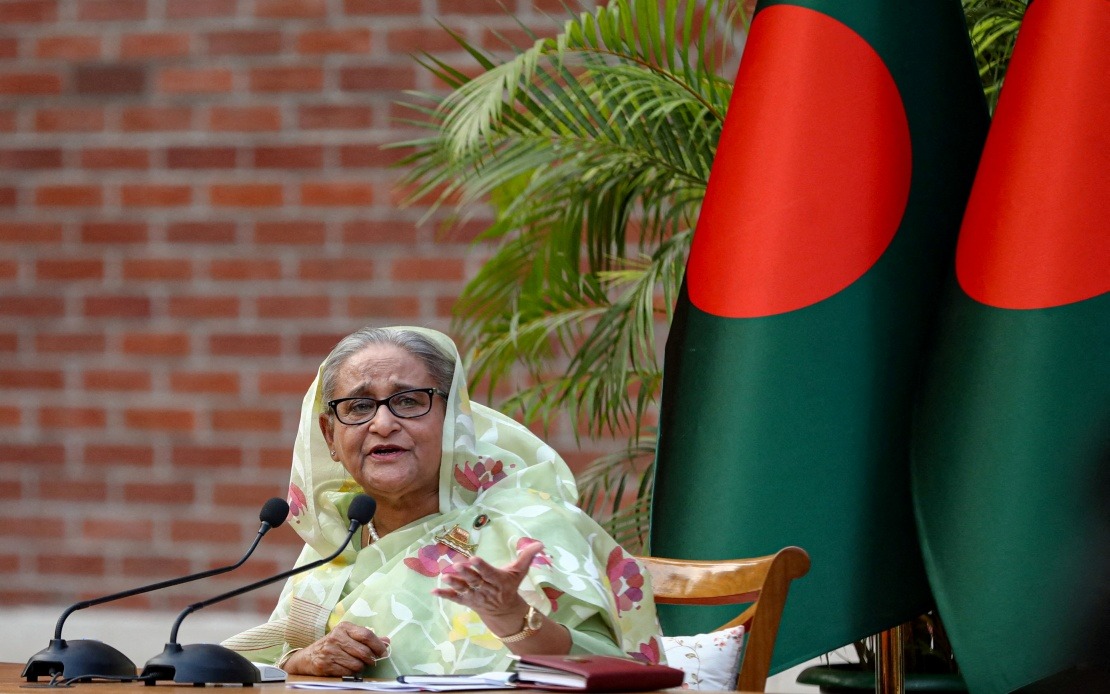
The ousted Prime Minister of Bangladesh, Sheikh Hasina, has declared her intention to return to her homeland and submit to legal proceedings, even as she faces the prospect of imprisonment or execution following a conviction handed down in absentia. In remarks made to international media, the 78-year-old former leader acknowledged the severe personal risks inherent in her decision but remained resolute about confronting the judicial system in her country, marking a striking statement from exile in India where she has resided since August 2024.
Hashina's conviction emerged from a war crimes tribunal in November 2025, which found her guilty of crimes against humanity connected to a violent crackdown on student-led protests that occurred in 2024. The tribunal sentenced her to death following a trial conducted without her presence or direct participation. The former prime minister has consistently maintained that the conviction is rooted in political calculation rather than genuine legal merit, characterizing the charges as a weaponization of the judiciary by her political rivals now in power in Dhaka.
The sequence of events that precipitated her downfall began when Bangladesh's high court reinstated a 30 percent employment quota for descendants of veterans from the 1971 independence war. This judicial decision sparked widespread student protests that rapidly metamorphosed into a broader anti-government movement challenging Hasina's Awami League administration. Security forces deployed to manage the demonstrations engaged in lethal force against demonstrators, with the United Nations documenting approximately 1,400 deaths during the unrest, predominantly from gunshot wounds inflicted by state security personnel.
Hashina has persistently denied any personal responsibility for the deaths, asserting instead that political opponents manipulated the protest movement to serve their own ends. In her recent statements, she proposed an alternative investigative approach: independent international forensic experts could examine the circumstances surrounding each fatality, analyzing ballistic evidence and wound patterns to establish an objective factual record. This suggestion implies that such a neutral examination might contradict the narrative underpinning her conviction and vindicate her claims of non-culpability.
The international human rights community has approached Hasina's conviction with considerable skepticism. Human Rights Watch has highlighted procedural deficiencies in the tribunal's proceedings, particularly the absence of the defendant throughout the trial process. While the organization reaffirmed that genuine abuses committed during Hasina's tenure warrant accountability, it questioned whether a trial conducted in the defendant's absence meets established international standards for criminal justice. This position captures a fundamental tension: acknowledging legitimate grievances against Hasina's government while questioning the legitimacy of the mechanisms used to prosecute her.
Bangladesh's current authorities, led by Prime Minister Tarique Rahman following the Bangladesh Nationalist Party's electoral victory in February 2026, have requested India's extradition of Hasina to face domestic trial. India's Ministry of External Affairs has indicated it is reviewing the extradition petition while examining the broader legal and judicial dimensions of the matter. This diplomatic choreography reflects the delicate balance India must maintain between bilateral relations with Bangladesh and its own legal obligations and principles governing extradition decisions.
Hashina's historical tenure as premier spanned five separate terms, with her most recent administration lasting from January 2009 until her flight in August 2024. Her earlier years in office witnessed significant security incidents, including the July 2016 attack on the Holey Artisan Bakery in Dhaka, where Islamist militants murdered 20 hostages—including nine Italians, seven Japanese, two Bangladeshis, and one Indian-American—along with two police officers responding to the siege. Several Japanese victims were engaged in work on a rapid transit infrastructure project funded by the Japan International Cooperation Agency, underscoring Bangladesh's integration into regional development initiatives.
The political landscape in Bangladesh has undergone substantial transformation since Hasina's departure. An interim administration initially assumed control under Muhammad Yunus, the Nobel Peace Prize laureate and pioneering microfinance entrepreneur, who was proposed for leadership by the protest movement's student organizers. Following the February 2026 general election, Tarique Rahman of the Bangladesh Nationalist Party ascended to the premiership, establishing a government fundamentally opposed to Hasina's political legacy. The Awami League, Hasina's party, has been comprehensively banned since May 2025, effectively excluding it from Bangladesh's political structure.
Hashina has framed the current moment as an opportunity for Bangladesh to pursue reconciliation and institutional renewal, while insisting that such processes cannot function as mechanisms for avoiding accountability. She emphasized that individuals responsible for documented crimes must navigate proper legal procedures rather than escaping consequences through political compromise. This rhetorical position, while addressing her own situation indirectly, articulates a vision of post-conflict governance that seeks neither wholesale impunity nor victor's justice.
The situation carries substantial implications for South and Southeast Asia's broader stability architecture. Hasina has highlighted the interconnectedness of Bangladesh's political stability with regional and global development partnerships, pointing particularly to Japan's investments in infrastructure and human capital. A Bangladesh consumed by unresolved political grievances or perceived injustices could complicate development cooperation, foreign direct investment, and multilateral engagement across South Asia, the Bay of Bengal region, and beyond. Her invocation of these considerations suggests awareness that Bangladesh's internal politics ripple through regional economic and strategic relationships.
For Malaysian observers, the Bangladesh upheaval illuminates the vulnerabilities of majoritarian governance without robust institutional safeguards, the capacity of security force deployments to escalate civil unrest catastrophically, and the complex interplay between political vindication and legal legitimacy when change of government occurs through extra-electoral means. The protection of due process and judicial independence emerges as critical infrastructure for democratic resilience, particularly when political transitions involve displacement of long-serving leaders.
Hashina's pledge to return remains contingent upon diplomatic and legal developments in India's extradition deliberations. Her stated willingness to face judicial scrutiny, coupled with her insistence on forensic reconsideration of the evidence, suggests she believes international scrutiny and procedural legitimacy might vindicate her position. Whether Indian authorities will accede to Bangladesh's extradition request, how the international community evaluates the fairness of Bangladesh's legal proceedings, and whether Hasina ultimately returns remain open questions that will shape regional politics and the precedent-setting implications for how post-conflict societies address accountability and reconciliation.

