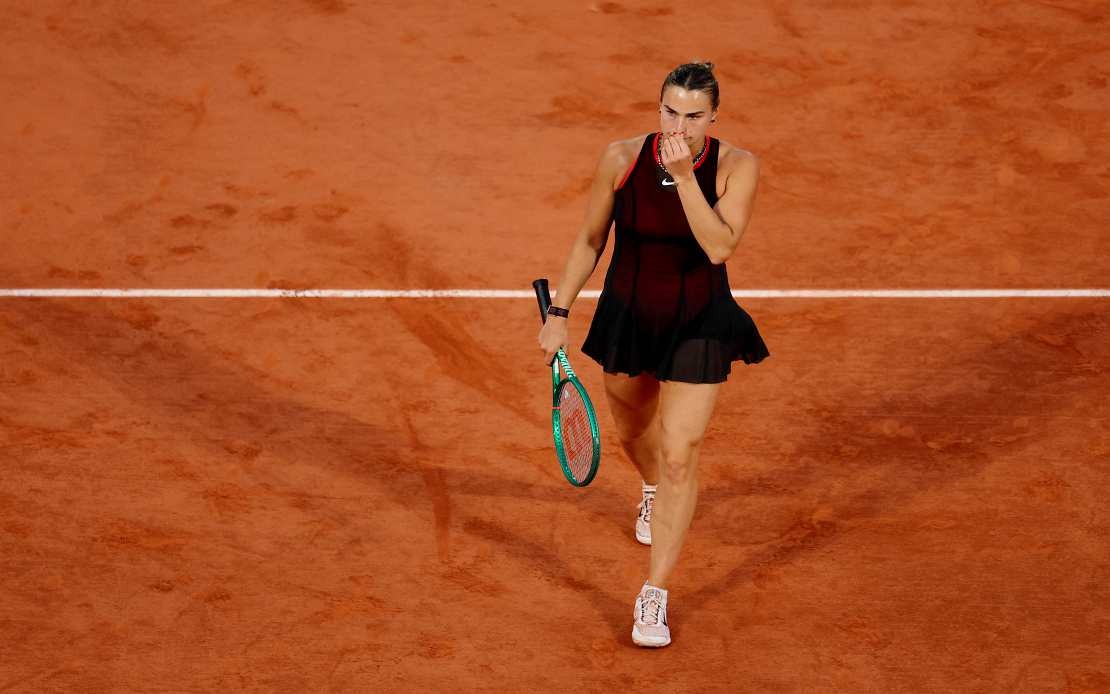
In a commanding upset victory on the grass courts of London, Japan's Naomi Osaka defeated world No. 1 Aryna Sabalenka of Belarus 6-2, 7-6(2) in the fourth round of Wimbledon on Sunday, securing her maiden quarterfinal berth at the prestigious championship. The 14th-seeded Japanese player's breakthrough performance not only secured a place in the last eight but also marked a significant shift in momentum against the dominant Belarusian, who had overwhelmed Osaka in their three previous encounters this season.
Oska's run at the All England Club carries particular historical significance for Japanese tennis. Her advancement to the quarterfinals makes her the first Japanese woman to reach this stage at Wimbledon since Ai Sugiyama's campaign in 2004—a gap of nearly two decades that underscores the rarity of sustained success for Japanese female players on grass. Given that Osaka is a four-time Grand Slam champion with victories at the Australian Open and US Open, this marks a notable absence from Wimbledon's later rounds despite her pedigree and proven ability to perform on the sport's biggest stages.
The psychological dimension of Osaka's victory cannot be overstated. Sabalenka had won three consecutive meetings with Osaka earlier in 2024, including a fourth-round victory at the French Open, suggesting a troubling pattern of capitulation for the Japanese star. Entering Sunday's encounter, Osaka faced the mental burden of a negative streak against her opponent, yet she managed to compartmentalise that history and execute a tactically superior performance. Her ability to overcome these recent setbacks demonstrates the resilience and competitive maturity that characterised her dominant period as world No. 1.
In her on-court interview following the victory, Osaka conveyed visible relief and genuine elation. She noted that the experience of playing competitive tennis at the highest level felt refreshingly enjoyable—a sentiment that resonates across professional sports, where external pressures and injury concerns can diminish the inherent pleasure of competition. For Osaka, whose career has been punctuated by breaks for mental health and physical rehabilitation, rediscovering joy in performance represents a crucial element of sustained excellence.
The tactical dimensions of Osaka's performance warrant examination. Playing against one of women's tennis most formidable power hitters required precision, consistency, and strategic court positioning rather than simply matching Sabalenka's raw power. The scoreline suggests Osaka controlled key moments, particularly in the tiebreak where she established clear dominance at 7-6(2). This kind of clinical execution against a top-ranked opponent indicates that Osaka's recent preparations have been effective and her confidence is rebuilding.
Oska will now face 10th-seeded Karolina Muchova of the Czech Republic in the quarterfinals, where a victory would send her through to the semifinals. Muchova represents a different stylistic challenge from Sabalenka—a more technically varied player whose defensive excellence and craftsmanship could present Osaka with fresh tactical puzzles. The quarterfinal draw has opened positively for the Japanese player, offering a realistic pathway toward the final stages of the tournament.
For Southeast Asian tennis enthusiasts and the broader Malaysian sporting public, Osaka's progression carries symbolic weight. Japanese success in Grand Slam competitions generally elevates interest across the region, and a deep run by a former world No. 1 at Wimbledon enhances the prestige of Asian representation at major tournaments. The contrast with regional standards of participation highlights both the exceptional nature of Osaka's achievement and the ongoing challenges facing developing tennis infrastructure across Southeast Asia.
Meanwhile, the men's singles competition saw Japanese qualifier Shintaro Mochizuki's remarkable tournament run curtailed in the fourth round. The world No. 151, who had survived qualifying and multiple main-draw matches to reach this stage, encountered defending champion Jannik Sinner of Italy. Mochizuki's 6-3, 7-6(0), 6-3 defeat to the top-seeded Italian underscores the vast gulf between qualifying-level tennis and championship contention, yet his ability to progress this far demonstrates the depth of talent emerging from Japanese tennis development programmes.
Sinner's retention of his Wimbledon title is proceeding on schedule, though his tiebreak scoreline in the second set against an underdog qualifier suggests the Italian has not yet reached peak performance. Sinner's dominance across multiple surfaces this season—including his Australian Open triumph earlier in 2024—positions him as the clear favourite for the men's championship despite facing stiff competition from other top-ranked contenders.
The narrative surrounding grass-court tennis in Asia has gradually shifted over the past decade. While Wimbledon remains dominated by European and North American players, the increasing participation and success of Japanese competitors signals growing sophistication in how Asian nations approach grass-court preparation. Investment in grasscourt training facilities and scheduling players' preparation cycles around Wimbledon rather than prioritising the hard-court calendar represents a strategic recalibration that could yield more sustained results in future seasons.
Oska's victory also reflects broader patterns in women's tennis, where competitive depth continues to produce surprising results. The gap between world No. 1 and world No. 14 has narrowed considerably compared to previous eras, suggesting more balanced competition across the field. This parity benefits tournaments like Wimbledon, which thrive on compelling narratives and unexpected advances by ambitious challengers.
Looking forward, Osaka's path through the tournament will depend on maintaining the elevated performance level she demonstrated against Sabalenka. Grass-court tennis demands consistency and precision that separates champions from pretenders, and a single underperformance could end her run. However, the psychological breakthrough achieved against Sabalenka provides genuine foundation for optimism regarding her trajectory for the remainder of the championship.

