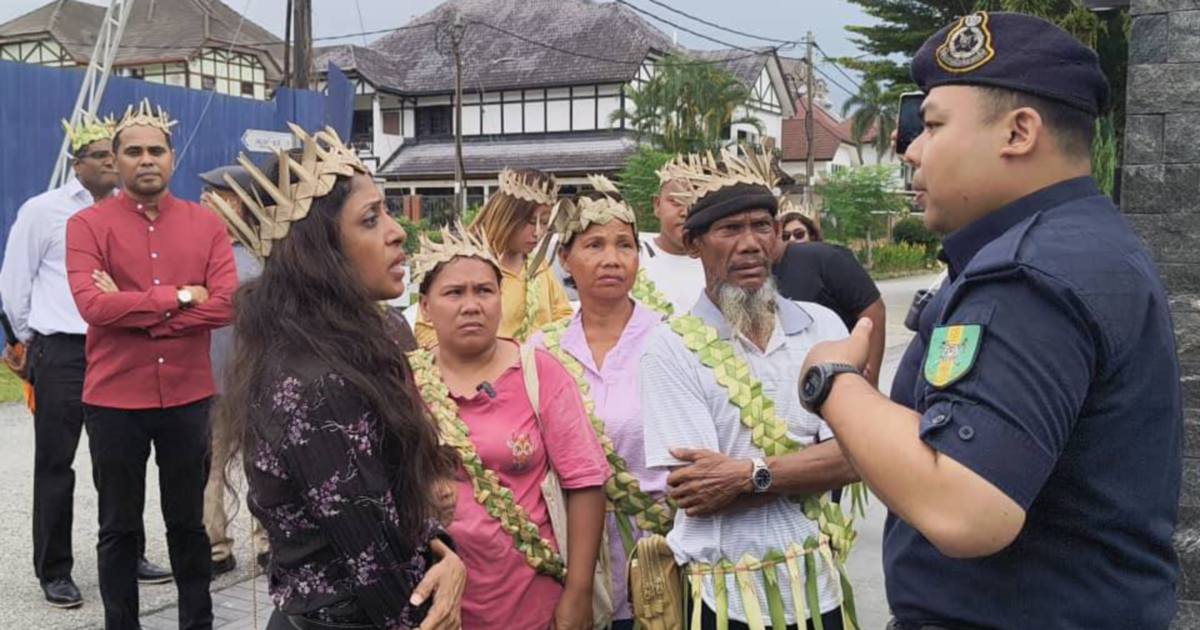
Relief washed over Juliana Jazlin Ismail as she left her encounter with Prime Minister Datuk Seri Anwar Ibrahim in Kajang, the weight of uncertainty finally lifting from her shoulders. The Kampung Sungai Cot resident had carried the burden of her community's land dispute for far too long, watching as bureaucratic processes moved at a glacial pace while indigenous families remained in limbo over their territorial claims. Anwar's direct assurance that he would personally intervene in the matter represented more than a political gesture—it signalled potential movement on an issue that has simmered beneath the surface of Malaysian politics for years, affecting vulnerable Orang Asli populations across the country.
The Kampung Sungai Cot case encapsulates a broader struggle facing indigenous communities throughout Malaysia. Land disputes involving Orang Asli have historically fallen through administrative cracks, where competing claims between state governments, federal authorities, private developers, and indigenous groups create a labyrinth of conflicting interests. These communities often lack the legal resources and political capital to navigate such complex terrain, leaving them dependent on sympathetic officials or public pressure to advance their claims. The fact that a prime ministerial assurance was necessary to secure attention to what should be a fundamental rights matter underscores systemic shortcomings in how Malaysia addresses indigenous land grievances.
Anwar's intervention arrives amid growing international scrutiny of Malaysia's indigenous rights record. The United Nations and various human rights organisations have consistently flagged concerns about Orang Asli land security and access to natural resources. Domestically, civil society groups have amplified indigenous voices, documenting cases where communities have been displaced without adequate consultation or compensation. By publicly committing to resolve the Kampung Sungai Cot situation, the Prime Minister is responding to both local advocacy and broader global expectations regarding indigenous peoples' rights—a delicate balancing act given Malaysia's development aspirations and commercial interests.
The emotional resonance of Anwar's pledge should not obscure the practical complexities ahead. Land disputes in Malaysia typically involve multiple stakeholders with entrenched positions. State authorities often claim jurisdiction over territorial matters, federal agencies may have overlapping responsibilities, and private parties may hold competing legal documentation. Resolving such tangles requires not just political will but also careful coordination across governmental silos, technical expertise in land administration, and potentially legislative amendments if current laws prove inadequate. The real test will be whether the Prime Minister's commitment translates into concrete action with measurable timelines and outcomes.
For Orang Asli communities beyond Kampung Sungai Cot, Anwar's stance offers both hope and a lesson in persistence. The visibility generated by this particular case may catalyse attention to similar disputes affecting indigenous villages in Selangor, Pahang, Perak, and other states. However, it also exposes a troubling reality—that indigenous communities must escalate their grievances to the highest political level to secure basic government responsiveness. This suggests systemic reform may be necessary at the state and district levels, where most land administration actually occurs. Without strengthening these lower-tier institutions and clarifying indigenous land rights through legislation, individual prime ministerial interventions will remain ad hoc solutions to structural problems.
The Orang Asli population, numbering approximately 180,000 to 200,000 people according to various estimates, represents Malaysia's earliest inhabitants. Yet they remain among the most economically marginalised and politically underrepresented groups in the country. Historical land dispossession—through colonial policies, post-independence development projects, and more recent commercial ventures—has concentrated indigenous communities in fragmented reserves often lacking adequate infrastructure or economic opportunity. Land represents not merely property but cultural heritage, livelihood security, and collective identity. Disputes over territorial control therefore touch on existential concerns that extend far beyond conventional property disputes.
Anwar's commitment must be situated within his broader governance agenda. The Prime Minister has previously expressed commitments to addressing inequality and improving representation for marginalised communities. However, implementation remains inconsistent across different policy areas. Indigenous rights advocates will be scrutinising not just whether the Kampung Sungai Cot dispute receives resolution but how vigorously the administration pursues systematic reforms that would prevent similar conflicts from arising. This includes reviewing land classification schemes, clarifying overlapping jurisdictions, and potentially establishing dedicated mechanisms for indigenous land claim adjudication.
The international dimension cannot be overlooked. Malaysia's regional standing and economic relationships increasingly depend on demonstrating commitment to human rights and indigenous peoples' protection. Regional trade agreements and investment partnerships often contain provisions referencing indigenous rights. The European Union and other trading partners have expressed concerns about Malaysia's environmental and indigenous rights records, particularly regarding deforestation and forest-dependent communities. How the government resolves cases like Kampung Sungai Cot sends signals to international observers about the seriousness of such commitments.
Civil society organisations working with indigenous communities have framed Anwar's pledge as validation of their advocacy efforts. Groups that have documented Orang Asli grievances and mobilised public support see the Prime Minister's intervention as evidence that sustained pressure and transparent documentation of injustices can influence high-level policy responses. This may encourage other communities to come forward with their own cases, potentially creating a queue of land disputes seeking prime ministerial attention—a situation that, while indicating growing responsiveness, also underscores the inadequacy of relying on individual leadership rather than systemic mechanisms.
Looking ahead, the success of this intervention will depend on follow-through. Anwar has signalled receptiveness, but bureaucratic inertia, competing interests, and technical complexities may slow implementation. Indigenous communities, having experienced years of unfulfilled promises, will rightfully demand evidence of progress. The government should establish clear timelines, designate accountability for each stage of the resolution process, and maintain transparent communication with affected residents. Such accountability measures would demonstrate that this is not merely political theatre but a genuine commitment to indigenous rights.
Ultimately, Juliana Jazlin Ismail's relief represents a crucial moment of recognition—that Orang Asli voices matter and deserve to be heard at the highest levels of government. Yet recognition alone cannot resolve decades of marginalisation. The real work begins now, in translating political pledges into concrete outcomes that restore land security and dignity to indigenous communities. Whether this marks a genuine turning point in Malaysia's approach to indigenous rights or remains an exceptional gesture will become clear as the government's actions unfold in the months ahead.

