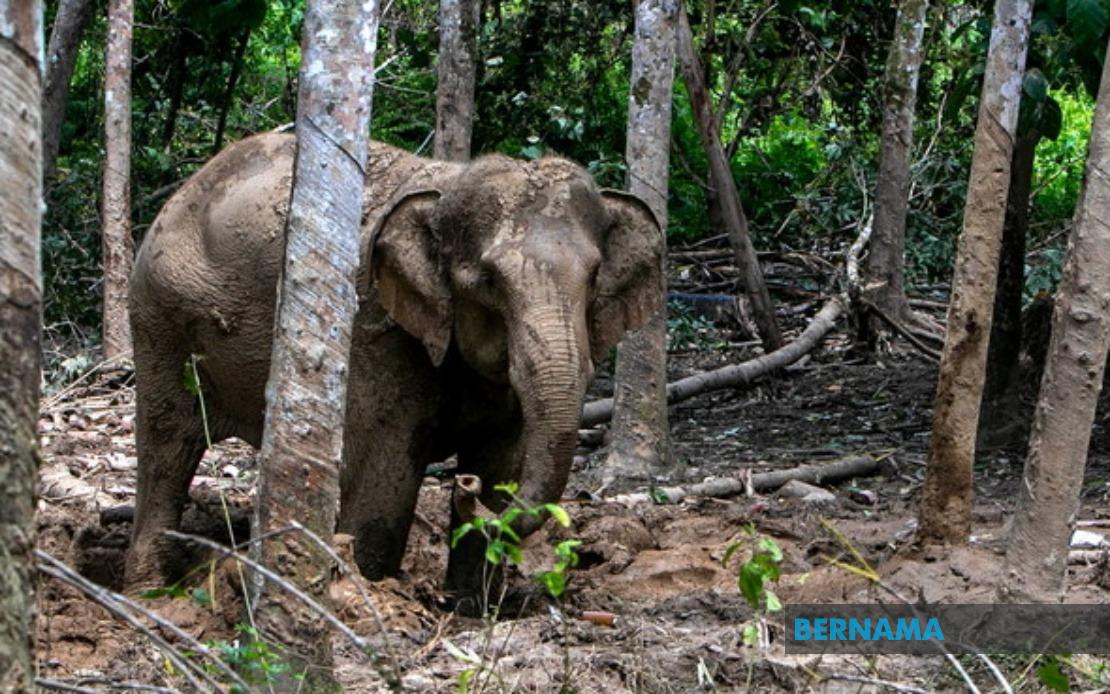
A member of the Orang Asli community in Kampung Orang Asli Perjek at the Legap Resettlement Scheme in Sungai Siput, Perak, sustained severe injuries on Friday last week during a confrontation with wild elephants that had wandered into the settlement seeking food. The Department of Wildlife and National Parks (PERHILITAN) Peninsular Malaysia confirmed that staff from its Sungai Siput district office rushed to the scene following an emergency call received shortly after 10 pm to document the incident and begin their investigation.
According to the wildlife authority's findings, a group of four elephants had made their way into the area immediately behind the residential dwellings, where they began feeding on cassava and banana plants that villagers had cultivated. This foraging activity represented another in a growing pattern of human-wildlife conflicts in rural Perak, where expanding settlements increasingly overlap with traditional elephant migration routes and feeding grounds. The presence of agricultural crops near homes has inadvertently created an attractive food source for these large animals, which face declining forest cover and habitat loss across the peninsula.
The situation escalated when the injured resident and several of his neighbours decided to intervene directly. In their attempt to scare away the herd and protect their crops, the villager ventured too close to the animals, triggering an aggressive response from one of the elephants. The animal attacked the man, causing him to sustain substantial injuries including significant bleeding and a loss of consciousness at the scene. This incident underscores the extreme danger posed when ordinary citizens attempt to handle wildlife encounters without professional support or training.
Neighbours quickly responded to the emergency, rescuing the injured man from the immediate vicinity of the elephants and transporting him to medical care. He was admitted to Raja Permaisuri Bainun Hospital in Ipoh, where medical staff stabilized his condition and provided treatment for his injuries. At the time of the PERHILITAN statement, the victim remained in stable condition, though the full extent of long-term effects from the attack remained to be determined as he underwent ongoing medical assessment and recovery.
Following the incident, PERHILITAN deployed drone technology to monitor the movements of the elephant herd and confirm they had vacated the village area. The surveillance capability allowed officials to assess whether the animals posed an immediate ongoing threat to residents. The department subsequently implemented what it described as appropriate management measures designed to mitigate the likelihood of future human-wildlife conflicts occurring in the Kampung Orang Asli Perjek settlement. These preventive steps likely included perimeter patrols, community education, and potentially improved crop protection strategies.
Beyond the immediate response, PERHILITAN indicated that it would facilitate the victim's family's application for financial assistance through the Wildlife Attack Victim Assistance programme, an initiative managed by the Ministry of Natural Resources and Environmental Sustainability. This safety net provides crucial support for those injured by wildlife encounters and acknowledges the genuine risks faced by rural communities living in proximity to forest ecosystems. The assistance programme represents an important government recognition that vulnerable populations, particularly those in resettlement schemes, require protection mechanisms when wildlife interactions occur.
The incident prompted PERHILITAN to issue public guidance advising villagers and members of the public to refrain from attempting to handle dangerous wildlife situations independently. Officials emphasized that such confrontations pose extreme personal hazard, particularly with large animals such as elephants that can cause fatal or permanently disabling injuries. The department urged residents experiencing wildlife incursions to contact trained professionals rather than risk their lives through direct intervention.
Community members in areas prone to such encounters have been encouraged to report wildlife-related incidents promptly through established channels. PERHILITAN operates a dedicated hotline at 1-800-88-5151 available for emergency reporting, and the department has also created a Public Complaints Management System (SISPAA) accessible via its official website to document incidents and coordinate responses. These communication pathways enable wildlife authorities to respond quickly and appropriately when problems emerge, potentially preventing escalation and protecting both humans and animals.
The attack highlights a broader challenge facing Perak and other peninsular regions where Orang Asli communities occupy land near wildlife corridors. As human settlements expand and agricultural activities increase, encounters between villagers and wild animals become more frequent. The Orang Asli, who have historically coexisted with forest ecosystems, now face mounting pressures from habitat fragmentation and animal population movements. This incident serves as a reminder that sustainable coexistence requires both community awareness and government support for wildlife management strategies that protect vulnerable populations while respecting the rights of wild animals to access remaining forest resources and migration routes.

