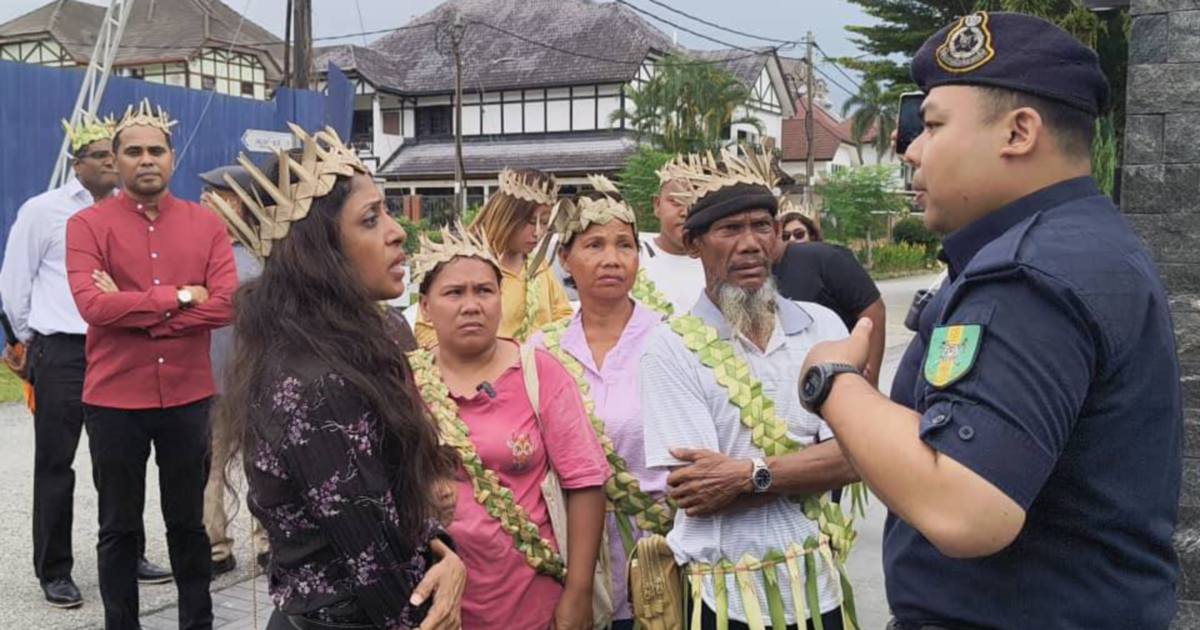
The Orang Asli community of Kampung Sungai Cot in Maran, Pahang, is cautiously optimistic following a direct assurance from Prime Minister Datuk Seri Anwar Ibrahim that he will personally intervene in their decades-old dispute over ancestral lands. The commitment, made during an engagement in Kajang, represents a significant moment for families who have waged an exhausting battle to reclaim territories that have been central to their identity and livelihoods for generations.
The residents of Kampung Sungai Cot have endured a protracted struggle that exemplifies the broader challenges facing Orang Asli communities across Peninsular Malaysia. Beyond the immediate question of land ownership lies a complex intersection of indigenous rights, development pressures, and administrative jurisdiction between federal and state authorities. The village's situation underscores how indigenous peoples often find themselves caught between competing claims and governmental silos, with resolution frequently requiring high-level political attention to break through institutional inertia.
What distinguishes this moment is the personal pledge from the highest executive office in the land. The Prime Minister's willingness to escalate the matter directly to Pahang authorities signals that the issue has transcended routine administrative channels and now carries the weight of federal priority. For communities that have navigated bureaucratic processes without resolution, such an intervention can prove transformative, provided it translates into concrete action within state government structures that may have their own competing interests and constraints.
The land dispute affecting Kampung Sungai Cot reflects patterns familiar to indigenous advocacy groups throughout Southeast Asia. Ancestral territories occupied and managed by Orang Asli communities for centuries have increasingly come under pressure from commercial development, plantation expansion, urban growth, and competing land claims. The legal and documentary frameworks governing land ownership in Malaysia often disadvantage indigenous claimants, who may lack formal title deeds recognising customary tenure systems that predate modern state structures. Resolving such disputes typically requires acknowledging indigenous land rights within a legal system that has historically centred on individual private ownership and state land management.
The Pahang government will now face pressure to engage meaningfully with the federal commitment. State governments in Malaysia retain significant autonomy over land matters, yet cooperative federalism demands that Putrajaya's intervention carries genuine weight. The challenge for administrators in Kuala Lumpur will be crafting a solution that respects Pahang's constitutional prerogatives while advancing the Prime Minister's pledge to the community. This balance becomes particularly delicate when land disputes involve state government interests or have attracted commercial or developmental attention from state-level actors.
For the Orang Asli families themselves, the Prime Minister's assurance offers both opportunity and uncertainty. Decades of struggle suggest that good intentions, even from high office, do not automatically translate into resolution. Previous commitments to indigenous communities have sometimes stalled when implementation obstacles emerge or when political attention shifts to other priorities. Nevertheless, the visible engagement from national leadership provides leverage that community representatives can wield in future negotiations with state authorities, establishing a clear record that the centre of government is monitoring the situation and expects progress.
The broader implications extend beyond Kampung Sungai Cot alone. Malaysia's Orang Asli population, numbering roughly 180,000 people across multiple ethnic groups, faces persistent marginalisation and land insecurity. The recognition that their grievances warrant Prime Ministerial attention reinforces that indigenous rights constitute a legitimate national concern rather than a peripheral provincial matter. This positioning could influence how other Orang Asli communities frame their own disputes, potentially emboldening efforts to seek federal intervention in similar circumstances across Peninsular Malaysia.
The international dimension also merits consideration. Malaysia's treatment of indigenous peoples features in regional and global human rights assessments. A tangible resolution in Kampung Sungai Cot would demonstrate substantive progress on indigenous land rights, contrasting with the stalled progress visible in many other cases. Conversely, if the Prime Minister's pledge yields limited concrete outcomes, it may further erode indigenous communities' faith in governmental processes and amplify concerns already raised by rights organisations about the adequacy of legal protections for Orang Asli territories.
Moving forward, the critical question centres on implementation mechanics and timelines. The Prime Minister's commitment must now flow through bureaucratic channels toward substantive engagement between federal officials and their Pahang counterparts. Community representatives should expect to define what resolution looks like—whether full land restoration, compensation, co-management arrangements, or alternative solutions addressing their core needs. Establishing clear benchmarks and deadlines will help prevent the dispute from becoming another unresolved commitment gathering dust in administrative files.
For Kampung Sungai Cot's residents, this moment represents neither victory nor certain resolution, but rather a pivotal juncture where national attention has focused on their struggle. The true test lies in what follows, as the promise made in Kajang must navigate the complexities of Malaysian federalism, competing land interests, and the historical inertia that has characterised Orang Asli land disputes. The community's resilience through decades of struggle positions them to monitor progress closely and hold authorities accountable to the undertaking made at the highest level of government.

