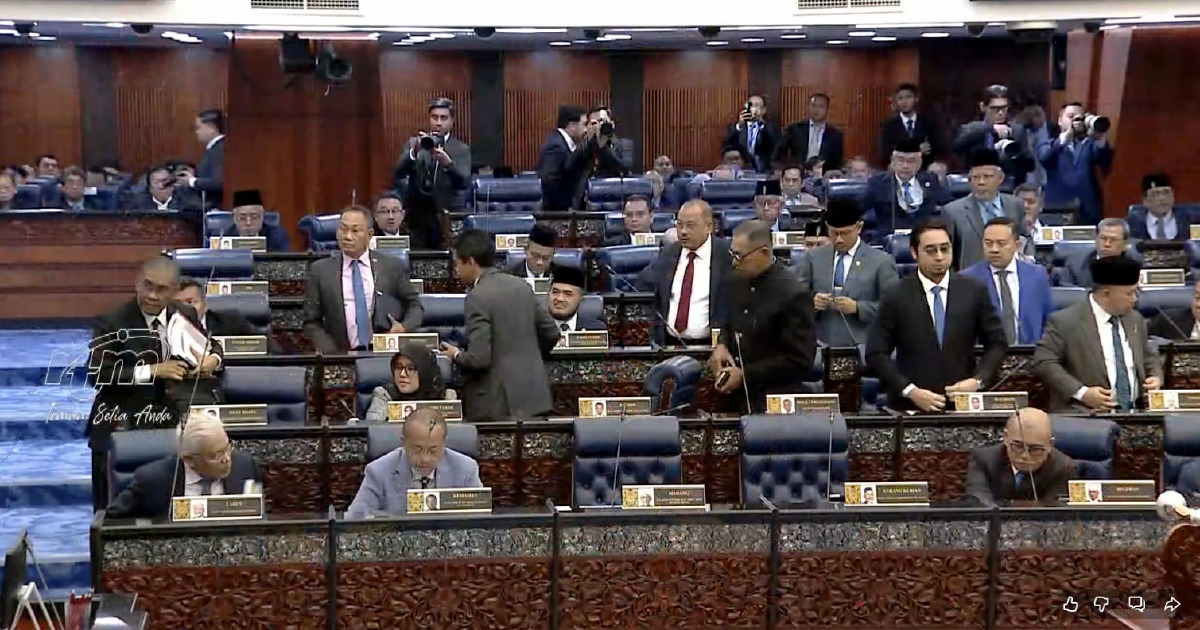
Members of the opposition staged a coordinated departure from the Dewan Rakyat in protest over the Speaker's decision to proceed with a special sitting examining the Royal Commission of Inquiry findings on Tabung Haji, despite their objections regarding the absence of Prime Minister Datuk Seri Anwar Ibrahim from the chamber.
The walkout underscores deepening tensions between the government and opposition blocs over procedural matters and the timing of major parliamentary business. The opposition had formally requested that debate on the RCI report be deferred until the Prime Minister could personally engage in discussions, arguing that the gravity of the matter warranted his direct participation. Their plea was rejected by the Speaker, prompting the dramatic exit that brought proceedings temporarily to a standstill.
This confrontation reflects broader dynamics within Malaysia's current parliamentary landscape, where opposition parties have increasingly employed procedural challenges and symbolic protests to register dissent over government actions. The Tabung Haji situation is particularly sensitive given the Islamic pilgrimage fund's significance to Malaysia's Muslim population and the various controversies that have surrounded its management and financial health in recent years.
The Royal Commission's investigation into Tabung Haji represents a comprehensive scrutiny of the institution's operations and decision-making processes. The opposition's insistence on the Prime Minister's presence suggests they view his participation as essential for accountability and for ensuring that concerns are addressed at the highest policy level. The Speaker's decision to proceed regardless reflects the government's determination to move forward with parliamentary business according to its own timetable.
Tabung Haji itself remains a touchstone issue in Malaysian politics and public discourse. As the fund responsible for facilitating Hajj pilgrimages for Malaysian Muslims, it carries immense symbolic weight alongside its substantial financial obligations. Any revelations or recommendations from the RCI report could influence policy direction, affect fund management practices, and have ramifications for millions of Malaysian account holders who depend on the institution.
The walkout incident also highlights the challenges facing Malaysia's parliamentary culture at a time of political fragmentation. With no single coalition commanding overwhelming majorities, procedural disputes can quickly escalate into broader confrontations over legitimacy and governance. The opposition's refusal to participate signals their view that the government is circumventing proper debate protocols, whilst the government's refusal to accommodate their request demonstrates its confidence in its numerical strength within the chamber.
From a regional perspective, Malaysia's parliamentary tensions occasionally attract scrutiny from observers monitoring democratic practice in Southeast Asia. While such walkouts are not unprecedented in Westminster-style legislatures, they underscore the importance of maintaining conventions and mutual respect between government and opposition to preserve institutional credibility. The Tabung Haji debate therefore transcends the specific issue at hand, touching on broader questions about parliamentary conduct and the health of Malaysia's democratic institutions.
The timing question itself warrants consideration. Whether the Prime Minister's absence was temporary or extended, and whether he was engaged in official duties at the national or international level, influences the reasonableness of the opposition's request. Similarly, the government's perspective on the necessity of proceeding without delay reflects its assessment of urgency and public interest in receiving the RCI findings without further postponement.
Previous controversies surrounding Tabung Haji management have made the institution's governance a matter of public concern extending beyond parliamentary circles. Media scrutiny, civil society commentary, and public discussion have established expectations that any RCI report would receive thorough deliberation. The opposition's insistence on formal conditions for debate reflects these broader public expectations, even if the Speaker ultimately determined that parliamentary procedures should not be further delayed.
Moving forward, the incident illustrates how procedural disagreements in parliament can quickly assume symbolic significance that extends beyond the immediate issue. Whether tomorrow's headlines focus on the walkout itself, the underlying Tabung Haji questions, or the broader state of parliamentary civility will shape public perception of the government and opposition performance during this particular session.
The opposition's strategic use of the walkout—a visible, reportable protest—suggests they are playing to their base whilst attempting to generate public narrative around government procedural dominance. Meanwhile, the government's refusal to accommodate demonstrates its institutional control and suggests confidence that the public prioritises substantive policy outcomes over procedural proprieties. These competing calculations will continue shaping parliamentary dynamics as Malaysia navigates its current political constellation.

