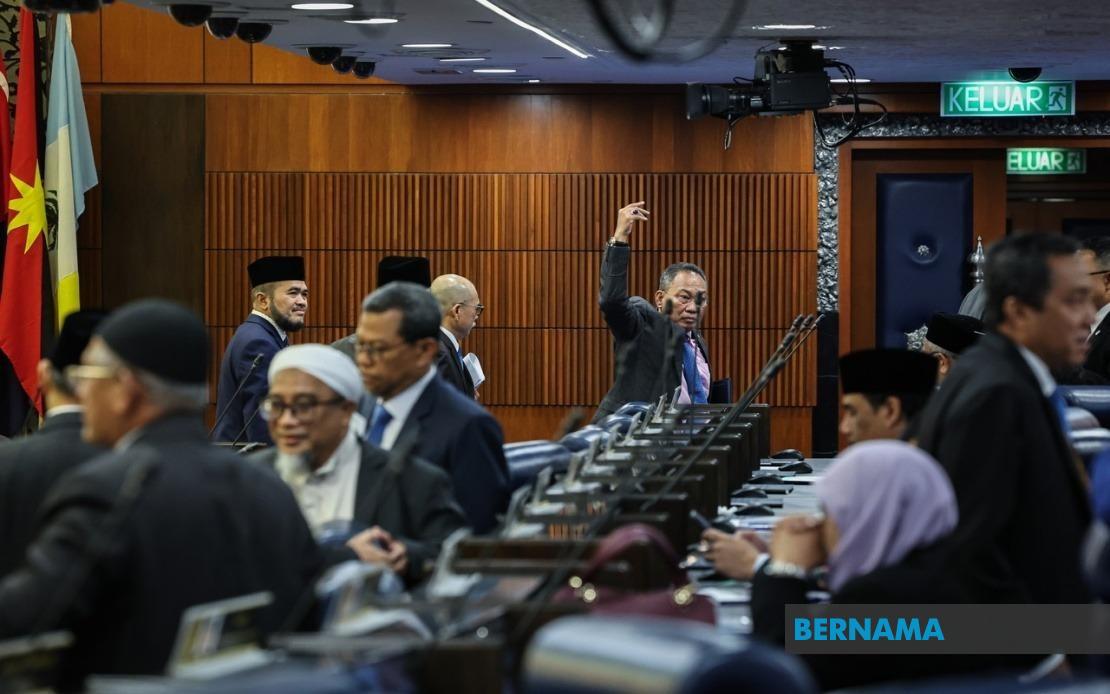
When Perikatan Nasional opposition MPs, led by Opposition Leader Datuk Seri Hamzah Zainuddin, staged a walkout from the Dewan Rakyat to boycott a ministerial briefing on the Tabung Haji (TH) Royal Commission of Inquiry report, they triggered fresh debate about Parliament's effectiveness as an institution of public accountability. The boycott, ostensibly prompted by the absence of Prime Minister Datuk Seri Anwar Ibrahim and Deputy Prime Minister Datuk Seri Fadillah Yusof—both receiving medical treatment—has drawn sharp criticism from academic experts who warn it signals a troubling abdication of the opposition's fundamental parliamentary responsibilities to the institution's 10 million depositors and the broader Malaysian public.
Political analysts argue that the walkout represents a significant missed opportunity for substantive scrutiny of findings that exposed significant governance weaknesses at Tabung Haji between 2014 and 2020. The special parliamentary sitting was convened specifically to enable Minister in the Prime Minister's Department (Religious Affairs) Dr Zulkifli Hasan to brief lawmakers on the RCI's conclusions and outline government measures to restore the institution's financial stability. Instead of engaging with this presentation, opposition members chose theatrical absence over procedural engagement—a distinction that carries profound implications for how Malaysia's system of checks and balances actually functions in practice.
Associate Professor Dr Mazlan Ali of Universiti Teknologi Malaysia contends that the opposition's decision to absent themselves fundamentally misunderstands Parliament's institutional purpose. He emphasizes that lawmakers should have remained in the chamber to hear the minister's full briefing, then exercise their democratic prerogatives to question, debate, or challenge the government's explanations if they found them inadequate. The minister's portfolio and expertise, he argues, were entirely sufficient for a substantive discussion of Tabung Haji's management and recovery plans—the Prime Minister's physical presence, while politically symbolic, adds no technical value to the actual substance of parliamentary scrutiny. By framing the absence of the Prime Minister as grounds for boycotting the entire session, opposition MPs conflated personal political theatre with institutional responsibility.
The broader damage to depositor representation deserves particular emphasis. Tabung Haji serves as a pilgrimage savings vehicle for predominantly Muslim Malaysians, many of whom are middle-income or working-class Malaysians whose accumulated savings represent significant personal financial commitments. These 10 million account holders had every right to expect their elected representatives—opposition members included—to use parliamentary proceedings as a platform to examine the RCI report thoroughly, demand accountability for the period of mismanagement, and press the government on concrete implementation timelines for remedial measures. Instead, they witnessed their representatives choosing symbolic protest over substantive representation of their interests.
Dr Nazreena Mohammed Yasin, a senior lecturer in the Department of Social Sciences at Universiti Tun Hussein Onn, reinforces this analysis by emphasizing that active parliamentary participation represents the primary mechanism through which elected representatives fulfil their check-and-balance function. The Dewan Rakyat debate on the Tabung Haji RCI report provided precisely the institutional platform needed for MPs to probe the report's findings, pose detailed questions about governance failures and recovery measures, and extract accountability commitments from the government. This process of systematic parliamentary interrogation strengthens the principle of democratic accountability by ensuring that the executive must answer directly to elected representatives who, in turn, answer to voters. Boycotting this mechanism ruptures this chain of accountability.
The timing of the opposition's walkout also requires scrutiny in the Malaysian political context. Perikatan Nasional—which includes PAS and other parties—has positioned itself as a defender of Islamic institutions and public interests, particularly regarding matters touching the Muslim community. Tabung Haji directly serves this constituency, making the opposition's absence from debate on its governance and recovery particularly damaging to its political credibility. Opposition Leader Datuk Seri Hamzah Zainuddin's participation in the walkout, alongside PN Chief Whip Datuk Seri Takiyuddin Hassan and PN chairman Datuk Seri Dr Samsuri Mokhtar, signals a unified decision that carries reputational consequences. Public perception may reasonably conclude that Perikatan Nasional proved less committed to championing Tabung Haji depositors' interests than to scoring political points through parliamentary theatrics.
The ministers involved—Dr Zulkifli Hasan in particular—occupied a defensible institutional position. Government accountability to Parliament does not hinge entirely on Prime Ministerial attendance; any relevant minister bears responsibility for answering parliamentary questions and defending government decisions. That Anwar Ibrahim was hospitalized receiving medical treatment created a medical reality, not a political excuse, for his absence. Dr Zulkifli, as the responsible minister, possessed full authority and presumably sufficient technical briefing to address parliamentary questions about Tabung Haji's RCI report, its findings, and government responses. Demanding the Prime Minister's attendance in these circumstances appeared less like principled parliamentary oversight and more like a demand for theatrical optics.
The substantive parliamentary function that opposition lawmakers abandoned has practical implications extending beyond symbolism. Parliament provides a formal, public, recorded venue where follow-up actions arising from the RCI findings can be systematically scrutinized. Subsequent government policies, governance reforms, and implementation measures designed to strengthen Tabung Haji's management and financial position require ongoing parliamentary monitoring. When opposition MPs boycott the initial debate on the RCI report, they forfeit opportunity to establish parliamentary record of their expectations, concerns, and demands for accountability. This creates a weaker foundation for monitoring and challenging subsequent government action—or inaction—on Tabung Haji recovery measures.
The incident also reflects evolving parliamentary culture in Malaysia that arguably privileges political confrontation over institutional functionality. Walkouts and boycotts certainly have legitimate parliamentary roles in extreme circumstances—when governments attempt to suppress debate, when procedural rights are violated, or when fundamental constitutional principles face threat. Yet using these tools to object to a senior minister's briefing in the Prime Minister's genuine medical absence represents a devaluation of these tactics' serious purpose. If parliamentary boycotts become routine responses to disagreements over ministerial-level briefings, they lose force as instruments of genuine oversight and become merely performative partisan gestures.
For Malaysian readers and Southeast Asian observers, the Tabung Haji debate episode offers instructive lessons about how democratic institutions function most effectively through engagement rather than withdrawal. The RCI report on Tabung Haji documents organizational failures that directly affected millions of ordinary Malaysians' savings. Those depositors deserved representation through rigorous parliamentary questioning of government explanations and accountability mechanisms. Opposition MPs possessed both institutional authority and democratic obligation to provide that representation. By walking away, they weakened not just Parliament's immediate oversight capacity but also demonstrated to depositors that political advantage could outweigh constituent service in their representatives' priorities. This calculus ultimately corrodes public confidence in parliamentary democracy's capacity to deliver justice and accountability on issues directly affecting citizen welfare.

