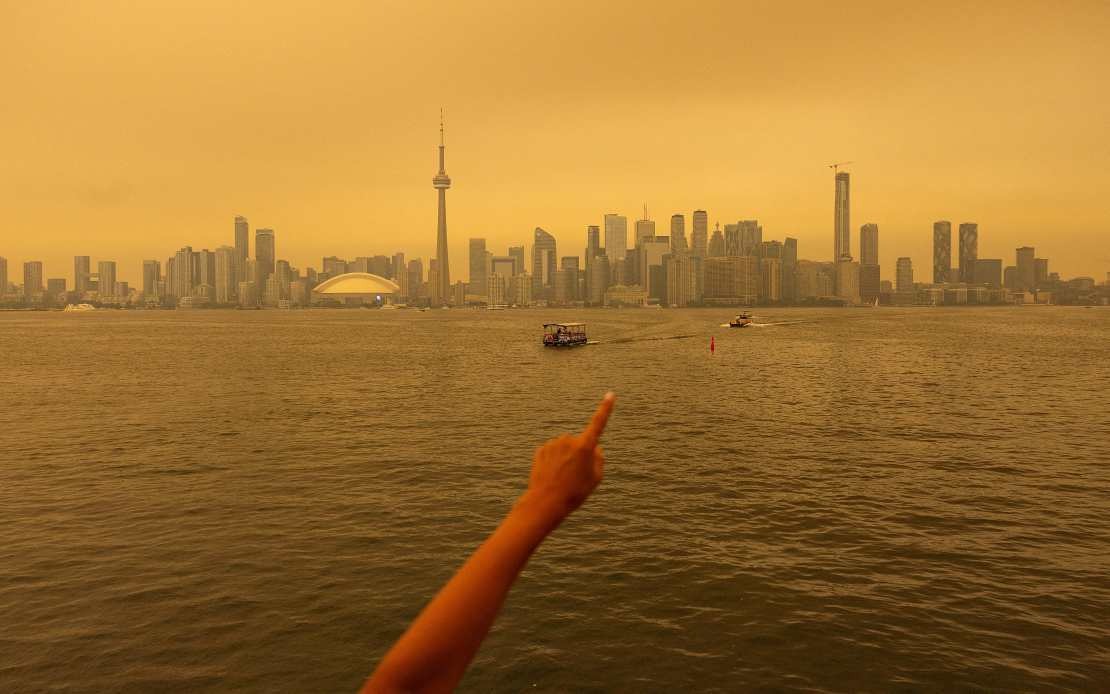
Devastating wildfires tearing through northwestern Ontario have transformed Canada's two largest urban centres into hazardous zones, with thick smoke and ash casting a yellow pall over both Toronto and the nation's capital, Ottawa. The rapidly spreading fires, which have intensified over recent days, have triggered widespread air quality alerts and raised public health concerns across the region, marking one of the most severe air pollution events to hit the country in recent years. Environment Canada data confirms that Toronto experienced some of the worst air quality readings globally on Wednesday morning, underscoring the scale and intensity of the environmental crisis unfolding hundreds of kilometres to the north.
The deterioration in air quality has been classified as posing a "very high risk" to public health, according to official measurements from Environment Canada's Air Quality Health Index system. Toronto residents woke Wednesday to find their city shrouded in a thick haze that reduced visibility and prompted authorities to issue urgent health advisories. Ottawa similarly grappled with hazardous conditions, with officials attributing the persistent poor air quality to a combination of smoke drifting from the distant fires and local weather patterns that trap pollutants near ground level. High humidity in the region has amplified the effect, preventing smoke particles from dispersing naturally and creating a stagnant layer of contamination over both metropolitan areas.
The scale of the wildfire outbreak is remarkable, with more than 100 active fires currently burning across northwestern Ontario's vast forests. The uncontrolled spread has forced emergency evacuations across multiple communities in the affected regions, displacing residents from their homes as flames advance through previously untouched terrain. Provincial authorities have mobilized response efforts, but the sheer number and geographical dispersal of fires has strained available resources. Weather forecasters have warned that current atmospheric conditions are expected to perpetuate the smoke accumulation over southern Ontario for several additional days, meaning residents in Toronto and Ottawa should prepare for an extended period of hazardous air quality.
Beyond the public health crisis, the wildfires have disrupted critical infrastructure, most notably Canada's rail network. A dramatic video that circulated widely on social media late Monday captured the intensity of the situation, showing a Canadian National (CN) freight train engulfed by towering flames on both sides of the tracks near Armstrong, Ontario. The footage, recorded by a locomotive crew member, depicted the locomotive cab illuminated by an intense red glow as massive fires consumed the surrounding forest. CN officially verified the authenticity of the video on Wednesday and confirmed that the train crew had been evacuated to safety without injuries, though the incident highlighted the extreme danger posed by the fire's proximity to critical transportation corridors.
Following the near-disaster near Armstrong, Canadian National announced a temporary suspension of all train operations throughout the affected section of northwestern Ontario. This suspension represents a significant disruption to freight and passenger rail services that depend on the corridor, with cascading effects potentially reaching shippers and consumers across Canada and North America. The decision reflects both the immediate safety concerns and the operational challenges of maintaining rail infrastructure in an active wildfire zone, where track conditions may be compromised and visibility for locomotive operators is severely limited. The suspension duration remains uncertain, dependent entirely on the progress of firefighting efforts and the containment of the spread.
The situation carries particular significance for regional supply chains and cross-border commerce, as the affected rail corridor handles substantial cargo volumes. The disruption compounds existing pressures on Canadian transportation networks and underscores the vulnerability of essential infrastructure to climate-driven extreme weather events. For Malaysian and Southeast Asian business interests with operations in or trade relationships with Canada, the incident serves as a reminder of how environmental crises can rapidly disrupt global logistics networks. Companies with just-in-time supply chain models are particularly exposed to such interruptions, requiring greater contingency planning and flexibility in sourcing arrangements.
The broader context reveals a troubling pattern in Canada's wildfire activity, with climate change intensifying fire seasons across the country. The concentration of over 100 simultaneous blazes in a single region demonstrates how changing environmental conditions are creating conditions for unprecedented fire behaviour. The smoke drifting from Ontario has even affected air quality in the northeastern United States, illustrating how transnational the air pollution problem has become. For policymakers and business leaders throughout Southeast Asia, the Ontario crisis illustrates the interconnected nature of environmental hazards in an increasingly volatile climate, where smoke and pollution can travel thousands of kilometres and impact distant regions.
Public health authorities in both Toronto and Ottawa have issued guidance recommending that residents limit outdoor activities, use air filtration masks when venturing outside, and monitor official air quality updates throughout the day. Vulnerable populations, including children, the elderly, and those with respiratory conditions, face heightened risks from prolonged exposure to hazardous air. Hospitals and clinics across both cities reported increased patient visits related to respiratory complaints and asthma exacerbations. Schools and outdoor recreational facilities have modified operations to protect public health, while many employers have accommodated remote working arrangements to minimise staff exposure to contaminated air. The cascading effects of the wildfire crisis extend far beyond the immediate fire zones, fundamentally disrupting daily life for millions of Canadians in major metropolitan centres.

