%22%2F%3E%3C%2Fpattern%3E%3C%2Fdefs%3E%3Crect%20width%3D%22100%25%22%20height%3D%22100%25%22%20fill%3D%22url(%23phhznzg)%22%2F%3E%3Crect%20width%3D%22100%25%22%20height%3D%22100%25%22%20fill%3D%22url(%23phhznzp)%22%2F%3E%3Ctext%20x%3D%2250%25%22%20y%3D%2250%25%22%20text-anchor%3D%22middle%22%20dominant-baseline%3D%22central%22%20fill%3D%22rgba(255%2C255%2C255%2C0.95)%22%20font-family%3D%22Georgia%2C%20'Times%20New%20Roman'%2C%20serif%22%20font-weight%3D%22700%22%20font-size%3D%22320%22%20letter-spacing%3D%22-0.02em%22%3EOnn%3C%2Ftext%3E%3C%2Fsvg%3E)
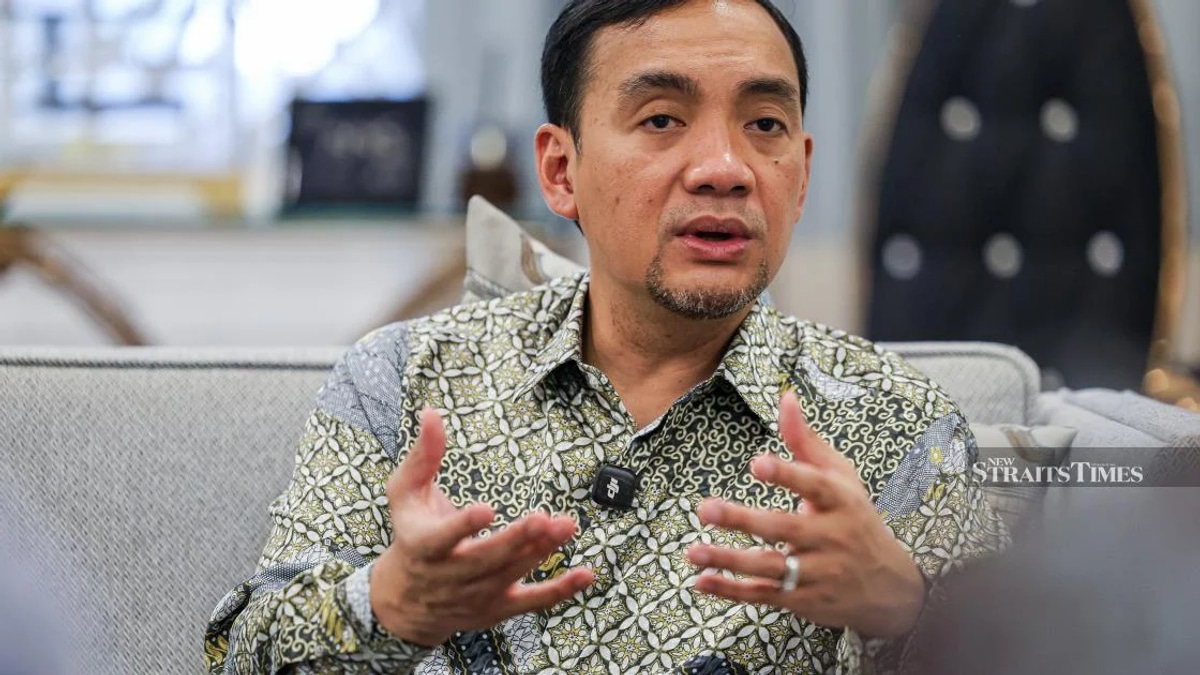
Johor's caretaker Menteri Besar Datuk Onn Hafiz Ghazi has rejected suggestions that Barisan Nasional's decision to contest the upcoming Johor state elections independently amounts to arrogance, reiterating instead that the coalition's strategy reflects pragmatic assessment of the state's political landscape. Speaking in Johor Bahru on June 17, Onn Hafiz directly addressed criticism from Prime Minister Anwar Ibrahim regarding the move, defending it as a calculated choice rooted in local electoral realities rather than overconfidence.
The tension between federal leadership and Johor's BN machinery underscores a significant rupture within Malaysia's governing coalition, one that carries implications for how Kuala Lumpur's power structures interact with state-level political actors. Anwar's characterisation of BN's solo campaign as arrogant reflects broader concerns within Pakatan Harapan about the trajectory of their partnership with BN at the national level, particularly as state elections provide an arena for jockeying and repositioning ahead of eventual federal contests. For Malaysian observers, this disagreement illuminates the fragility of the current political settlement and the competing ambitions that persist even among ostensible allies.
Onn Hafiz's defence of BN's autonomous approach rests on a reading of Johor's electoral composition and recent voting patterns that differs from the federal government's preferred narrative. The caretaker Menteri Besar contended that BN retains sufficient institutional strength and grassroots support within the state to secure victory without requiring partnership arrangements with PKR, DAP, or other components of the ruling federal coalition. This assertion, whether accurate or not, signals confidence in the traditional political machinery that has long dominated Johor despite the broader realignment that occurred during and after the 2018 elections when Pakatan first took federal office.
The decision to campaign separately holds broader ramifications for the delicate equilibrium that has sustained the Anwar-led government since 2022. When Pakatan and BN formalised their cooperation following the Umno-led coalition's defeat at the federal level, the understanding was that they would contest elections jointly in most states to prevent splitting anti-government votes and opening pathways for Opposition gains. Johor's deviation from this template, orchestrated by a Menteri Besar who commands considerable loyalty within BN's Umno apparatus, represents a challenge to that arrangement's coherence and, by extension, to Anwar's ability to enforce coalition discipline across state boundaries.
Critics of BN's solo venture have noted that fractured campaigns benefit the Opposition, particularly DAP and PAS-aligned forces, by allowing consolidation of anti-Pakatan sentiment. However, Onn Hafiz appears willing to gamble that BN's organisational machinery and historical dominance in Johor can overcome this structural disadvantage. The calculation hinges partly on whether Johor voters, conditioned by decades of BN governance at the state level, remain sufficiently attached to the coalition to deliver victory even without the electoral infrastructure that federal partnership would provide. This is an empirical question that will be tested when polling occurs, though the exact election date remained unconfirmed as of mid-June.
The dispute also reflects deeper divisions within Umno itself, where different factions harbour different views about optimal coalition strategy. Onn Hafiz's faction, aligned with Johor's traditional power structure, appears to believe that BN can best advance its interests by leveraging its state machinery independently rather than as a junior partner within a federal coalition framework. This perspective contrasts sharply with that of federal-level Umno leaders and certainly with Anwar's vision of a united front capable of withstanding persistent Opposition challenges. Such internal dissension within the coalition has become increasingly visible over the past two years, surfacing in disputes over ministerial appointments, legislative priorities, and the pace of institutional reform.
For Southeast Asian observers and regional analysts tracking Malaysia's political evolution, the Johor dispute illuminates the continued salience of state-level power structures and territorial political machines within a supposedly federalised system of governance. While Kuala Lumpur dominates constitutional and economic authority, state governments retain significant leverage over land administration, religious affairs, and local development spending. Politicians commanding state-level fiefdoms, such as Onn Hafiz in Johor, retain capacity to resist central direction when their reading of local advantage diverges from federal preferences.
The underlying tension also highlights the incomplete nature of Malaysia's transition toward more democratic and representative governance. While the 2018 election result signalled public desire for change, subsequent developments suggest that traditional patronage networks, factional alignments, and regional strongmen continue to wield considerable influence over political outcomes. Onn Hafiz's willingness to defy federal coalition preferences reflects not merely personal ambition but also the reality that Johor remains a constituency with its own political culture, where local Umno networks have consistently demonstrated ability to mobilise voters independently of federal trends.
As the state election campaign unfolds, the dynamic between Anwar's federal leadership and Onn Hafiz's autonomous Johor operation will warrant close monitoring. Should BN succeed in winning the state election despite contesting separately, Onn Hafiz's position would be significantly strengthened, potentially emboldening other state-level actors to assert greater independence from federal coalition constraints. Conversely, a disappointing result could vindicate Anwar's argument that such fragmentation weakens collective electoral prospects. Either outcome will carry implications extending well beyond Johor's borders, potentially reshaping coalition dynamics ahead of the next federal election scheduled for 2028.