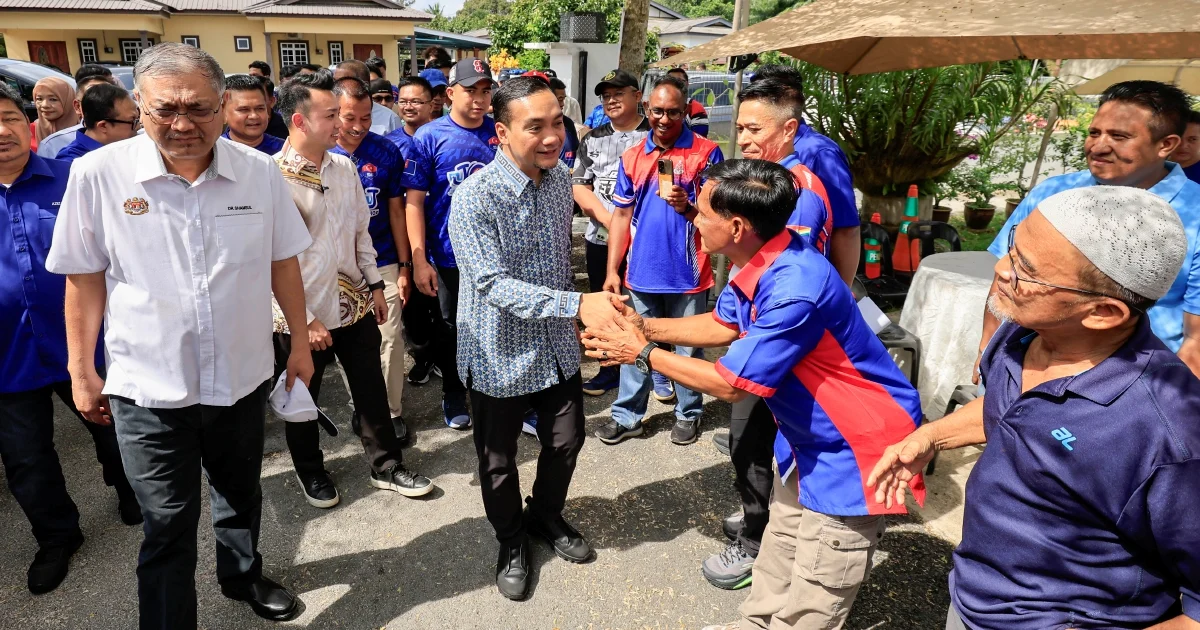
Johor Menteri Besar Onn Hafiz has defended PAS's call for party members to back Barisan Nasional candidates in constituencies where Perikatan Nasional is not fielding its own contenders, framing the directive as a natural extension of the Islamic party's electoral independence and strategic autonomy. Speaking at Simpang Renggam, Onn emphasised that all political organisations retain the fundamental right to chart their own course in campaign planning, suggesting that PAS's move should be viewed within the broader context of how various coalitions calibrate their competitive positioning ahead of elections.
The Johor Menteri Besar's remarks come as PAS, traditionally a component of Perikatan Nasional alongside Bersatu and other smaller parties, seeks to maintain strategic flexibility while managing its relationships within the larger coalition framework. His statement signals tacit acceptance of PAS's manoeuvre even as it highlights the complex negotiations that occur within multi-party coalitions in Malaysian politics, where constituent parties often pursue parallel interests and coordinate selectively across different electoral contests.
Onn's defence of party autonomy reflects a fundamental principle in Malaysian coalition politics: member organisations typically retain discretion over candidate selection and campaign priorities in their core constituencies, even when formally aligned with larger blocs. This flexibility allows parties to respond to local dynamics, strengthen their grassroots presence, and maximise electoral outcomes without appearing to subordinate themselves entirely to coalition partners. For PAS, directing support toward BN where PN abstains represents a tactical calculation to prevent votes from fragmenting across competing non-Pakatan Harapan options.
The practical implications of PAS's strategy extend beyond symbolic posturing. In constituencies where PAN does not contest, directing members toward specific BN candidates serves multiple objectives: it prevents voters from defaulting to opposition parties, consolidates the anti-Pakatan Harapan vote, and potentially strengthens personal relationships between PAS leadership and BN figures at state and federal levels. This granular approach to electoral coordination has become increasingly sophisticated in Malaysian politics, where coalition partners must balance competition with cooperation across different levels of government and regional contexts.
Onn's comments also reflect the evolving dynamics within Perikatan Nasional itself. While the coalition maintains formal unity, its constituent parties—particularly PAS, which commands significant support in the north and among rural Malay-Muslim communities—retain substantial negotiating power within the bloc. PAS's electoral reach in states like Kelantan and Terengganu, combined with its influence among conservative voters nationwide, gives the party leverage to pursue strategic initiatives that might not align perfectly with other PN components' preferences.
The timing of this issue carries significance for Malaysian politics more broadly. As major coalitions prepare for the next general election cycle, questions about candidate selection, seat allocation, and vote-sharing arrangements between alliance members consume considerable energy and generate friction. PAS's decision to back BN candidates selectively demonstrates how parties navigate these tensions by maintaining technical adherence to coalition membership while exercising practical autonomy in specific contests. This approach allows PAS to strengthen its standing with Malay-dominant constituencies and religious voters while avoiding the appearance of abandoning Perikatan Nasional.
From a Southeast Asian perspective, Malaysia's coalition politics exemplifies the sophisticated negotiation required to maintain multi-party alliances in competitive democracies. Unlike systems where coalitions are tightly bound by formal agreements, Malaysian parties operate within frameworks that explicitly permit substantial independent manoeuvre. Onn's willingness to acknowledge and defend such flexibility suggests recognition that coalition stability depends less on rigid adherence to predetermined strategies and more on accommodating the legitimate interests of constituent parties.
For Malaysian voters, PAS's strategy raises important questions about coalition reliability and campaign messaging. When major alliance partners pursue divergent electoral tactics in different constituencies, voters may struggle to understand the unified policy platform or long-term governance vision these groups intend to implement. The appearance of coordination between PAS and BN, despite their formal positioning in different coalitions, also underscores the extent to which Malaysian electoral contests often transcend simple binary competition between clearly defined blocs.
Onn's comments carry particular weight given his position as Johor Menteri Besar and his standing within Bersatu, the coalition party that leads Perikatan Nasional. His defence of party autonomy implicitly acknowledges that PN itself operates with principles permitting such strategic flexibility, establishing a precedent that could influence how other coalition members approach future electoral negotiations. This implicit authorisation from a senior Bersatu figure suggests that PN leadership understands such tactical manoeuvres as acceptable costs of maintaining an inclusive coalition structure.
The defence of PAS's strategy also reflects practical realities of Malaysian campaigning. In many constituencies, particularly in rural areas and in states where PAS maintains historical strongholds, party members and machinery represent crucial mobilisation assets. Instructing these cadres to work for BN candidates in non-contested seats maximises their utility and reinforces local networks that benefit PAS long-term. Rather than leaving supporters politically unactivated or permitting them to drift toward alternatives, the party channels their energies strategically.
Looking forward, Onn's remarks suggest that Malaysian coalition politics will continue evolving along lines of flexible alignment rather than monolithic bloc competition. Perikatan Nasional's ability to accommodate PAS's selective backing of BN candidates indicates the coalition's pragmatism, even as such arrangements complicate the broader political narrative. For voters, observers, and international analysts attempting to understand Malaysia's electoral terrain, such tactical fluidity underscores the importance of examining constituency-level dynamics rather than assuming nationwide consistency in coalition behaviour.
The broader implication extends to governance itself. If major coalitions operate with components pursuing divergent electoral strategies even while maintaining formal alliance status, questions arise about implementing coherent policy platforms and maintaining parliamentary stability after elections. Onn's endorsement of party autonomy in campaign strategy, while politically sensible, highlights ongoing tensions within Malaysian politics between coalition cohesion and constituent party independence that may shape governance challenges regardless of which alliance emerges victorious.

