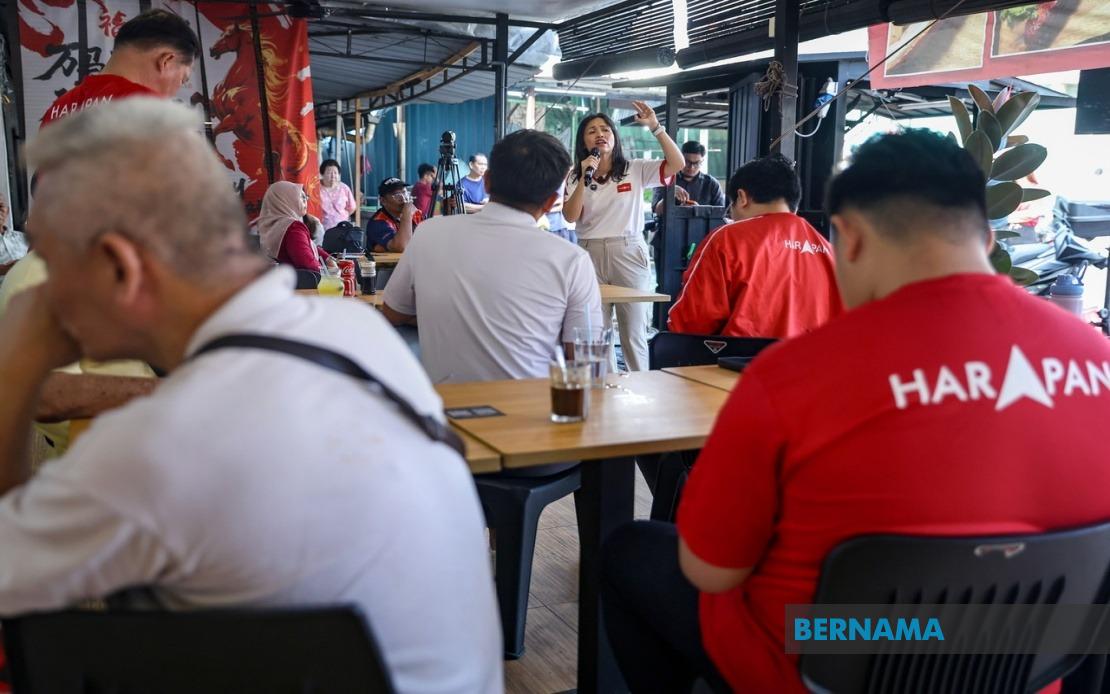
The question of whether government resources and facilities are being appropriated for political purposes has surfaced during Johor's state election campaign, with opposition leaders demanding clarity from the state's top administrator. Johor DAP chairman Teo Nie Ching has called upon Menteri Besar Datuk Onn Hafiz Ghazi to provide a transparent explanation regarding allegations that a Technical and Vocational Education and Training roadshow was leveraged to solicit support for Barisan Nasional candidates, drawing complaints from parents and students who felt coerced into attendance.
The incident in question centred on the Johor MARA TVET Roadshow held on July 4 at the Inland Revenue Board Hall in Kluang. According to Teo, the party received reports that students were instructed to participate, with warnings that non-attendance would be recorded as absenteeism. While the event was ostensibly an official government programme showcasing vocational education opportunities, Teo alleged that it subsequently transformed into a platform for promoting the BN candidate, with Onn Hafiz reportedly mentioning the candidate's number directly to attendees.
Teo's concerns strike at a fundamental principle of electoral conduct in Malaysia: the distinction between legitimate government activities and partisan political campaigning. She articulated this distinction clearly, explaining that while there is no inherent problem with the Menteri Besar attending a government-sponsored event, the transformation of such an event into a campaign vehicle raises serious questions about propriety and regulatory compliance. The tension lies in determining whether the programme was fundamentally governmental in nature—in which case political campaigning would be inappropriate—or whether it was organised as a political event, which would raise questions about the use of a government building for party purposes.
The evidence Teo referenced lends credibility to the allegations. The DAP has obtained the event's programme itinerary, an official letter mandating attendance, and a video recording purporting to show Onn Hafiz making campaign-related statements. This documentation suggests a structured attempt to consolidate a student audience, typically representing impressionable voters with limited political independence, for political messaging. The compulsory attendance element introduces a particularly troubling dimension, as it removes the voluntary aspect that would characterise genuine civic engagement.
From a broader governance perspective, the incident exemplifies a pattern that Teo characterised as selective credit-claiming by the state administration. She noted that when federal government policies prove popular, the state government attempts to claim them as state successes, yet when policies become unpopular, blame is directed toward the Prime Minister or opposition parties. This approach obscures the Cabinet's role in approving major national policies and creates a misleading narrative about the state government's actual powers and responsibilities. Such tactics can confuse voters about the proper attribution of credit and blame in Malaysia's federal system.
Teo's framing of the issue as a concerned mother rather than solely as a political leader adds emotional resonance to the institutional concerns. She posed a question designed to resonate with Malaysian parents: what would they think if their child was compelled to attend a programme and then pressured to support a particular political party? This personalisation of the issue transcends partisan politics and appeals to shared values about appropriate boundaries in civic life. Parents have legitimate expectations that government-mandated or government-encouraged student attendance at programmes will be conducted in a non-partisan manner.
The Pakatan Harapan coalition has indicated willingness to escalate the matter formally if deemed necessary. Teo mentioned that PH candidates would consider whether to lodge a complaint with the Election Commission, the statutory body responsible for maintaining electoral integrity. Such a complaint could trigger an investigation into whether electoral regulations were violated, though enforcement mechanisms and outcomes remain uncertain. The timing of such a complaint during an active campaign could add further dimensions to the state election narrative.
Lim Kit Siang's parallel emphasis on rejecting racial politics and embracing the Malaysian Dream provided ideological context to the opposition's broader campaign messaging. His call for voters to consolidate support rather than fragment their votes suggests PH is attempting to frame the election as a choice between inclusivity and divisiveness. However, the specific allegations about the TVET event represent a more concrete governance concern that transcends ideological differences—the misuse of government machinery for partisan advantage is a practical issue affecting how public institutions operate.
The Johor state election context adds significance to these allegations. With 172 candidates contesting 56 state seats, with early voting on July 7 and polling scheduled for July 11, the campaign is in its intensive final phase. Any credible accusations of improper conduct using government resources carry potential to influence voter perceptions of the state government's integrity and adherence to electoral norms. Johor has historically been a BN stronghold, making it a focal point for both coalitions' strategic efforts.
Onn Hafiz has yet to publicly respond to these allegations as of the reporting date. His silence or delayed response could itself become a campaign issue, as critics may interpret it as avoidance of accountability. Should he choose to respond, his explanation would likely focus on clarifying whether the event was genuinely a government TVET promotion activity that happened to be attended by the Menteri Besar, or whether it was structured as a political event from its inception. The availability of the video recording and official documentation means that any explanation will be subject to factual verification.
The broader implications for Malaysian electoral practice extend beyond this single incident. The allegation, if substantiated, would illustrate how government facilities and mandatory attendance mechanisms can be repurposed for political campaigns—a practice that potentially disadvantages opposition parties without equivalent access to government machinery. This concern has recurred throughout Malaysian electoral history and remains relevant to discussions about creating a more level political playing field.
For Malaysian readers and Southeast Asian observers, this episode demonstrates the ongoing tension between the use of state apparatus for governance and its potential misuse for partisan advancement. The case underscores why institutions like the Election Commission, media scrutiny, and political opposition serve essential functions in maintaining democratic norms. As Johor voters prepare to cast their ballots, the credibility of institutions and the integrity of the electoral process remain central considerations in evaluating the competing coalitions' fitness to govern.

