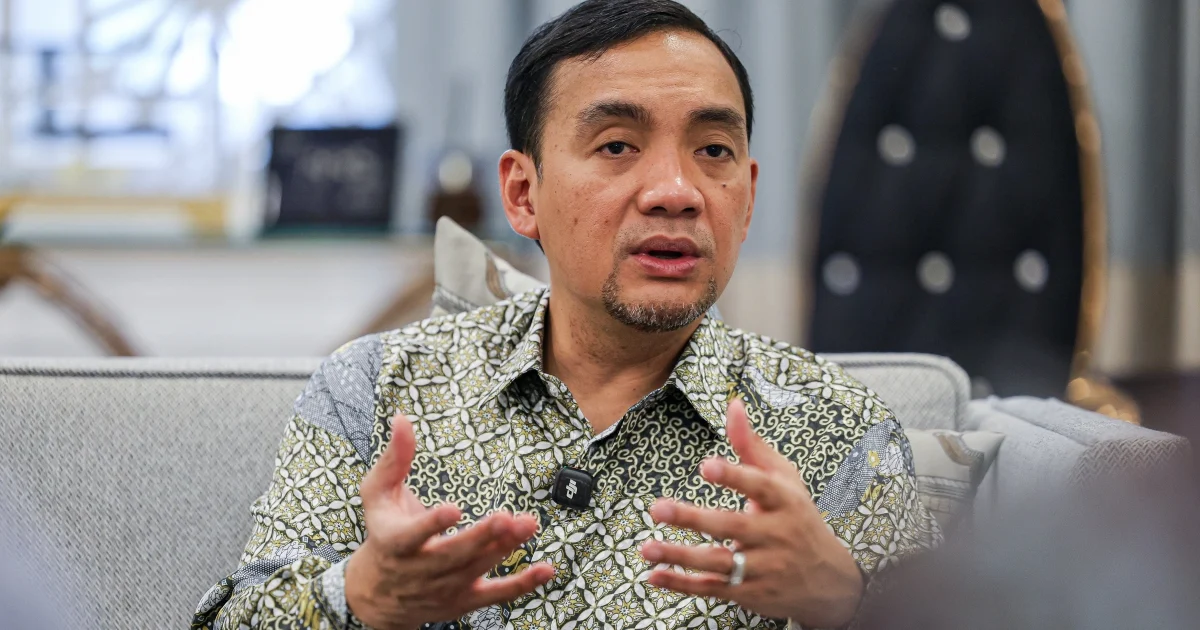
Johor's caretaker Menteri Besar Datuk Onn Hafiz Ghazi has moved to correct the record following assertions by Datuk Dr Mohd Puad Zarkashi that he had characterised the state assembly dissolution as having been "ordered" by the palace. The denial comes amid heightened scrutiny surrounding the circumstances and timing of the assembly's dissolution, a matter that carries significant constitutional and political implications for Malaysia's southern state.
The distinction between a palace decision and a palace directive carries considerable weight in Malaysia's constitutional framework. In the Malaysian system of monarchy, the Ruler plays a crucial role in state governance, yet the boundary between advisory and directive authority remains a nuanced constitutional question. Onn Hafiz's clarification suggests he may have articulated the palace's involvement differently than Puad Zarkashi portrayed, or that his comments were interpreted or transmitted inaccurately. Such precision matters because statements framing palace involvement as mandatory rather than consultative can attract constitutional scrutiny and public concern about the exercise of royal prerogative.
The dissolution of state assemblies represents one of the most consequential decisions in state politics, triggering fresh electoral mandates and potentially reshaping coalition arrangements. In Johor's case, the timing and justification for assembly dissolution directly affect the legitimacy and stability of the incumbent government. Public and political confidence in the dissolution process depends partly on clear communication about the decision-making process and the respective roles of the Menteri Besar, the state government, and the palace in reaching that outcome.
Johor has experienced considerable political turbulence in recent years, with multiple changes in administration and coalition configurations. These shifts have periodically raised questions about governmental stability and the institutional relationships between elected leadership and constitutional authorities. The current dispute over how the assembly dissolution was characterised—whether as a palace instruction or a palace-approved decision—reflects the ongoing sensitivity surrounding these relationships and the public's desire for transparency about how power is exercised at the state level.
Puad Zarkashi's original attribution of the dissolution to a palace order, if accurately reported, would have constituted a significant claim about the decision-making hierarchy and the relative influence of different institutions in state governance. Such claims, whether intended or not, can influence public perceptions of democratic function and institutional independence. Onn Hafiz's rebuttal indicates that he regards the characterisation as materially inaccurate or misleading, prompting him to issue a public correction.
The incident illustrates how statements about constitutional matters can generate political controversy, particularly in Malaysia's federal context where state-level governance involves a delicate calibration of executive, legislative, and monarchical authority. Menteri Besar positions carry responsibility not only for policy direction but also for maintaining appropriate public understanding of constitutional processes. When such processes are discussed in political discourse, precision in language becomes essential to preserve confidence in democratic institutions.
Johor, as Malaysia's second-largest state by population and a significant economic hub, attracts considerable attention to its political developments. Events in Johor often carry implications beyond the state's borders, influencing broader national political calculations and coalition dynamics. The state has historically served as a bellwether for political trends affecting federal politics, making its governance arrangements and the conduct of state leaders matters of more than parochial interest.
The broader context includes ongoing debates nationally about the proper role of royal institutions in executive governance, the scope of constitutional monarchy in a democratic system, and the mechanisms through which decisions affecting state assemblies and their dissolution should be communicated and justified to the public. These conversations have become more visible in Malaysian political discourse in recent years, reflecting evolving expectations about transparency and accountability in how governmental institutions interact.
Onn Hafiz's position as caretaker Menteri Besar during this period adds another dimension to the matter. Caretaker administrations operate under specific constraints and conventions regarding their authority and policy scope. The manner in which a caretaker leader characterises decisions affecting governmental continuity and electoral timing can have implications for how the public and political actors perceive the legitimacy and appropriateness of actions taken during the transition period.
The denial also underscores the importance of accurate reporting and attribution in political matters. Whether Puad Zarkashi's characterisation arose from misquotation, misinterpretation, or genuine disagreement about how events unfolded, the public disagreement highlights how easily constitutional matters can become contested when the precise nature of communications and decisions is not clearly established from the outset. The incident may prompt future discussions about more formal and transparent processes for announcing and explaining significant constitutional decisions affecting state governance.
Moving forward, the episode demonstrates the ongoing relevance of clarifying institutional relationships and decision-making processes in Malaysian governance. As Johor anticipates its electoral cycle and the formation of new leadership, the manner in which past decisions are explained and justified will contribute to public confidence in the state's political institutions and their proper functioning according to constitutional principles.

