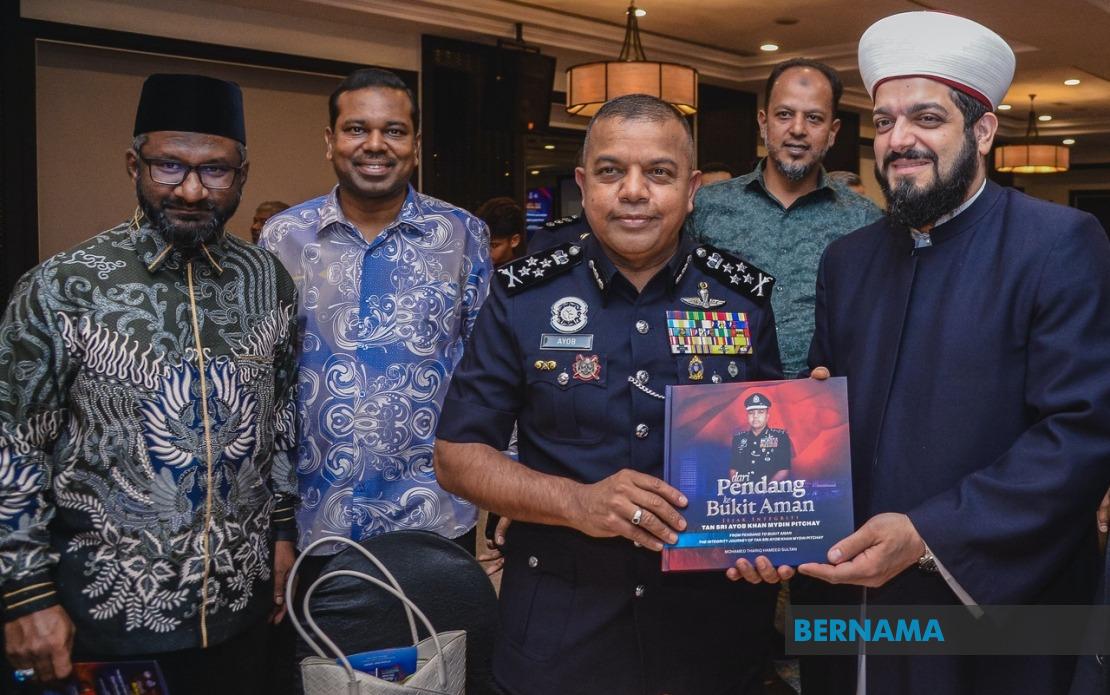
Malaysia's deputy police chief has sounded an urgent warning about the evolving threat landscape posed by extremist organisations, highlighting a troubling pivot toward digital recruitment methods that exploit entertainment platforms frequented by young people. Tan Sri Ayob Khan Mydin Pitchay, speaking at the launch of his biography in Kuala Lumpur on July 23, outlined how militant and extremist groups are abandoning traditional face-to-face indoctrination in favour of sophisticated online tactics that blur the lines between gaming and radicalisation.
The shift away from conventional recruitment channels represents a fundamental change in how extremist ideologies spread within Malaysian society. Where organisations once relied on private religious study circles, or usrah sessions, to cultivate sympathisers and build their base, the digital environment now offers anonymity, scale, and access to vulnerable demographics that traditional methods could never achieve. Popular gaming platforms including Roblox have become hunting grounds for recruiters seeking to identify emotionally susceptible individuals who can be gradually drawn into extremist worldviews through seemingly innocuous online interactions.
Ayob Khan's assessment underscores a critical reality facing law enforcement across Southeast Asia: the traditional toolkit for countering extremism has become partially obsolete. Gaming platforms were designed to entertain and connect millions of users globally, not to serve as vector points for violent ideologies. Yet their open architecture, the difficulty of moderating international communities, and the relative youth of their user bases create near-perfect conditions for exploitation by malevolent actors. The scale of platforms like Roblox, which hosts tens of millions of players worldwide, means that even small dedicated cells can reach enormous potential recruitment pools with minimal risk of detection.
The psychological dimension of this recruitment evolution is particularly concerning. Ayob Khan noted that contemporary extremist motivations transcend purely religious ideology, instead capitalising on emotional vulnerabilities such as anger, social alienation, and what he characterised as deep-seated hatred. This represents an important shift in understanding the radicalisation pathway: individuals may enter extremist circles through shared grievances, personal disputes, or social marginalisation, with religious or political ideology serving as post-hoc justification rather than initial attraction. Recent arrests of teenagers involved in extremist activities suggest that younger Malaysians are proving susceptible to these emotionally-driven appeals, lacking the life experience and critical cognitive development necessary to resist sophisticated manipulative tactics.
The modus operandi described by Malaysia's police establishment reflects global patterns evident across other democracies grappling with online extremism. Gaming spaces offer natural meeting points where coordination can occur under the cover of normal gameplay discussion. Private chat functions, temporary messaging that leaves no permanent trace, and the ability to communicate across jurisdictions create an enforcement nightmare for national security agencies. Extremist actors benefit from the plausible deniability inherent in encrypted gaming communications, where recruitment appeals can be framed as idle chat rather than deliberate indoctrination.
Ayob Khan's call for enhanced vigilance from the Special Branch's Counter-Terrorism Division reflects a recognition that current policing methodologies require substantial upgrades to match the pace of technological change. The requirement that law enforcement remain "one step ahead" of threats rather than reacting to attacks represents an implicit acknowledgment that traditional intelligence-gathering approaches—which typically rely on physical surveillance and infiltration—may prove inadequate in largely virtual spaces. The characterisation of passivity in this domain as constituting an "intelligence failure" carries significant weight given Malaysia's experience with terrorist incidents and the government's responsibility to protect citizens.
For Malaysian policymakers and security agencies, the implications extend beyond law enforcement into education, community engagement, and platform governance. The ability of extremist groups to exploit gaming environments suggests that digital literacy initiatives must evolve beyond cybersecurity and toward critical thinking regarding online communities and influence. Parents, educators, and young people themselves require frameworks for recognising radicalisation attempts that operate through entertainment channels rather than overtly political or religious discourse.
The challenge is compounded by the international nature of gaming platforms and the jurisdictional complications they create. Roblox and comparable services operate globally with servers and administrative structures spanning multiple countries, making coordinated enforcement difficult. Platforms themselves face the difficult balance between user privacy, free expression, and security—considerations that sometimes conflict in ways hostile to counter-extremism objectives. Malaysia's police and security agencies must engage these multinational corporations more actively, sharing intelligence about recruitment patterns and pressuring them to strengthen moderation in gaming spaces where radicalisation appears to be occurring.
Looking forward, Ayob Khan's warnings suggest that Malaysia recognises extremism as a persistently evolving threat that demands continuous adaptation from law enforcement and security services. The shift toward online gaming recruitment does not represent a temporary tactical adjustment by extremist groups but rather reflects their strategic evolution in response to improved border security, enhanced offline surveillance, and greater public awareness of traditional recruitment methods. As long as gaming platforms remain inadequately monitored and emotionally vulnerable young people remain accessible through these channels, extremist organisations will continue exploiting them.
The broader security ecosystem involving Melaka Governor Tun Mohd Ali Rustam, the Criminal Investigation Department, the Commercial Crime Investigation Department, and the Internal Security and Public Order Department suggests a whole-of-government approach to the problem. Yet the ultimate effectiveness of such coordination depends heavily on whether resources, technological capacity, and operational authority align sufficiently to mount credible counter-programming. Without sustained investment in cyber-intelligence capabilities, platform cooperation mechanisms, and community-based prevention initiatives, Malaysian authorities risk falling behind the sophistication of extremist recruitment operations.

