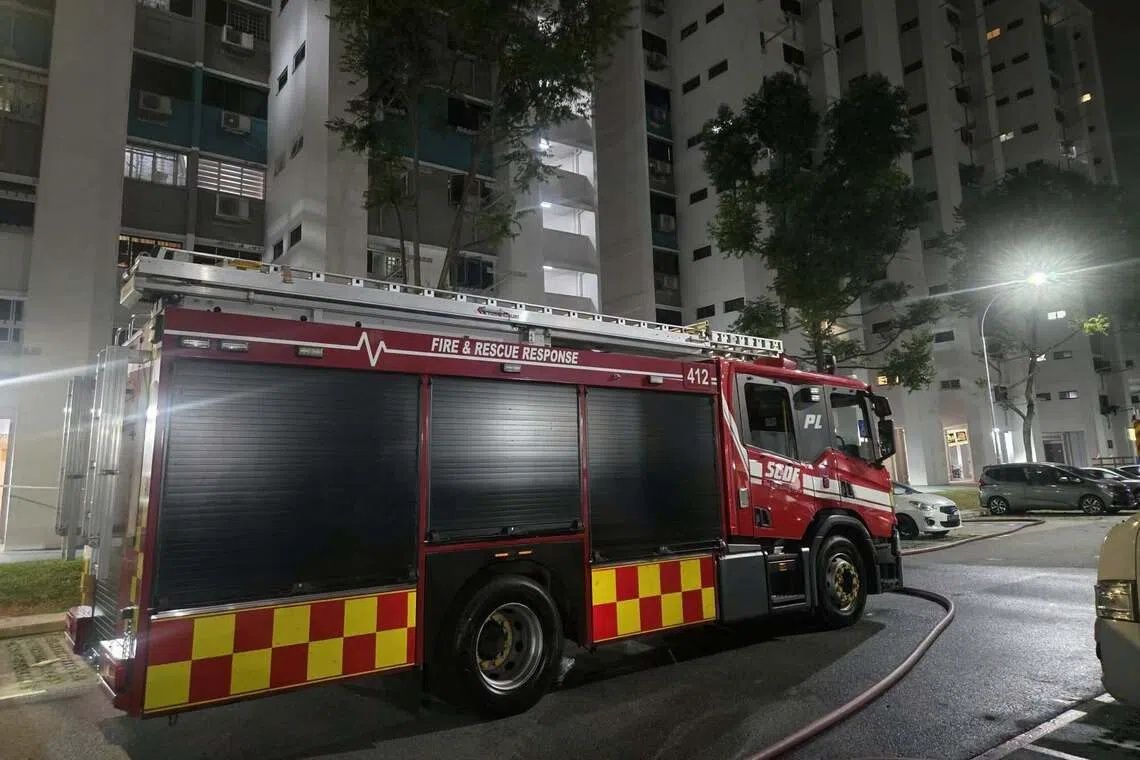
Singapore's public housing sector is grappling with a troubling surge in fatal fires. In the early morning of August 16, emergency responders were dispatched to Block 339 Jurong East Avenue 1 after reports of a blaze at 3.55am. The Singapore Civil Defence Force arrived to find thick black smoke billowing from a third-floor unit, with flames confined to the living room area. Upon forcing entry, firefighters discovered an unresponsive occupant whom paramedics were unable to revive, declaring them dead at the scene. A total of 50 residents from the block were evacuated as a precaution, though the fire's swift containment prevented additional casualties.
The fatality marks a grim milestone in what has become an alarming pattern across Singapore's HDB estates. Just three weeks earlier, on July 28, a fire at Block 39 Circuit Road claimed the life of a 70-year-old resident. That incident was followed days later by another deadly blaze at Block 309 Clementi Avenue 4 on July 31, where a 65-year-old man perished and two firefighters sustained injuries while battling the flames. Most recently, a fire at Block 684 Race Course Road on August 3 hospitalised five elderly residents, with an 88-year-old man succumbing to his injuries on August 5. The clustering of these incidents within a 19-day window suggests systemic vulnerabilities in fire safety or prevention measures across HDB neighbourhoods.
The circumstances surrounding these fires warrant close examination. Elderly residents and those living alone appear disproportionately represented among the casualties, a demographic reality that warrants targeted intervention strategies. HDB blocks, by their nature, house thousands of residents in close proximity, meaning that fires in individual units carry inherent risks of rapid spread and evacuation challenges, particularly among mobility-impaired or elderly occupants. The Jurong East incident, while contained to a single unit's furnishings, nonetheless necessitated the displacement of 50 households, underscoring how fires in high-rise residential settings can disrupt entire communities even when damage remains localised.
Investigations into the precise cause of the Jurong East fire remain ongoing, as authorities work to determine whether it originated from electrical failure, cooking equipment, smoking materials, or another source. Each of the recent fatal fires likely has distinct origins, but their collective occurrence suggests that broader fire prevention awareness and enforcement may require strengthening. The living room origin point at Block 339 indicates that fires can ignite in common areas within residential units, places where residents may be less vigilant about fire hazards compared to kitchens, where smoke detectors and fire safety awareness tend to be higher.
For Malaysian readers, the Singapore situation offers instructive parallels. Malaysia's own urban public housing stock, including federal schemes and state-level low-cost flats, houses millions of residents in similar high-density configurations. While Malaysia has its own fire safety regulations and enforcement mechanisms, the frequency of fires in Singapore's HDB blocks serves as a cautionary reminder that regulatory frameworks alone may not suffice without complementary public education and active resident participation. Both nations share tropical climates, building materials, and household consumption patterns that can influence fire risk profiles.
The South-East Asian context adds another dimension to this discussion. Rapid urbanisation across the region has seen explosive growth in public housing stock, often with resources stretched thin for maintenance and safety inspections. Fire safety in older HDB blocks, many of which date back decades, presents particular challenges as building materials age and electrical systems deteriorate. The concentration of fatalities among elderly residents in Singapore—a demographic trend that will intensify across South-East Asia in coming decades—demands proactive strategies beyond reactive emergency response.
Singapore's Civil Defence Force and housing authorities will likely initiate a comprehensive review of fire prevention protocols following this cluster of incidents. Enhanced inspection regimes, renewed public education campaigns, and potentially stricter enforcement of fire safety standards in common areas and individual units may emerge from this period. For residents, the incidents underscore the importance of maintaining functional smoke detectors, keeping escape routes clear, and being familiar with evacuation procedures—practical measures that can mean the difference between survival and tragedy.
The human cost of these fires extends beyond immediate fatalities. Survivors often face trauma, displacement, and disruption to their lives. The 50 residents evacuated from Jurong East, regardless of whether they suffered direct fire damage, have experienced a stark reminder of their vulnerability. In a region where public housing serves as the primary accommodation for working and middle-class families, ensuring its safety is not merely a technical question but a fundamental matter of social responsibility and public trust.
Moving forward, the convergence of these tragedies presents an opportunity for regional authorities to examine fire safety holistically. This includes assessing whether current building codes, inspection frequencies, and enforcement mechanisms adequately protect the millions residing in public housing across South-East Asia. The August 16 fire at Jurong East, tragic as it is, should catalyse broader reflection on how urban societies can better safeguard their most vulnerable residents from preventable disasters.

