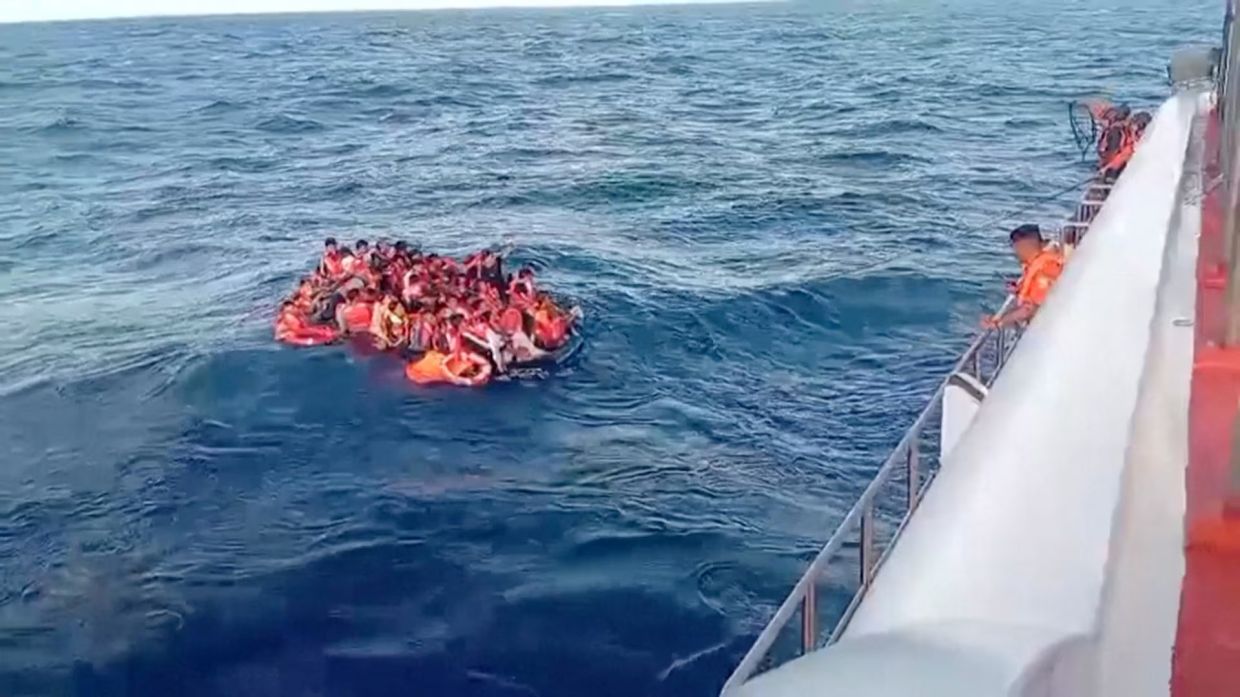
An Indonesian passenger ferry erupted in flames near Bali early Wednesday morning, claiming one life but resulting in the successful evacuation of 211 people in a coordinated rescue effort involving multiple government and civilian agencies. The incident underscores persistent maritime safety challenges across the sprawling Indonesian archipelago, where thousands of vessels operate daily across treacherous waters connecting remote islands.
The Putri Yasmin caught fire at approximately 4:15 a.m. local time while navigating waters between Bali and Lombok, two of Indonesia's most visited islands. The blaze spread rapidly through the vessel, forcing crew members to issue distress calls that mobilized responders across the region. The National Search and Rescue Agency, Indonesian Navy, maritime police, and nearby civilian vessels converged on the location, working to pull passengers and crew from the burning ship before the situation deteriorated further.
Authorities confirmed that one Indonesian woman perished in the incident, with the death toll potentially reflecting the speed of the evacuation and favourable weather conditions during the rescue operation. The successful retrieval of 211 survivors—a substantial majority of those aboard—demonstrates the effectiveness of coordinated emergency response protocols when activated swiftly. Survivors were transferred to ports in both Bali and Lombok, where they received medical attention and assistance from local authorities.
Local officials praised the conduct of the evacuation, with one statement declaring the operation "completed safely and smoothly." This assessment, however, came tempered by a troubling discrepancy that emerged during the investigation. The ferry's official passenger manifest had recorded only 131 people aboard, including 17 crew members, yet authorities later confirmed that substantially more individuals had actually been on the vessel at the time of the fire. This gap between registered and actual passenger numbers raises critical questions about boarding procedures and manifest accuracy.
The presence of unregistered passengers is not unusual in Indonesian maritime transport, reflecting the practical realities of inter-island travel where informal bookings and last-minute additions frequently occur. However, such discrepancies complicate emergency response efforts, as rescuers may lack accurate information about the number of people requiring assistance. In this instance, the overestimate of actual occupancy may have inadvertently ensured sufficient resources were deployed, but inconsistent record-keeping remains a systemic vulnerability in maritime operations across the region.
Indonesia's National Transportation Safety Committee has begun investigating the fire's origin, with assistance from the Lembar Port Authority overseeing operations from the Lombok side. Preliminary assessments suggest significant material losses, encompassing the ferry itself, vehicles stored aboard, and cargo. The investigation will likely examine whether mechanical failures, electrical malfunctions, or other causes sparked the blaze, and whether maintenance schedules and safety equipment functioned as intended.
The incident highlights the critical role maritime transport plays throughout Indonesia, an archipelagic nation comprising more than 17,000 islands where ferries remain the primary connection between communities. Millions of Indonesians depend on these vessels for daily commutes, economic activities, and access to services. Yet the sector faces persistent challenges rooted in aging infrastructure, variable enforcement of safety regulations, and the unpredictability of weather across the Indian Ocean and adjacent seas.
Safety lapses in Indonesian maritime transport have generated repeated accidents over recent decades, with investigative reports frequently identifying inadequate crew training, poorly maintained vessels, and insufficient life-saving equipment as contributing factors. The regulatory environment remains fragmented across multiple agencies, and economic pressures on operators incentivize cost-cutting measures that can compromise safety standards. Ferry companies often operate with thin profit margins, making investment in modern safety systems a secondary consideration despite obvious risks.
For Malaysian readers and Southeast Asian observers, this incident serves as a sobering reminder of the interconnected maritime challenges facing the region. As tourism grows and inter-island travel increases, the pressure on ferry operators intensifies, potentially exacerbating safety concerns. Indonesia's authorities face mounting pressure to strengthen oversight mechanisms, enforce consistent standards, and ensure that vessels meet international maritime safety conventions before departing ports.
The rescue operation's relative success should not obscure deeper systemic issues requiring urgent attention from Indonesian policymakers and industry stakeholders. Regional maritime organizations, including those coordinating with Malaysia and other ASEAN nations, may benefit from sharing best practices and coordinating regulatory frameworks to prevent future tragedies. Enhanced training programmes, mandatory safety audits, and stricter enforcement of manifest procedures could substantially reduce risks for the millions who traverse these waters annually.

